
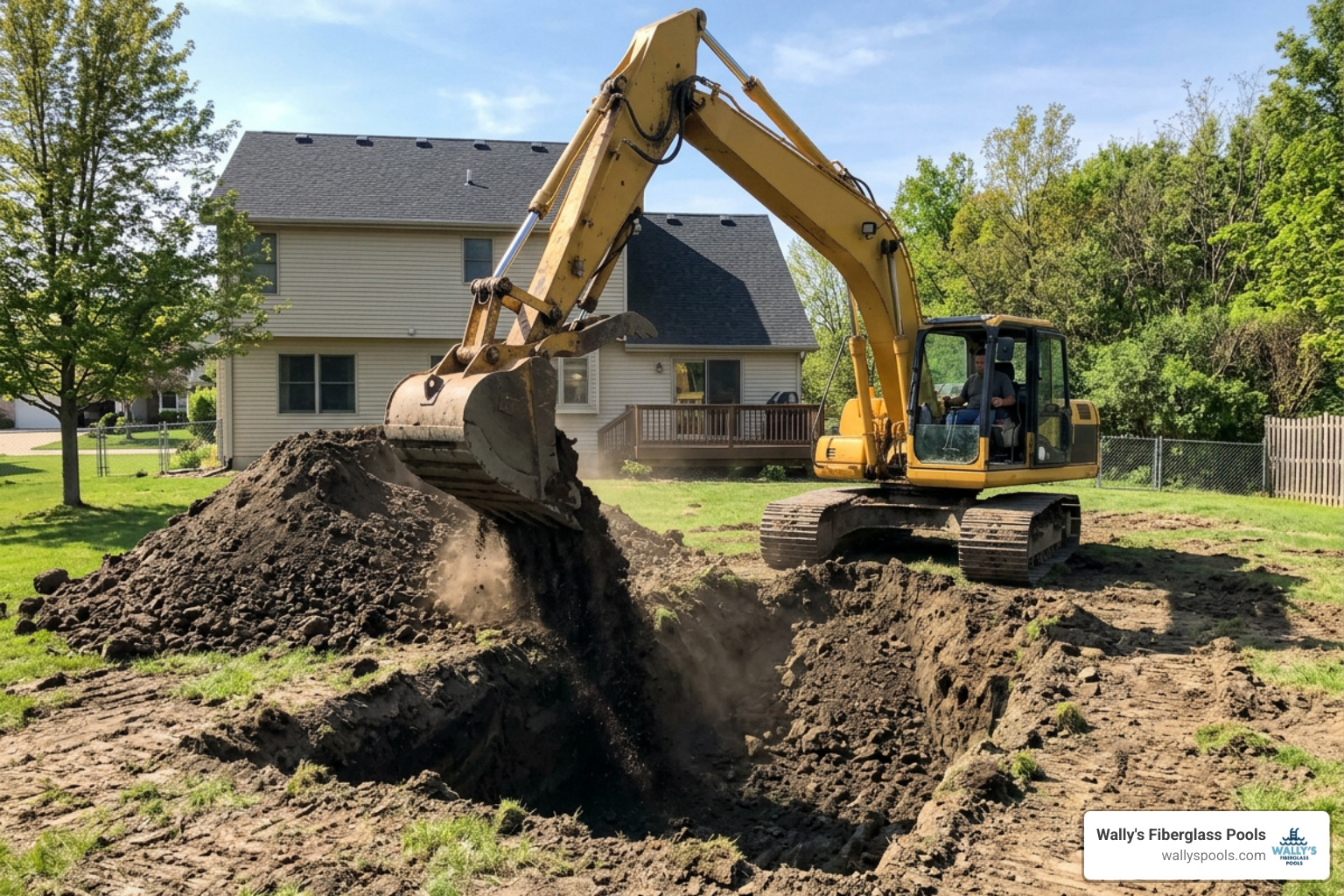
A Practical Guide to Comparing Pool Excavation Costs
Average Pool Excavation Cost and Key Pricing Drivers
Across the United States in 2026, standard residential pool excavation typically runs between $2,500 and $12,000, with a nationwide baseline average hovering around $2,500 to $4,500 for routine conditions. However, when complex site prep, rock excavation, or extensive grading enters the picture, site preparation can climb significantly higher.
When reviewing contractor estimates, excavation is calculated through a blend of unit volume rates, labor hours, and dedicated machinery fees:
- Per-Cubic-Yard Rates: Typical dirt excavation costs $15 to $40 per cubic yard under standard conditions, but difficult ground can drive this rate higher.
- Labor Crew Rates: Professional excavation crews usually charge between $60 and $95 per hour per operator, while general site labor runs $40 to $180 per hour depending on technical requirements.
- Equipment Mobilization & Rental: Bringing heavy equipment—such as 15-to-20-ton tracked excavators, track skid steers, and tandem axle dump trucks—to your property ranges from $400 to $1,800 per day.
To calculate volume baseline estimates for any project, you can use an Excavation Cost Calculator 2026 – Project Cost Estimator to match dimensions against regional averages.
How Dimensions and Depth Impact Pool Excavation Cost
The dimensions of your swimming pool directly dictate the total cubic yardage of earth that machinery must lift, load, and relocate. Excavation volume is calculated using standard geometry (Length × Width × Depth), but professional excavators always add a 1-to-2-foot “overdig” perimeter around the pool boundary to allow for plumbing lines, formwork, and gravel bedding.
Furthermore, once undisturbed earth is dug out, it experiences a natural expansion known as the “soil swell factor.” Loosened soil increases in volume by 25% to 30%, meaning a hole that measures 100 cubic yards in the ground turns into roughly 125 to 130 cubic yards of loose dirt to haul away.
| Pool Dimensions (Feet) | Typical Depth Profile | Excavated Volume (Loose Cu. Yds) | Est. Cost (Sandy / Normal Loam) | Est. Cost (Heavy Clay / Dense Soil) | Est. Cost (Rocky Ground / Ledge) |
|---|---|---|---|---|---|
| 10 × 20 (Plunge / Small) | 4.0′ – 5.0′ uniform | 40 – 55 | $1,500 – $3,200 | $2,500 – $4,500 | $4,500 – $7,500 |
| 12 × 24 (Compact) | 3.5′ – 5.5′ gradual | 60 – 80 | $2,200 – $4,200 | $3,500 – $5,800 | $6,000 – $9,500 |
| 16 × 32 (Standard) | 3.5′ – 6.5′ slope | 110 – 140 | $3,200 – $6,000 | $5,000 – $8,500 | $8,500 – $14,000 |
| 20 × 40 (Large) | 3.5′ – 8.0′ deep end | 180 – 230 | $4,800 – $8,500 | $7,500 – $12,500 | $12,000 – $20,000+ |
Soil Conditions: Dirt, Clay, Sand, and Rock Removal
Soil composition is often the single largest variable determining whether a dig stays on budget or requires specialty line items.
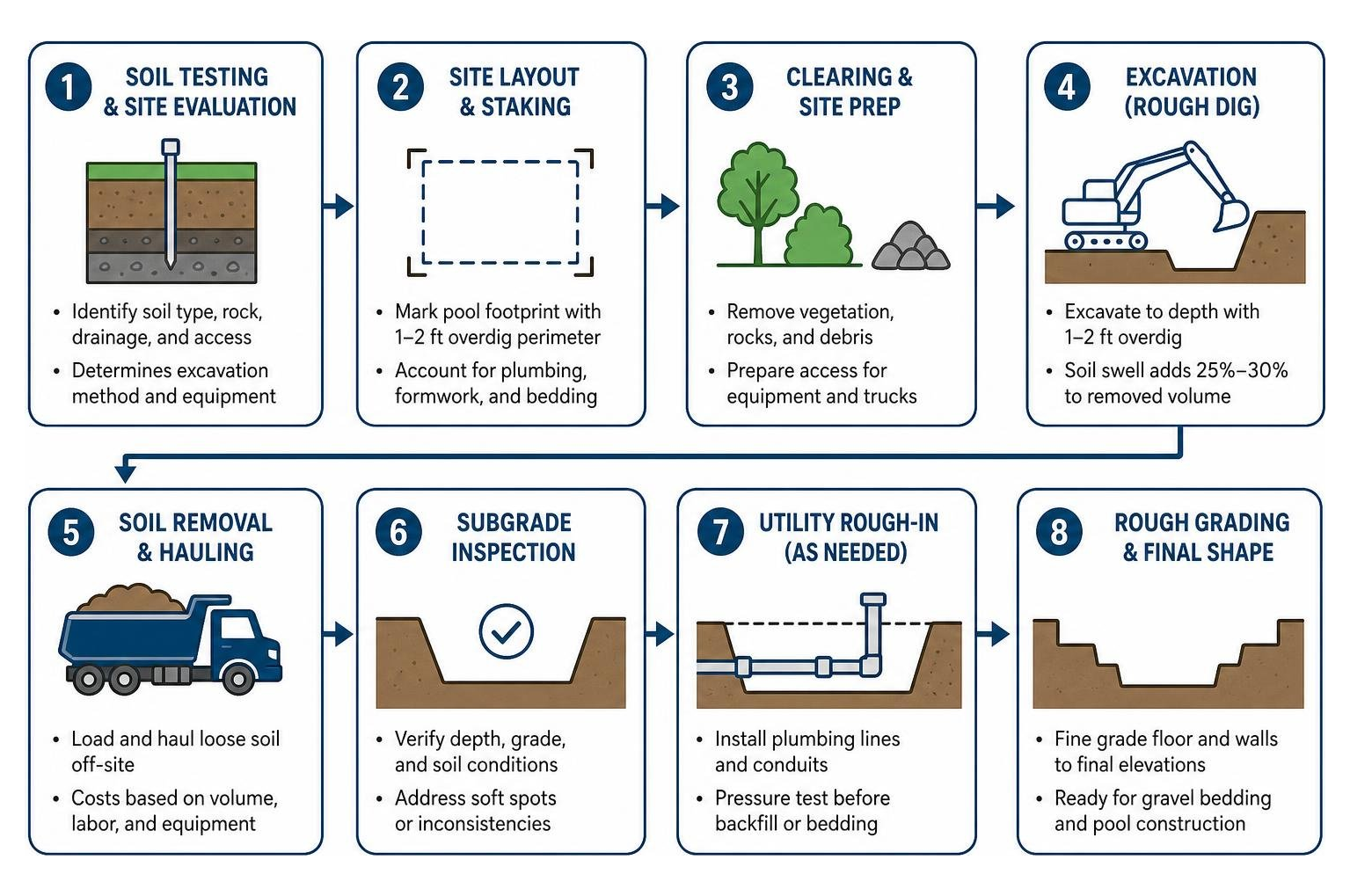
- Sandy Loam & Clean Dirt ($15 – $25 per cu. yd.): Digs smoothly, produces minimal equipment wear, and provides rapid loading times.
- Dense Clay ($25 – $40 per cu. yd.): Common throughout Southeast Wisconsin, heavy clay holds high moisture content, increases bucket drag, and becomes sticky and difficult to grade when wet.
- Glacial Till & Boulders ($40 – $70 per cu. yd.): In areas like Lake Country and Waukesha County, glacial till deposits leave large subterranean stones that require larger buckets or specialty ripper teeth to extract.
- Solid Bedrock & Ledge ($40 – $100+ per cu. yd.): When ledge rock is struck, standard buckets cannot penetrate the ground. Contractors must bring in hydraulic or pneumatic hammers mounted to excavators, adding $1,500 to $5,000+ per day to the job.
Reviewing regional pricing frameworks such as Estimating Pool Dig Costs: Price Ranges for Excavation in the United States 2026 – Current Cost highlights why early geotechnical understanding is critical before heavy machinery arrives.
Hidden Site Factors That Influence Dig Quotes
Two identical pools installed in the same municipality can carry wildly different dig quotes due to unique yard topography and buried infrastructure.
- Yard Slope & Elevation Offsets: If a backyard slopes more than 2 to 3 feet across the pool footprint, excavation must include shelf cutting, benching, or rough grading to prevent runoff from washing into the pool bed.
- Tree Roots and Canopy Protection: Working near mature hardwoods requires careful root pruning rather than aggressive ripping to avoid destabilizing valuable trees or violating local municipal tree preservation ordinances.
- Utility Line Relocation: Private utilities—such as secondary electrical feeds to detached garages, buried propane lines, invisible dog fences, and irrigation systems—must be rerouted before the excavator strikes ground.
- Public Utility Protection: A call to Diggers Hotline (811) is mandatory across Wisconsin before any mechanized digging begins to mark gas, power, communications, and municipal water mains.
Backyard Accessibility and Equipment Clearance
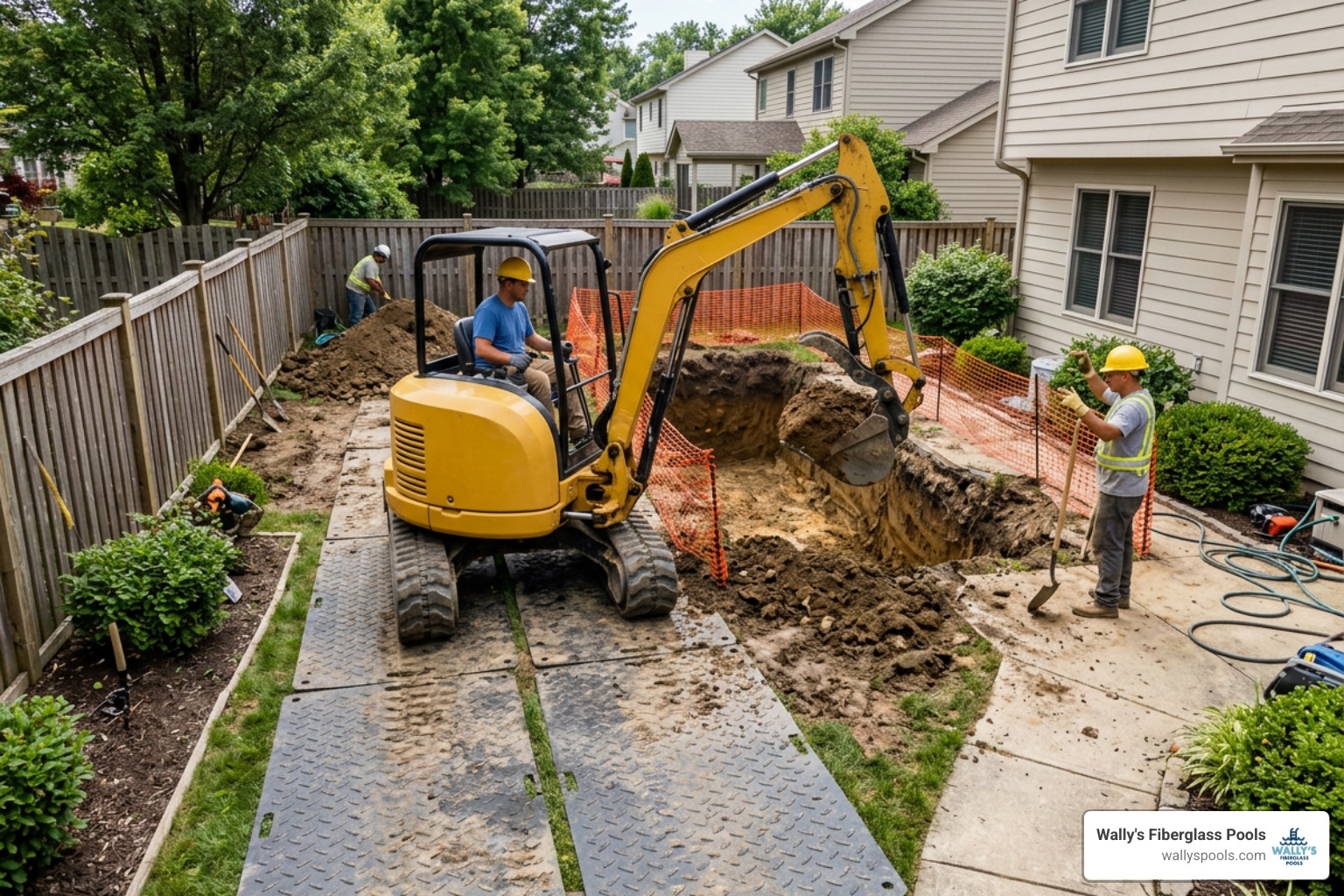
Bringing a 35,000-pound excavator into a residential yard requires an accessible pathway. If a contractor has clear, 10-to-12-foot access from a wide driveway or open corner lot, standard commercial excavators can complete the job quickly.
When properties feature narrow 4-to-6-foot side setbacks, retaining walls, or close neighbor property lines, contractors must deploy smaller mini-excavators or track loaders. These compact machines carry smaller bucket capacities, extending a one-day dig into a two-or-three-day operation and adding $1,000 to $3,500 in labor. In tight neighborhoods, temporary fence panel removals and heavy composite ground-protection mats are deployed to distribute machine weight and protect delicate turf and driveway pavers.
Soil Hauling and Disposal Fees
Digging a hole creates a massive mound of loose material. For an average 16×32-foot pool, you can expect between 10 and 15 tandem-axle dump truck loads of displaced earth.
- Haul-Away Dump Fees: Clean fill disposal sites charge tipping fees ranging from $10 to $25 per cubic yard, plus mileage surcharges ($2 to $5 per loaded mile). If soil contains excessive organic debris or heavy wet clay, disposal rates can rise.
- On-Site Dirt Reuse: You can save $1,500 to $4,000 by keeping clean excavated fill on your property. We frequently repurpose excavated material to build landscape berms, re-grade sloped yard sectors, backfill raised patio foundations, or level out low, water-retaining areas on the lot.
Regional Cost Considerations and Seasonal Timing
In Southeast Wisconsin, local geology and climate play major roles in excavation planning. Our regional soil profile features dense silty clay overlaid with pockets of glacial moraine gravel and boulders throughout Waukesha, Washington, and Walworth counties.
The Wisconsin freeze-thaw cycle also dictates ground stability. During late winter and early spring, seasonal frost can extend 40 to 48 inches into the ground. Digging through deep frost requires specialized frost-ripper equipment, while saturated spring thaw conditions make yards vulnerable to deep tire rutting. The sweet spot for seasonal excavation runs from late spring through late autumn, when subsoils dry out and achieve optimal compaction stability.
DIY vs. Professional: Managing Your Pool Excavation Cost
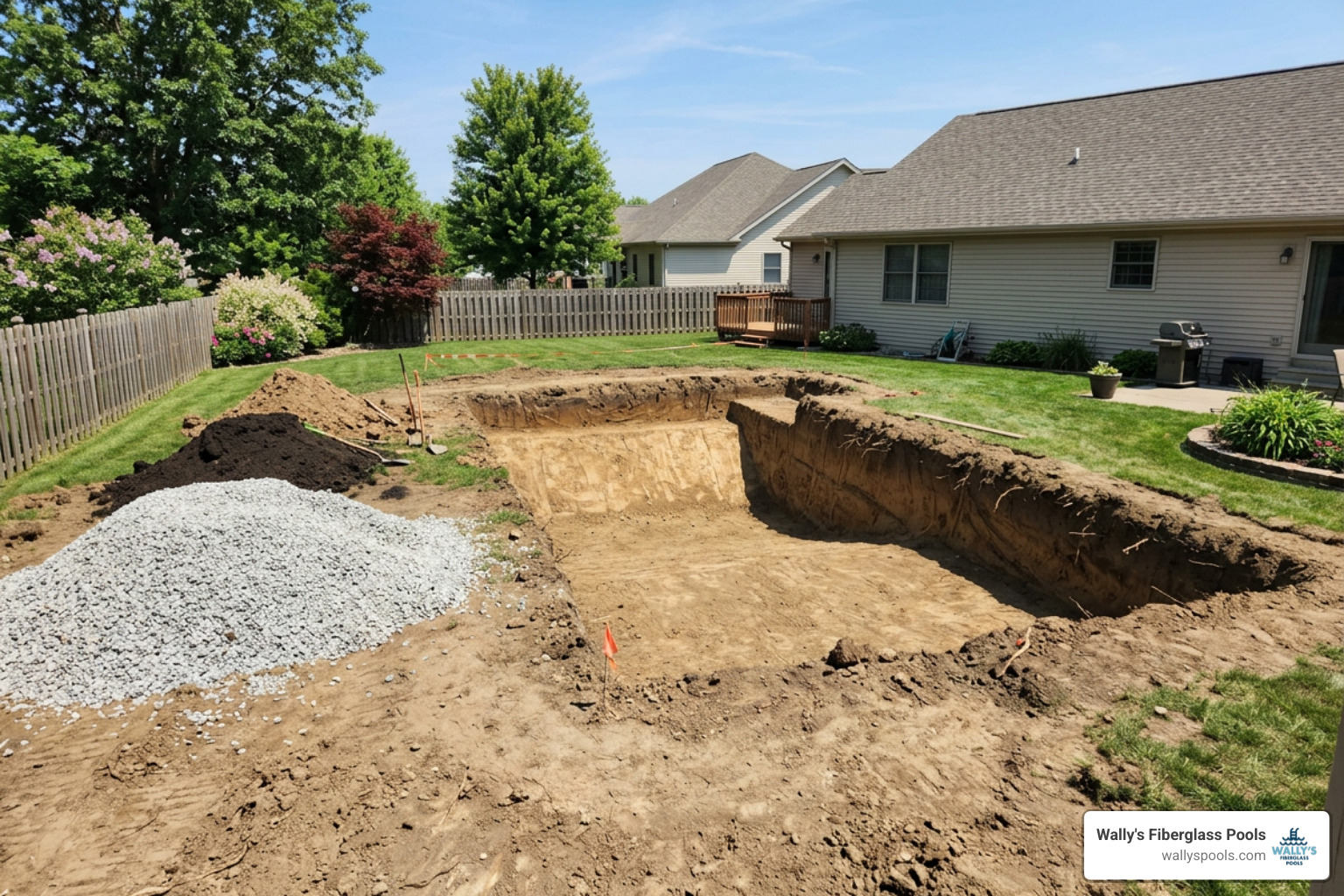
Tackling pool excavation yourself often seems like an easy way to trim $2,500 to $5,000 in labor costs, but residential pool digging is not simple trenching.
- Equipment Costs Add Up: Renting a 5-to-8-ton mini-excavator costs $200 to $350 per day (or $1,000 to $1,800 weekly), plus trailer transport, fuel, and insurance surcharges.
- Tolerances Must Be Exact: Inground fiberglass pools require an excavation floor graded to within fractions of an inch on an engineered clean crushed-stone bed. An overdug hole requires expensive extra gravel backfill, while an uneven base can void manufacturer structural shell warranties.
- Safety and Utility Hazards: Trench collapse risks and unmarked private utility strikes can cause expensive property damage. Professional excavation operators maintain commercial liability insurance, laser-guided grade receivers, and the experience needed to navigate unexpected underground obstacles safely.
Local Permits, Inspections, and Utility Locates
Before machinery touches your turf, municipal requirements must be satisfied. In communities across Waukesha County, Milwaukee County, and Lake Geneva, building departments require formal pool permits, zoning setback verifications, and erosion control plans.
- Permit Fees: Residential pool and excavation permits generally range from $150 to $800, depending on the municipal valuation schedule.
- Erosion Control: Silt fencing or straw wattles are often mandatory along property boundaries to keep disturbed soil from washing into neighboring yards or municipal storm drains.
- Enclosure Codes: Wisconsin uniform dwelling codes mandate safety enclosures or code-compliant locking pool covers before final approval is granted.
Frequently Asked Questions About Pool Excavation
How long does it take an excavator to dig a swimming pool?
For a standard residential pool with unobstructed side access and normal soil, an experienced operator using a full-sized excavator can complete the rough dig in 4 to 8 hours (single working day). If the job involves tight access requiring mini-excavators, difficult clay handling, or buried boulders, excavation typically takes 2 to 3 full working days.
How much dirt comes out of an inground pool dig?
A medium-sized 16×32-foot inground pool with a shallow-to-deep slope generates approximately 90 to 110 cubic yards of undisturbed earth. When factored with a standard 25% to 30% soil swell factor upon extraction, the volume expands to 115 to 140 loose cubic yards, requiring 10 to 14 standard dump truck loads to haul off-site.
Can you keep excavated soil on-site to save money?
Yes. Keeping soil on-site eliminates commercial trucking hours and landfill tipping charges, saving between $1,500 and $4,000 on average. Dirt can be used for structural landscape terraces, privacy berms along property perimeters, leveling out sloped yard zones, or creating elevated garden beds.
Conclusion
Understanding your pool excavation cost comes down to knowing what lies beneath your turf, how equipment will reach your backyard, and how the excavated earth will be managed. By evaluating soil conditions, yard access, and haul-away logistics through an itemized quote, you eliminate costly mid-project surprises.
At Wally’s Fiberglass Pools, we handle every stage of backyard transformation across Sussex, Waukesha County, Lake Country, and surrounding Southeast Wisconsin communities. From precision excavation and engineered gravel setting to complete professional fiberglass pool installation and ongoing service, our team ensures your new pool is built to withstand Wisconsin’s seasonal climate for decades to come. Reach out to us today to schedule your comprehensive on-site backyard consultation.