Everything to Look for in Modern Fiberglass Inground Pool Packages
A Smarter Way to Choose Fiberglass Inground Pool Packages
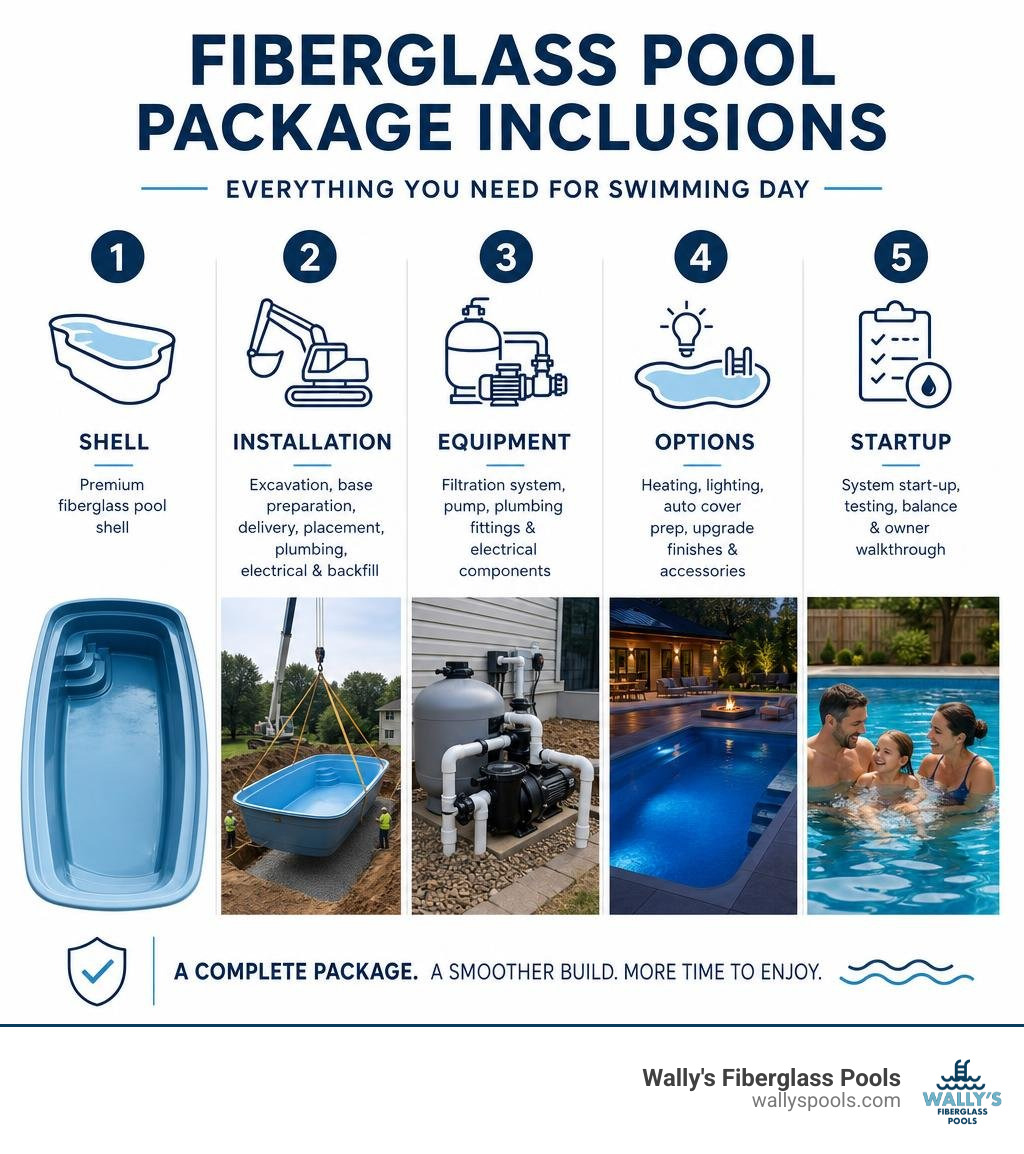
A complete fiberglass inground pool package should clearly spell out what is included before work begins. At a minimum, look for the pool shell, excavation, base preparation, delivery and placement, plumbing, filtration equipment, electrical coordination, backfill, and startup guidance. Ask separately about decking, fencing, permits, heating, covers, lighting, landscaping, and seasonal closing – these items may be optional rather than included.
For homeowners in Southeast Wisconsin and Lake Country, the right package also needs to account for local soil, yard access, drainage, grading (shaping the ground to direct runoff), permits, and freeze-thaw weather. Fiberglass pools are popular because their smooth, nonporous surface can reduce algae buildup, use less chlorine, retain heat well, and install faster than many concrete pool projects.
This guide will help you compare package levels, understand the true project investment, and identify the features that make sense for your backyard and Wisconsin swimming season. I am Wally Haines from Wally’s Pools, and we help local homeowners plan fiberglass pools built for the way they want to live outdoors.
What Comes Standard in Modern Fiberglass Inground Pool Packages?
When shopping for an inground swimming pool, the term “package” can mean vastly different things depending on the builder. Some companies offer basic drop-in kits where the homeowner is responsible for everything after the shell lands on the dirt, while turnkey packages encompass the entire build from the initial dig to swimming day.
At its core, a complete package begins with the manufacturing and safe transportation of the pool shell itself. Modern fiberglass pools are handcrafted in molds using multiple structural layers of fiberglass and resin, woven roving (woven fiberglass reinforcement), and a marine-grade gelcoat (a protective surface finish). Unlike concrete structures that are poured and cured directly in your yard over several months, a fiberglass shell arrives fully cured, factory-tested, and structurally sound.
Beyond the shell, comprehensive packages cover:
- Precision excavation: Digging the exact footprint based on manufacturer excavation plans specifying the hole’s dimensions and depths.
- Foundation prep: Installing a compacted gravel bed that will not shift or wash away.
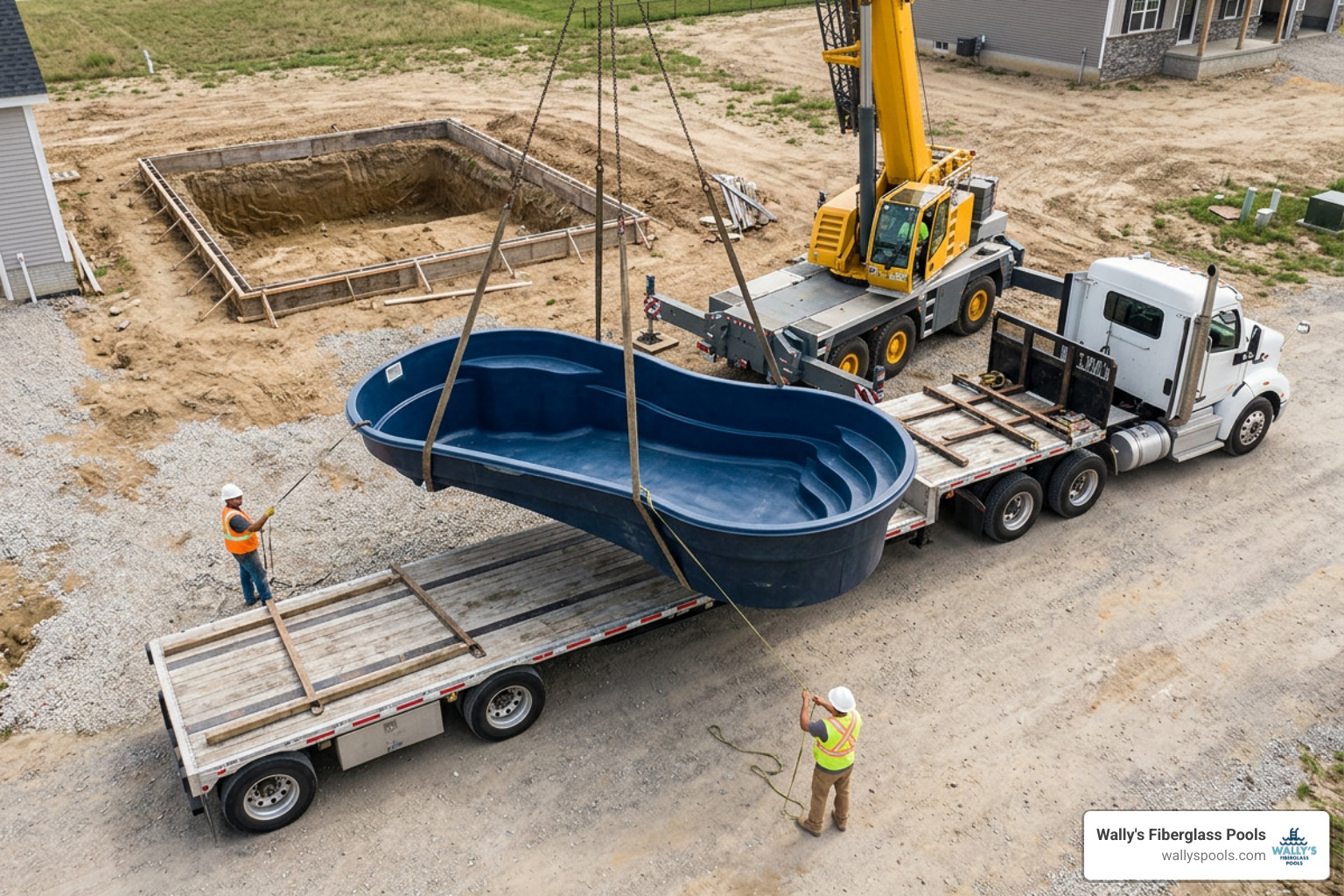
- Shell placement: Using heavy machinery or cranes to safely set the pool onto the sub-base.
- Plumbing installation: Running Schedule 40 PVC pipe (rigid plastic plumbing pipe with a standardized wall thickness), skimmers, main drains, and return fittings.
- Backfilling and leveling: Simultaneous water filling and gravel backfilling to equalize inward and outward pressure.
- Filtration equipment: Setting up the pump, filter, sanitation hardware, and pad.
Understanding these components ensures you do not encounter surprise costs halfway through construction.
Core Equipment in Turnkey Fiberglass Inground Pool Packages
The mechanical equipment bundled with your pool dictates how easy your pool will be to run. High-quality packages feature energy-efficient, commercial-grade equipment designed to handle high water volumes while keeping energy bills minimal.
Key equipment elements include:
- Variable-Speed Pumps: Modern variable-speed pumps run at lower speeds throughout the day, drawing significantly less electricity than older single-speed motors while maintaining constant circulation.
- Cartridge or High-Efficiency Sand Filters: Large-capacity cartridge filters trap microscopic debris without the need for frequent backwashing (reversing water flow through a filter to flush out trapped debris), helping conserve both water and heat.
- Structural Coping and Cantilever Forms: Coping forms the finished pool edge; cantilever forms shape concrete that overhangs that edge. These packages prepare the pool perimeter for concrete decking, pavers, or natural stone, ensuring a seamless aesthetic transition.
Choosing a professional Fiberglass Pool Installation package means your pump, plumbing lines, and circulation system are sized specifically for your shell volume, preventing premature motor burnout and dead spots in the water.
Sanitation Systems and Water Care Inclusions
Water care is an area where fiberglass truly outshines other materials. Because the smooth gelcoat surface is chemically inert and non-porous, algae cannot embed itself into the walls as it does in porous concrete plaster. As a result, fiberglass pools require roughly 30% less chlorine to keep clean compared to traditional pool surfaces.
Standard and upgraded sanitation inclusions often feature:
- Saltwater Chlorine Generators: These systems convert dissolved salt into pure chlorine automatically, delivering soft, silky water that is gentle on eyes, skin, and swimwear.
- UV Disinfection Systems: Inline UV sanitation neutralizes bacteria, viruses, and chloramines (compounds formed when chlorine reacts with contaminants such as sweat) on contact as water passes through the filtration chamber, further minimizing chemical demand.
- Automated Chemical Controllers: Smart monitoring systems that test pH and sanitizer levels in real time and dispense balancing agents as needed.
Investing in high-grade equipment upfront pays dividends in lower ongoing chemical costs and simplifies your weekly Fiberglass Pool Maintenance routine.
Why Fiberglass Pools Excel in Wisconsin Climates
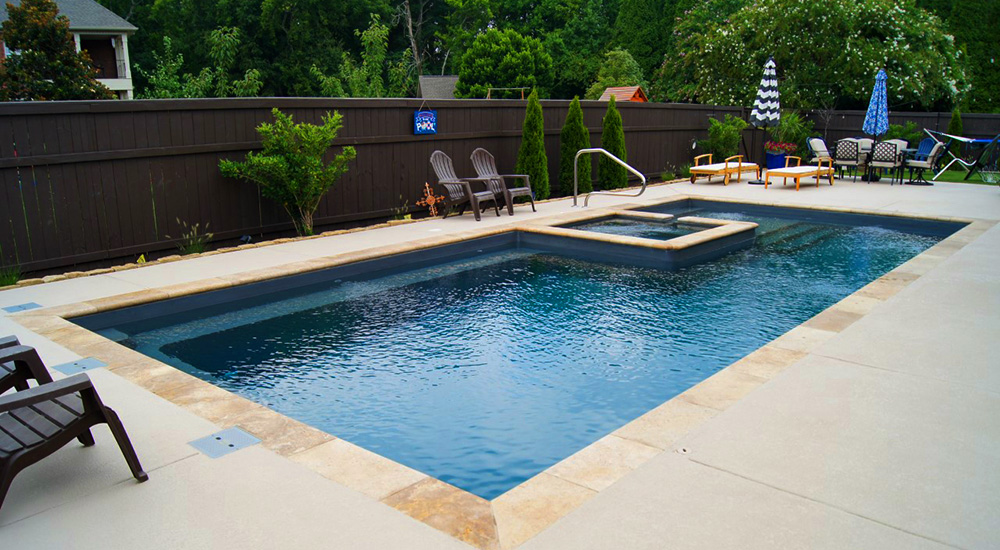
Midwestern weather is known for dramatic seasonal shifts. Between scorching July afternoons and freezing January snowstorms, backyard swimming pools in Waukesha County, Walworth County, and the Milwaukee area experience intense freeze-thaw cycles.
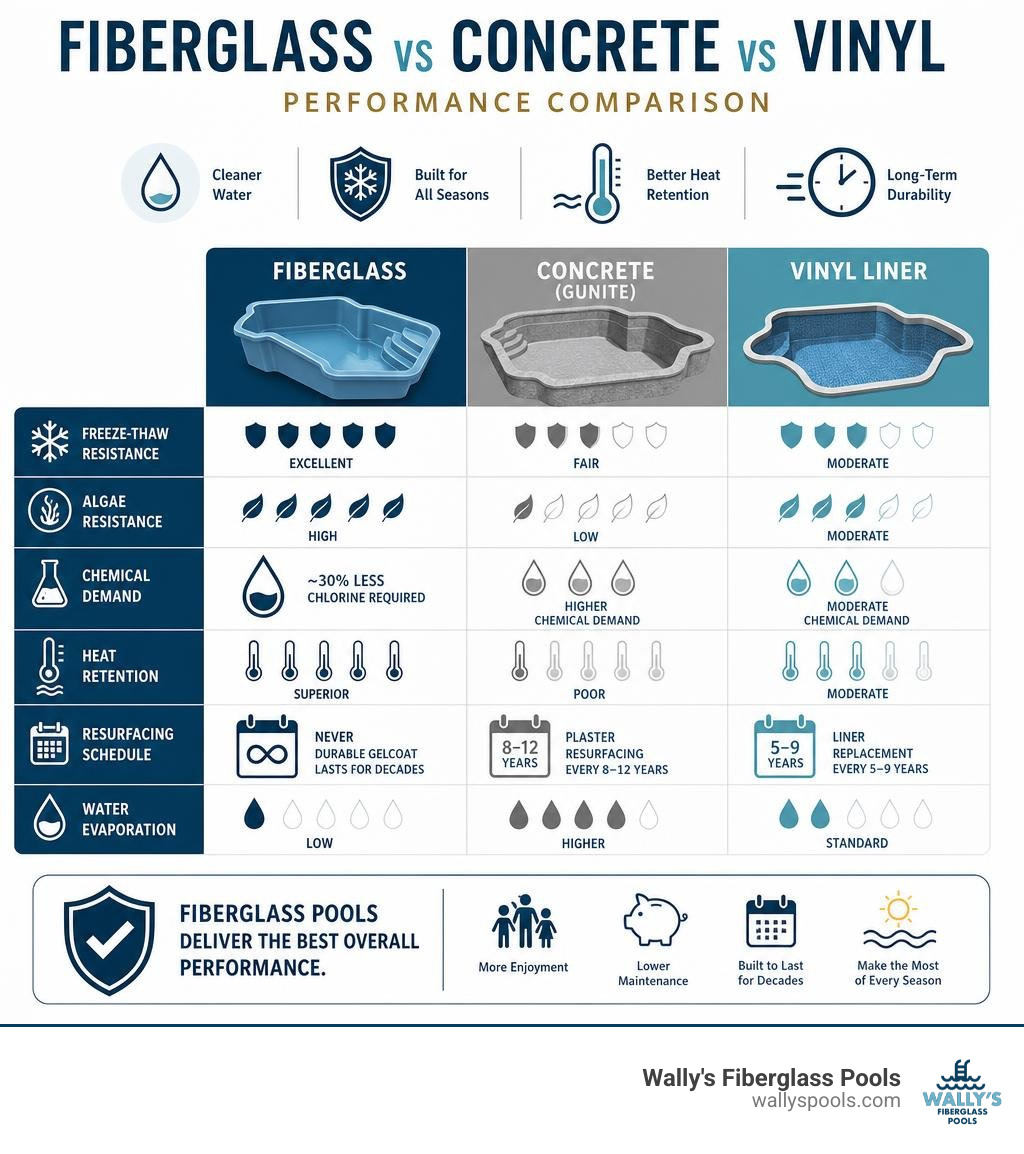
Concrete pools are rigid and prone to surface cracking or plaster spalling (flaking or chipping) when ground moisture freezes and expands around the shell. Vinyl liner pools face punctures, tears, and liner floating when heavy spring rains raise groundwater levels. Fiberglass composite pools, however, feature flexural strength (resistance to breaking under bending forces) and structural elasticity (the ability to return to their original shape after flexing). They expand and contract slightly with seasonal ground movement without cracking or suffering structural damage.
Additionally, fiberglass exhibits exceptional thermal efficiency. The composite structure acts as a natural insulator, slowing down heat transfer to the surrounding soil. When paired with an efficient heater and cover, fiberglass pools warm up faster in the spring and retain water temperature well into crisp autumn evenings.
| Feature / Consideration | Fiberglass Pools | Concrete Pools (Gunite Is Concrete Sprayed into Place) | Vinyl Liner Pools |
|---|---|---|---|
| Freeze-Thaw Resistance | Excellent (Composite flexibility accommodates soil shift) | Fair (Rigid structure prone to frost cracks/flaking) | Moderate (Liners can tear or wrinkle from frozen ground) |
| Algae Resistance | High (Smooth, non-porous gelcoat prevents rooting) | Low (Porous plaster harbors algae roots deep in walls) | Moderate (Seams and corners harbor dirt and algae) |
| Chemical Demand | ~30% Less Chlorine required | Higher chemical demand to manage water-chemistry changes as substances dissolve from the plaster | Moderate chemical demand |
| Heat Retention | Superior thermal retention; lower heating bills | Poor (Porous concrete pulls heat into surrounding soil) | Moderate heat retention |
| Resurfacing Schedule | Never (Durable gelcoat lasts for decades) | Plaster resurfacing every 8–12 years | Liner replacement every 5–9 years |
| Water Evaporation | Low overall water loss when paired with covers | Higher evaporation rate from rough, porous walls | Standard evaporation rate |
From Excavation to Swim-Ready: The Fast-Track Installation Timeline
One of the greatest advantages of fiberglass is the speed of installation. While concrete pools can disrupt your backyard for 3 to 6 months, an inground fiberglass pool is often structurally set, plumbed, and swimming-ready in approximately 2 to 4 weeks, depending on local permitting, weather, and decking choices.
Partnering with experienced Fiberglass Pool Contractors ensures that this rapid timeline is executed with laser precision, ensuring that the pool base is leveled within strict tolerances before the shell ever touches the ground.
Site Excavation, Shell Setting, and Plumbing
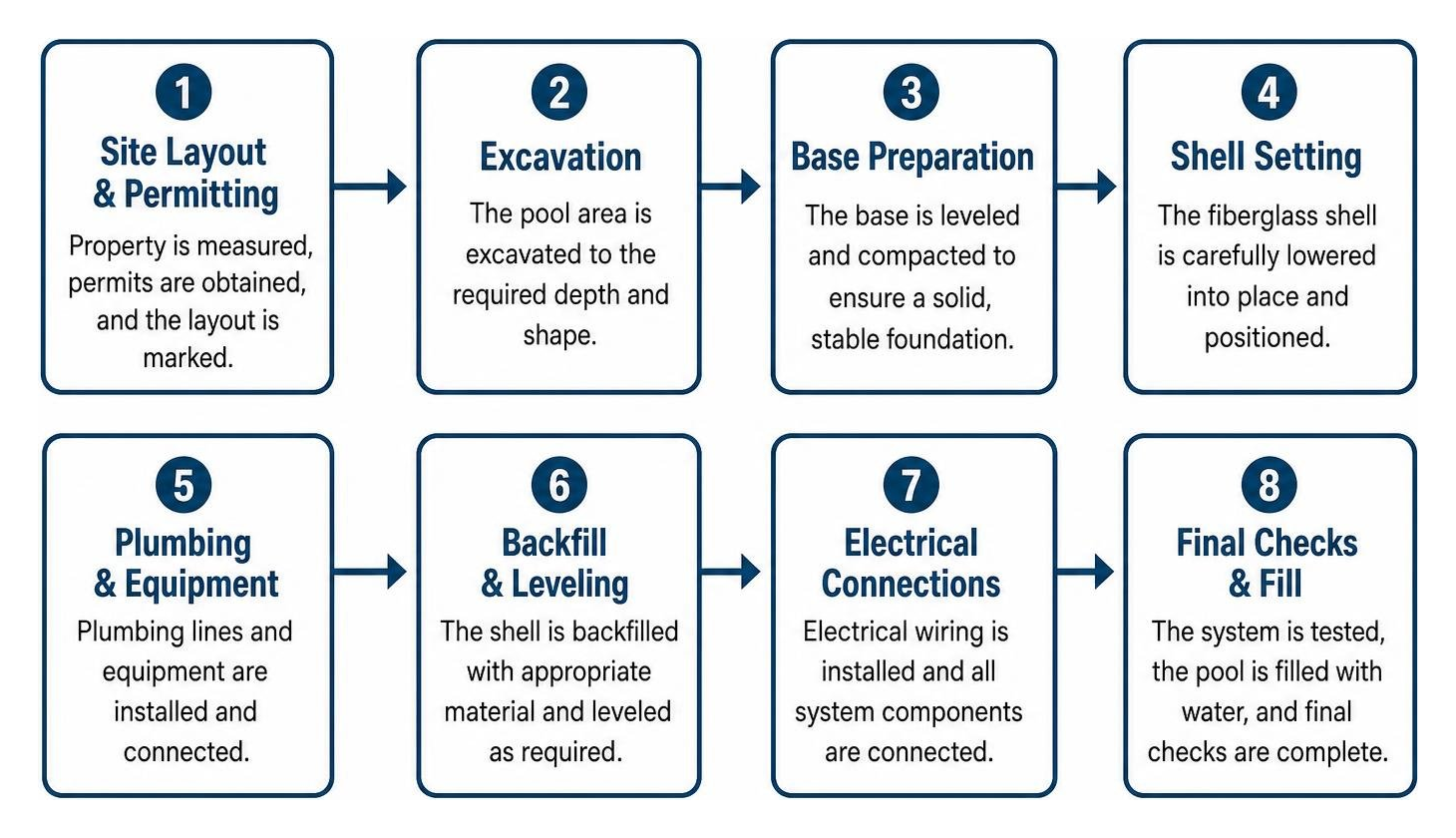
The installation process follows a tightly orchestrated, step-by-step method:
- Layout and Excavation: The dig crew stakes out the pool perimeter and excavates the earth using precision laser levels.
- Bed Preparation: A structural bed of clean, angular stone or gravel is laid and compacted to create a non-settling, free-draining foundation.
- Shell Delivery and Crane Setting: The pre-molded fiberglass shell arrives via flatbed trailer and is hoisted into position using an excavator or crane, guided into place onto the gravel base.
- Leveling and Plumbing: Technicians check the shell’s slope and level across all corners before installing rigid Schedule 40 PVC lines from the skimmers, returns, and main drains back to the equipment pad.
- Simultaneous Backfill and Fill: Clean gravel is backfilled around the exterior of the shell while water is pumped inside simultaneously. This technique equalizes inward and outward pressure, ensuring the walls remain straight and true.
Decking, Water Balancing, and Final Inspection
Once the shell is structurally anchored and the plumbing is pressure-tested:
- Electrical Bonding and Wiring: Bonding connects conductive components to reduce voltage differences around the pool. Licensed electricians bond the pool shell, steel reinforcement, and equipment to comply with National Electrical Code (NEC) standards and local Wisconsin building safety codes.
- Decking and Hardscaping: Concrete patios, stamped concrete, or stone pavers are poured or laid around the pool perimeter.
- Water Chemistry and Startup: The pool is balanced with the initial dose of startup minerals, salt, and sanitizers, and all pump schedules are programmed.
- Owner Orientation: We walk you through every aspect of operating your filtration system, cleaning gear, and winterization valves so you feel completely confident managing your new oasis.
If you ever need seasonal assistance, our dedicated Fiberglass Pool Service team handles spring openings, winter freeze-proofing, and equipment tune-ups throughout Southeast Wisconsin.
Key Factors Influencing Total Project Investment
Every backyard is unique, which means the overall investment for a pool package varies based on site conditions, property layout, and selected accessories. Understanding these variables helps you budget accurately without surprise change-orders.
Top site-specific factors that impact your final project price include:
- Yard Access: Narrow lot lines, overhead utility wires, or steep slopes may require specialized equipment or larger cranes.
- Soil Composition and Rock: Rocky terrain, heavy clay, or high water tables may necessitate additional excavation time or dewatering systems (equipment that removes water from the excavation).
- Underground Utilities: Rerouting existing gas, septic, or electric lines before excavation begins.
- Permits and Local Municipal Fees: Permit costs, applications for exceptions to zoning rules, and local stormwater management requirements across different Wisconsin municipalities.
- Fencing and Safety Barriers: Local safety codes require code-compliant safety barriers or self-latching safety fences around inground pools.
Budget Variables for Custom Fiberglass Inground Pool Packages
Beyond the base installation, customizing your pool package allows you to tailor your backyard to your family’s lifestyle.
Popular package upgrades include:
- Integrated Spas and Tanning Ledges: Built-in shallow splash pads with bubblers, umbrella holders, and adjoining hot tubs.
- Automatic Safety Covers: Track-mounted motorized covers that keep out dirt, reduce evaporation, prevent heat loss, and provide secure child safety at the touch of a button.
- Custom LED Lighting: Color-changing underwater lights that create evening ambiance and enhance safety.
- High-Efficiency Heat Pumps or Gas Heaters: Systems that extend your Wisconsin swimming season from early May through late October.
- Water Features: Sheer-descent waterfalls (fixtures that produce a smooth sheet of falling water), deck jets, and integrated rock waterfalls.
Financing Solutions and Flexible Payment Plans
An inground pool is a major investment that enhances both your quality of life and the long-term market appeal of your home. To make projects manageable, many homeowners utilize flexible financing solutions rather than paying out of pocket all at once.
Common financing routes include:
- Unsecured Swimming Pool Loans: Specialized pool lenders offer fixed-rate, unsecured loans with flexible terms up to 15–20 years and zero home equity requirements.
- Home Equity Lines of Credit (HELOC): Utilizing your home’s built-up equity often provides lower interest rates and tax-deductible interest options (consult your tax advisor).
- Milestone-Based Payment Schedules: Professional pool builders structure payments in clear phases (e.g., contract signing, excavation, shell delivery, decking completion) so you only pay as real progress is made.
Frequently Asked Questions About Inground Fiberglass Pools
How long does a typical fiberglass pool installation take from start to finish?
From the day excavation begins, a fiberglass pool shell is usually set in the ground, filled with water, and plumbed within 3 to 5 business days. Completing the surrounding concrete decking, electrical hookups, fencing, and final landscaping inspections typically brings the total timeline to 2 to 4 weeks. In contrast, poured concrete pools regularly take between 3 and 6 months to complete.
Why do fiberglass pool shells require fewer chemicals?
Fiberglass pool shells are manufactured with an ultra-smooth, non-porous gelcoat finish. Unlike concrete plaster, which is porous and full of microscopic crevices where algae can root itself, algae cannot easily stick to fiberglass. Furthermore, fiberglass is chemically inert, meaning it will not react with your pool water to raise pH levels like cement-based materials do. This non-porous design reduces chemical consumption by approximately 30%, saving money and reducing time spent testing and adding chemicals.
How well do fiberglass pools handle Wisconsin freeze-thaw cycles?
Fiberglass pools perform exceptionally well in harsh winter climates. The composite material features high tensile strength (resistance to breaking under pulling forces) and natural flexural elasticity (the ability to bend and return to its original shape), allowing the pool to expand and contract with the surrounding soil during freezing and thawing cycles without cracking. When paired with a non-settling gravel backfill that drains water away from the walls, fiberglass pool shells easily withstand frozen ground pressure throughout cold Wisconsin winters.
Conclusion
Investing in an inground pool transforms your backyard into a private retreat for family gatherings, weekend relaxation, and summer memories. By selecting a complete, well-engineered package, you eliminate the guesswork, protect your budget, and ensure that every element—from the structural shell to the high-efficiency filtration system—is built to last.
For families across Sussex, Waukesha County, Lake Geneva, and the broader Milwaukee metropolitan area, Wally’s Fiberglass Pools is your Sussex, Wisconsin-based fiberglass pool specialist. We guide you through every step of the planning, excavation, installation, and seasonal care process, creating a durable, low-maintenance outdoor living space engineered specifically for Wisconsin weather. Contact us today to explore custom pool shapes, view package options, and get a detailed quote for your backyard.