Fiberglass Pool Chalking Explained Without the Pool Jargon
Why Fiberglass Pool Chalking Needs Attention
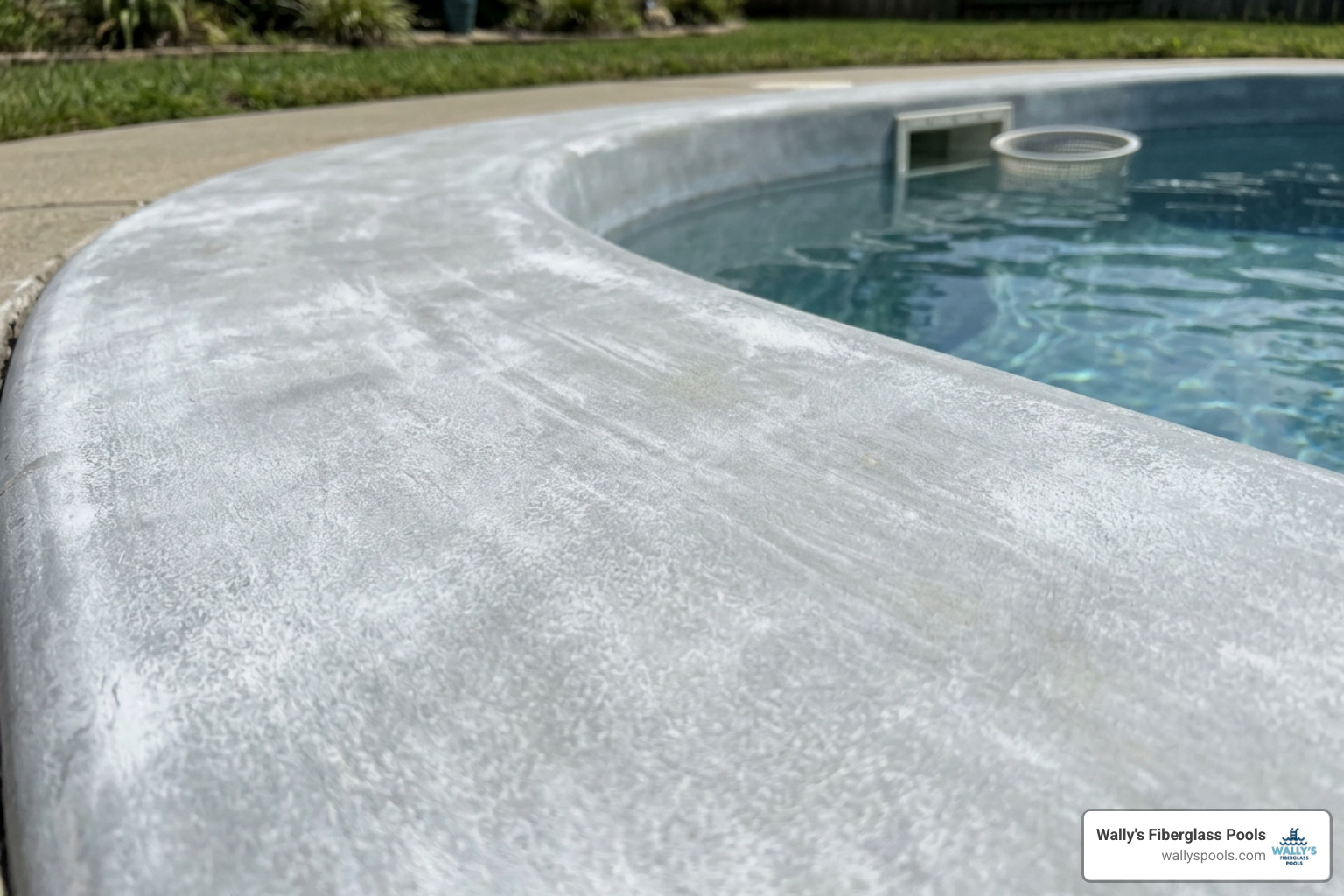
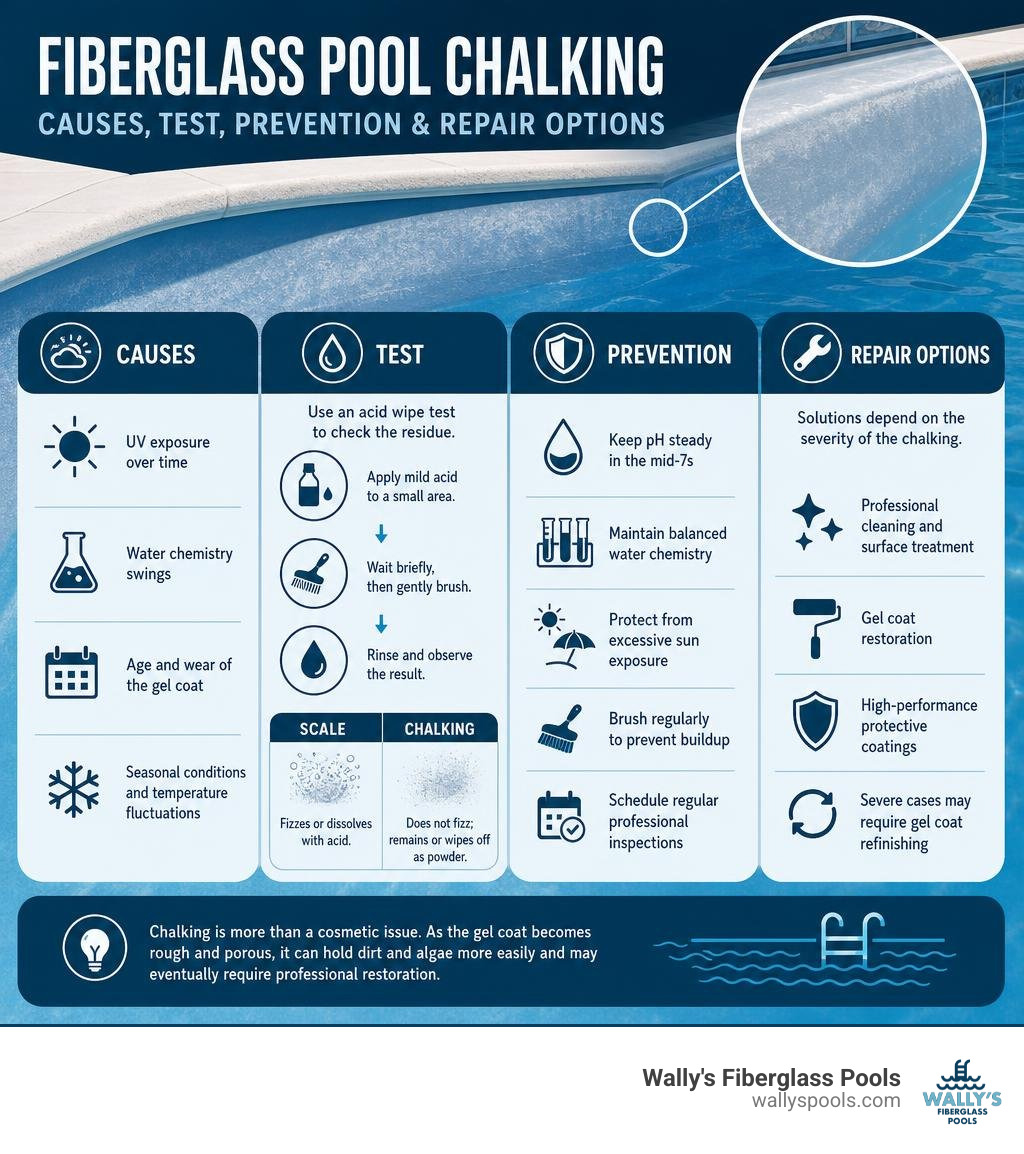
Fiberglass pool chalking is a dull white haze or powdery residue that appears when the pool’s gel coat—the smooth protective resin finish over the fiberglass—begins to break down or minerals bond within it. It can look like calcium scale, but the fix is very different: scale usually bubbles or dissolves during a careful acid wipe test, while true chalking typically does not.
For Wisconsin pool owners, the best first steps are simple:
- Test pH, chlorine, total alkalinity, and calcium hardness.
- Keep pH steady in the mid-7s and avoid prolonged high-chlorine or high-pH conditions.
- Have a pool professional inspect stubborn white haze before using acid, paint, or abrasive cleaning tools.
Chalking is more than a cosmetic issue. As the smooth gel-coat finish becomes rough and porous, it can hold dirt and algae more easily and may eventually require professional restoration. Sun exposure, age, water chemistry swings, and seasonal conditions in Southeast Wisconsin can all add stress to the surface.
I’m Wally Haines from Wally’s Pools, a Sussex, Wisconsin-based fiberglass pool specialist, and this guide will help Lake Country and Southeast Wisconsin homeowners identify chalking early and protect their fiberglass pool’s finish.
What Is Fiberglass Pool Chalking and How Does It Form?
If you run your hand along your pool wall and pull back fingers coated in a milky, powdery residue, you are looking at classic pool chalking. The smooth, glossy gelcoat layer applied during manufacturing has lost its density and integrity. Instead of reflecting sunlight through crystal-clear water, the surface turns hazy, dull, and rough—much like fine sandpaper.
In community discussions on pool chalking symptoms, homeowners often describe waking up to cloudy water after brushing the walls, or noticing a cloudy white plume trailing behind their automatic vacuum. This can happen as the gelcoat’s outermost layer breaks down and releases tiny particles damaged by chemical reactions with oxygen or oxidizing chemicals into the water.
Gelcoats are resin coatings that harden permanently during manufacturing, forming a protective, non-porous finish over structural fiberglass. However, continuous exposure to harsh sunlight, strong sanitizers, and shifting water balance can cause oxidation (chemical reactions involving oxygen or oxidizing chemicals) and hydrolysis (chemical breakdown involving water). Over time, these reactions can break apart the bonds in the resin, leaving the surface porous, faded, and chalky.
Differentiating Chalking From Calcium Scale
Because both conditions create an unsightly white film, chalking is frequently misdiagnosed as calcium scale (calcium carbonate). Treating chalking as scale usually leads to frustrating chemical overuse and surface damage.
To tell them apart, perform a simple acid wipe test:
- Put on protective gloves and safety glasses.
- Apply a small amount of diluted muriatic acid or vinegar to a clean rag.
- Gently rub a hidden, hazy section of the pool wall just above or below the waterline.
- Observe the chemical reaction.
If the white film fizzes, bubbles (effervesces), and dissolves, you are dealing with standard calcium carbonate scale. If the acid has zero reaction and the white haze remains unchanged, the gelcoat is chalking.
LSI, or Langelier Saturation Index, estimates whether water tends to form calcium carbonate scale or dissolve it. Mineral precipitation means dissolved minerals form solid deposits. Chelation uses a treatment that binds dissolved mineral ions.
| Characteristic | Fiberglass Pool Chalking | Calcium Carbonate Scale |
|---|---|---|
| Primary Root Cause | Gelcoat breakdown & calcium oxide bonding | Mineral precipitation from hard water / high LSI |
| Tactile Texture | Powdery, dusty, feels like fine grit | Rough, crusty, crystalline sandpaper |
| Acid Wipe Test | No reaction (will not fizz or dissolve) | Fizzes vigorously and dissolves quickly |
| Location on Shell | Broad flat walls, floor areas, sunny slopes | Waterline, spillways, rough corners, tile lines |
| Standard Solution | Chelation, LSI balancing, or resurfacing | Lowering pH/LSI, scale removers, gentle brushing |
The Chemistry Behind Fiberglass Pool Chalking
For decades, the pool industry assumed all chalking was simple resin breakdown from age. However, Orenda research on calcium oxide binding in gelcoat uncovered a fascinating chemical reaction happening inside the material itself.
During manufacturing, fiberglass gelcoat is sprayed onto a polished mold. As it cures, crosslinking polymerization—chemical bonds forming between polymer chains—locks the molecules into a solid network. The outer edges (like step curves and bench radii) compress tightly, creating a high crosslink density, meaning more connections within that network. The broad, flat floor and wall sections often end up with slightly fewer connections.
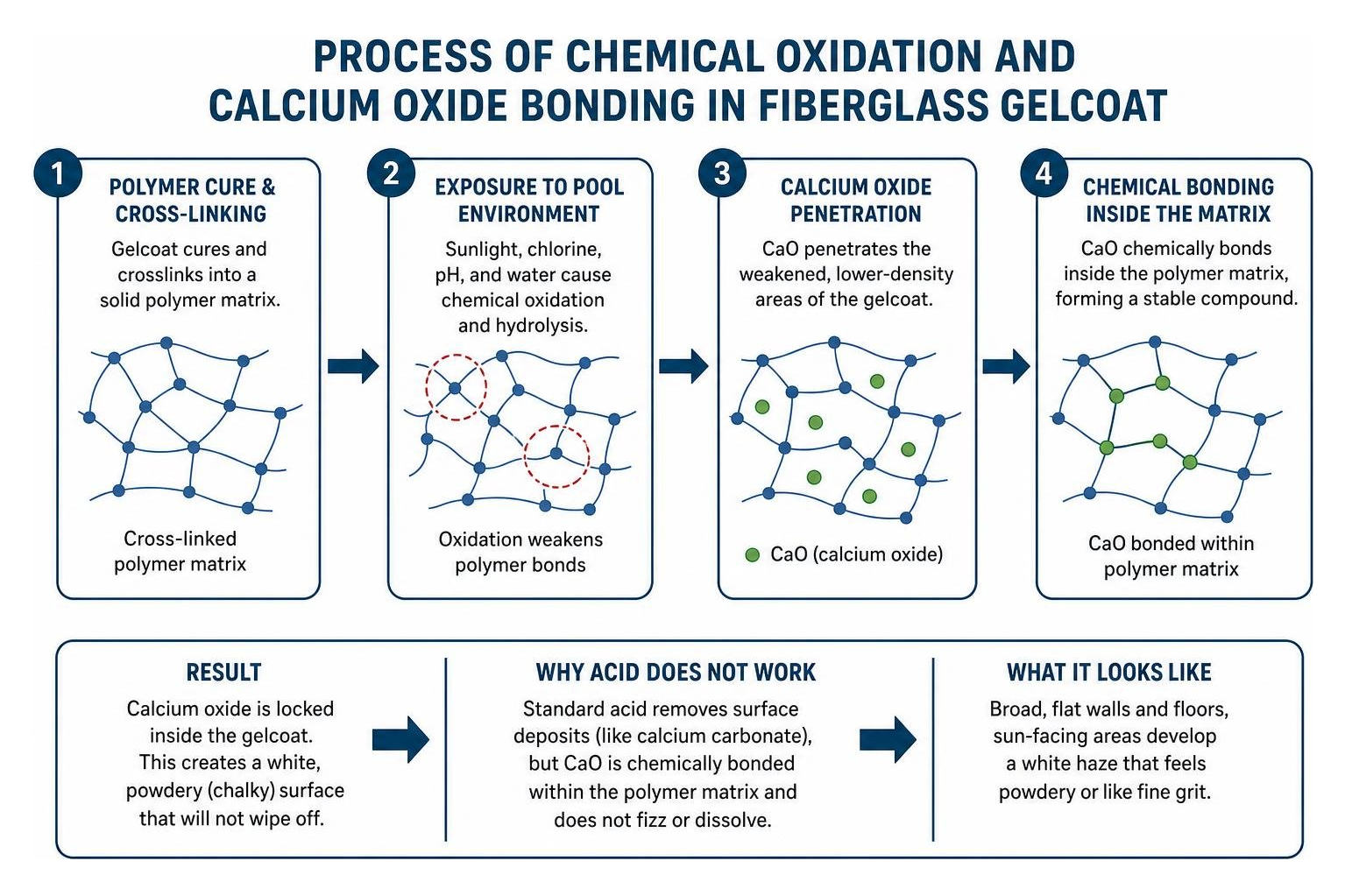
When pool water contains unchelated calcium hardness (dissolved calcium not bound by a chelating treatment) alongside elevated pH and chlorine levels, calcium oxide ($\text{CaO}$) can penetrate these lower-density areas. Rather than sitting on top of the pool surface as removable scale, the calcium oxide chemically bonds inside the resin’s molecular network. This internal bonding explains why standard descaling chemicals and muriatic acid washes may fail to wipe the white haze away.
Primary Causes and Triggers of Surface Degradation
Understanding what accelerates chalking helps you safeguard your pool shell against early wear.
Water Chemistry Imbalances and High pH
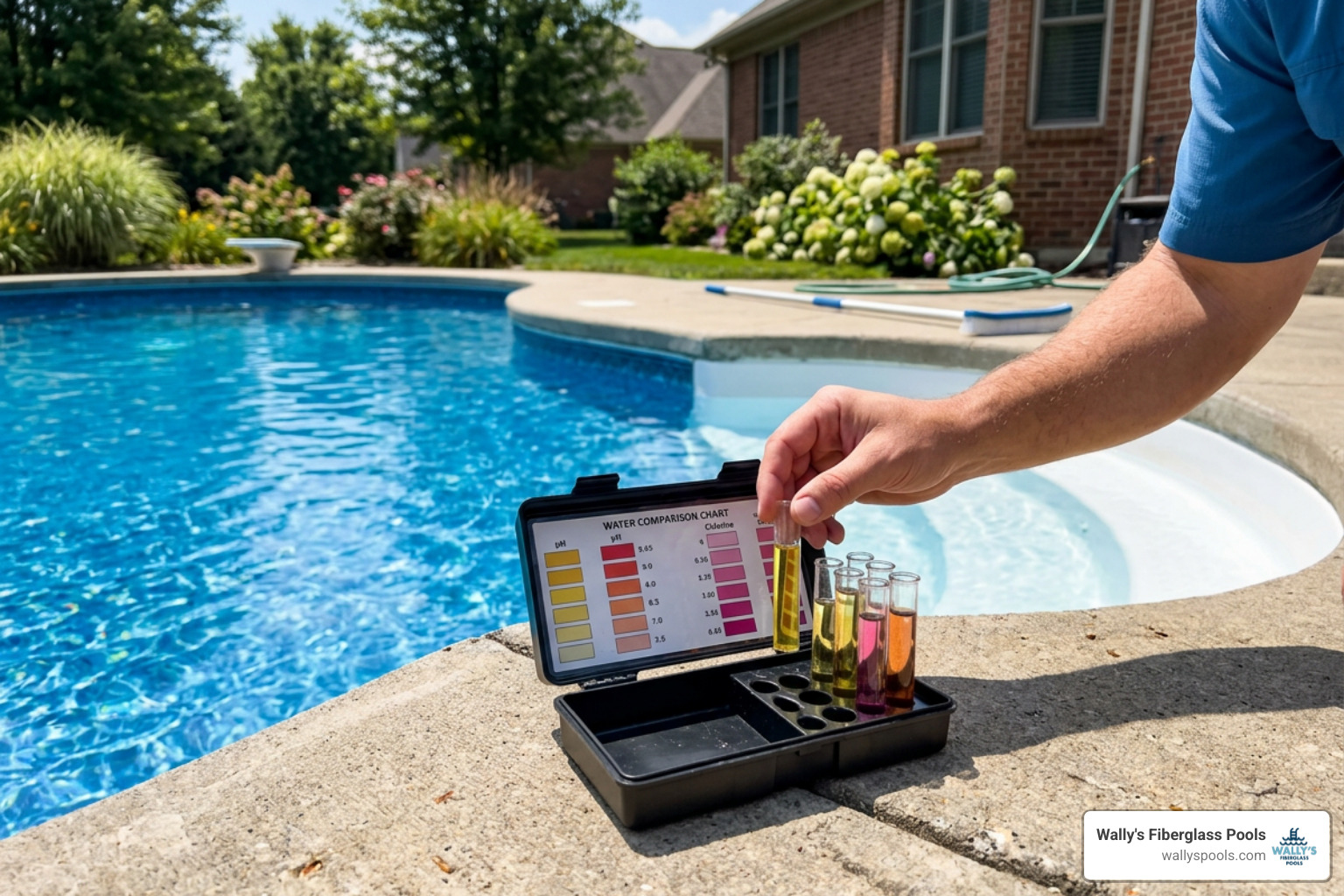
Water chemistry is your pool’s first line of defense. When water parameters drift out of range, the gelcoat bears the brunt of the stress:
- Elevated pH & Total Alkalinity: High pH (above 7.6) and high total alkalinity drive the Langelier Saturation Index (LSI) upward, increasing the tendency for calcium carbonate scale to form. Saltwater chlorine generators can contribute to rising pH, making regular monitoring essential.
- Unchelated Calcium Hardness: Laboratory studies report chalking in water samples exceeding 120 ppm (parts per million) calcium hardness when no sequestering or chelating treatment is present to bind dissolved minerals and help keep them from depositing. In those tests, water with hardness levels as high as 1,000 ppm showed no chalk formation when calcium was properly chelated.
- Excessive Free Chlorine: Free chlorine—the chlorine available to sanitize the water—kept consistently above 3 to 4 ppm without adequate cyanuric acid (CYA), a stabilizer that slows chlorine loss from sunlight, can accelerate chemical damage, bleaching the pigment and breaking apart the resin’s molecular chains.
- Aggressive, Low-LSI Water: Overly soft water (calcium hardness under 150 ppm) paired with low pH can produce a low LSI. This means the water tends to dissolve calcium carbonate rather than form scale; it does not by itself establish that the gelcoat is being damaged. Keep water chemistry within your pool manufacturer’s recommended ranges.
Environmental Exposure and Sunlight
Solar ultraviolet (UV) radiation breaks down organic polymers in the clear and pigmented layers of your pool shell. Just like an unshaded boat hull or car clearcoat oxidizes under the summer sun, fiberglass pool walls experience steady solar oxidation.
In Lake Country and across Southeast Wisconsin, thermal cycling adds another layer of mechanical stress. Our dramatic seasonal shifts—from humid 90°F summer days to freezing winter lows—cause microscopic expansion and contraction in the pool shell. This thermal movement weakens degraded polymer chains, allowing moisture and minerals to penetrate deeper into the finish.
Maintenance Practices and Surface Protection
A disciplined care routine prevents chalking, protects your gelcoat, and avoids unnecessary repairs.
Proven Strategies to Prevent Fiberglass Pool Chalking
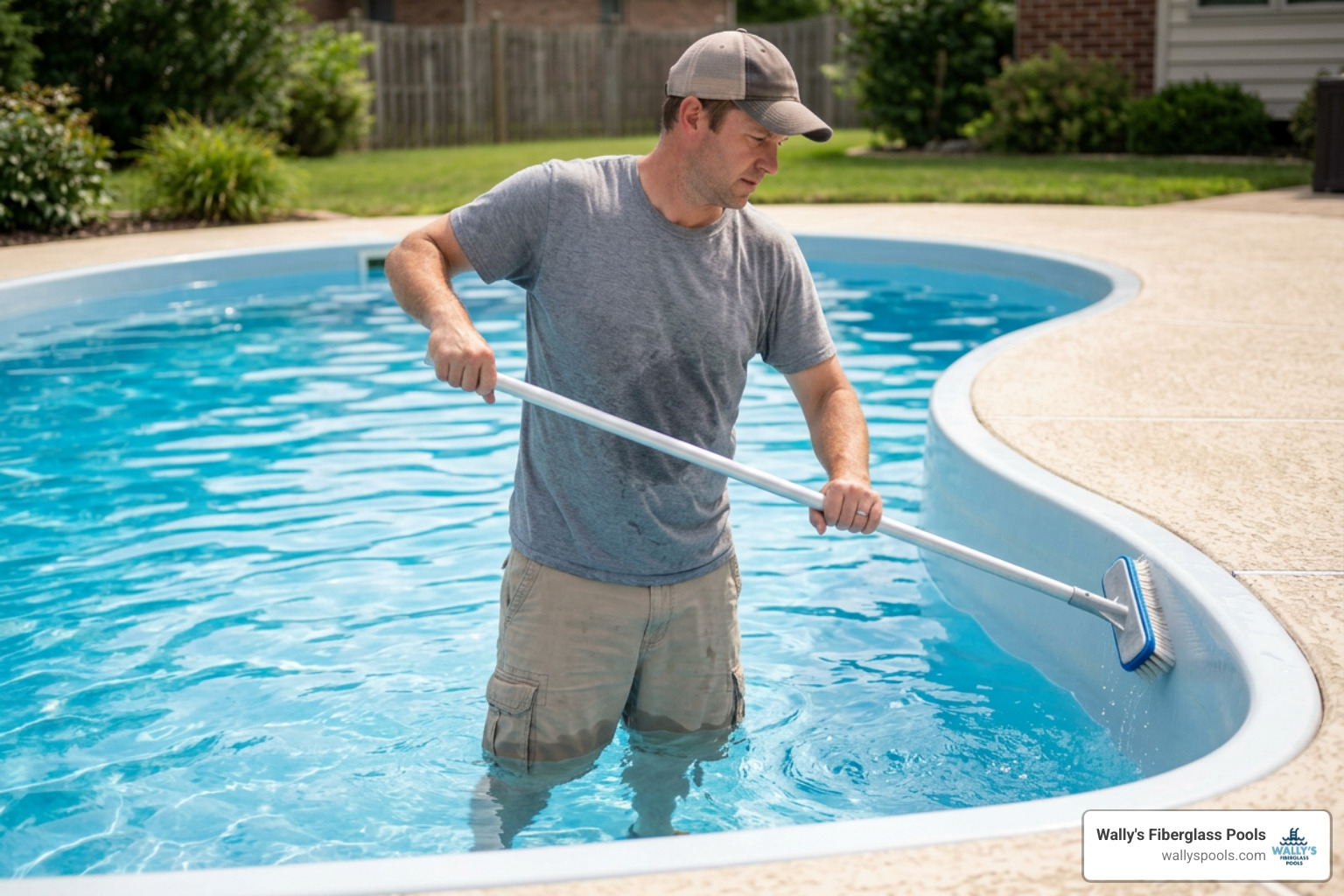
Maintaining pristine water chemistry doesn’t require a chemistry degree—just regular habits:
- Test Water Weekly: Test your pool water twice a week during the swimming season. Keep your pH between 7.4 and 7.6, total alkalinity between 80 and 120 ppm, and free chlorine between 1.0 and 3.0 ppm.
- Dose Chelating & Sequestering Agents: Adding a high-grade chelating agent (such as SC-1000) binds free calcium ions in the water. Chelation keeps calcium suspended so it cannot bond with the gelcoat polymers.
- Track the LSI (Langelier Saturation Index): Balance your water according to the LSI rather than chasing individual numbers in isolation. Keeping your LSI between -0.30 and +0.30 prevents both corrosive etching and mineral bonding.
- Use Soft-Bristle Brushes: Brush walls regularly using a soft nylon pool brush. Never use stainless steel wire algae brushes or harsh abrasive pads, which scratch the gelcoat and accelerate chalking.
- Invest in routine fiberglass pool maintenance: Consistent, professional water testing and seasonal chemical balancing keep your equipment and pool shell protected year-round.
- Winterize with Balanced Water: When closing your pool for a Wisconsin winter, avoid shocking the pool with massive doses of chlorine right before covering it. Balance your calcium, pH, and alkalinity, and add a winter dose of sequestering agent to shield the shell through months of stagnant contact. For complete seasonal care, consider our scheduled fiberglass pool service.
Why Traditional Quick Fixes Fail
When faced with a cloudy, chalking pool wall, homeowners are often tempted by quick DIY fixes. Unfortunately, these usually make the condition worse:
- Standard Pool Paint: Applying epoxy or rubber-based pool paint over a chalked pool rarely lasts. The degraded gelcoat underneath prevents proper adhesion. Within weeks or months, the paint can blister, bubble, and peel away in large sheets.
- Aggressive Acid Washes: While acid washing removes superficial calcium carbonate scale on concrete pools, it can damage fiberglass. Harsh muriatic acid treatment can damage the gelcoat’s outer layer without removing minerals bonded inside the resin, leaving the finish more vulnerable to further deterioration.
- Heavy Abrasive Buffing: Lightly polishing a lightly oxidized pool with marine-grade compound can provide short-term cosmetic improvement. However, aggressive machine polishing with abrasive compound removes material from the remaining protective finish and can shorten its service life.
Restoration Options and Long-Term Surface Repairs
When chalking progresses past the point of chemical chelation and maintenance corrections, permanent surface restoration is necessary.
- Professional Polishing & Chemical Rebalancing: For mild, early-stage chalking, a technician can perform a controlled drain, light mechanical polish using specialized non-abrasive pads, and apply a restorative sealing compound. When paired with adjusted calcium and chelation levels upon refilling, this can extend the gelcoat’s service life.
- High-Performance Thermal Polymer Coatings: Modern polymer finishes (such as polyFIBRO) melt and bond directly to prepared fiberglass. These coatings create a smooth, non-porous, chemical-resistant barrier. Ask the installer about the selected coating’s resistance to chalking and sunlight-related deterioration, as well as its maintenance and warranty requirements.
- Complete Gelcoat Resurfacing: For heavily weathered shells, a full resurfacing involves draining the pool, grinding away degraded resin, applying primer to the underlying fiberglass surface, and applying new industrial gelcoat layers.
Resurfacing a typical 10,000-gallon pool generally costs around $7,000 to $12,000 depending on pool dimensions, structural condition, and selected finish. When dealing with complex repairs, structural cracks, or gelcoat failure, relying on professional fiberglass pool repair ensures the shell is properly prepped and sealed to handle Wisconsin’s freeze-thaw cycles for decades to come.
Frequently Asked Questions About Chalky Fiberglass Pools
Is it safe to swim in a chalky fiberglass pool?
Swimming in a mildly chalky pool is generally safe, but heavily chalking walls indicate underlying chemical imbalances or gelcoat degradation. Loose chalk particles can cause mild skin, eye, or respiratory irritation, clog filter cartridges, and reduce water clarity. If water visibility is compromised, resolve the water chemistry and clean the filtration system before swimming.
Can acid washing remove chalking permanently?
No. Acid washing dissolves calcium carbonate scale, but it cannot dissolve calcium oxide bonded inside the gelcoat matrix. In fact, applying harsh acid strips the remaining dense outer finish, accelerating future chalking and permanently damaging the pool shell.
How much does it cost to resurface a chalked fiberglass pool?
Resurfacing a standard residential fiberglass pool typically ranges from $7,000 to $12,000. Costs vary based on overall gallon capacity, accessibility for equipment, the severity of gelcoat degradation, and whether you choose a standard gelcoat recoating or a long-lasting thermal polymer finish.
Conclusion
A chalky fiberglass pool is a clear signal that your pool’s gelcoat is under oxidative stress or interacting with unchelated minerals in the water. By running a quick acid wipe test, you can pinpoint whether you are dealing with ordinary calcium scale or true gelcoat chalking. Proactive water care—tracking the LSI, keeping pH steady, adding chelating agents, and avoiding harsh abrasive scrubbers—will preserve your pool’s smooth, vibrant finish for years.
If you live in Waukesha County, Lake Country, or anywhere across Southeast Wisconsin and your pool walls feel rough, dusty, or faded, we are here to help. Contact the team at Wally’s Fiberglass Pools for expert water analysis, seasonal maintenance, equipment care, and professional surface restoration tailored to Wisconsin backyards.