
How to Fix a Sinking Fiberglass Pool
Primary Causes of a Fiberglass Pool Sinking in Clay Soils
To fix and stabilize a sinking fiberglass pool, a professional must determine whether it is settling downward or shifting sideways, address active plumbing leaks or surface drainage issues, and assess how to level the structure. Repair options may include engineered helical piers (steel foundation supports with spiral plates) beneath the perimeter bond beam (the reinforced concrete beam around the pool). Low-pressure void grouting (injecting material at low pressure to fill gaps beneath the shell) or foam injection may also be considered beneath settled floors, depending on the shell and site conditions.
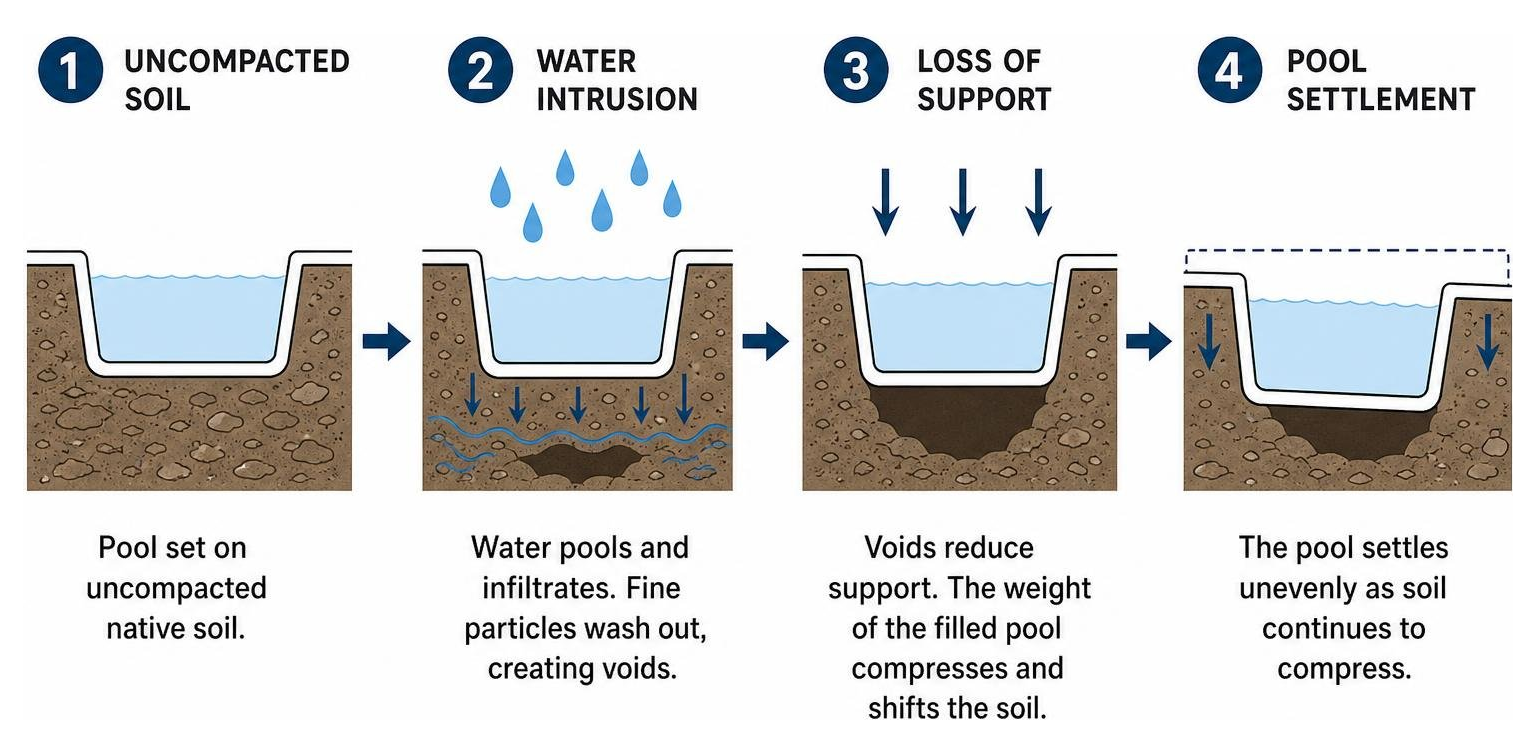
When an inground fiberglass pool begins to settle unevenly, the shell itself is not necessarily the root issue. Composite shells are designed for tensile strength (resistance to pulling forces) and flexibility. Movement can instead stem from problems in the ground beneath: soils that were not properly compacted before placement, or sub-base materials (the prepared support materials beneath the pool shell) that have become compromised by water intrusion, poor grading, or plumbing leaks.
Fiberglass Installation Problems and Solutions highlights the importance of installation practices. Selection of backfill—the material placed around the pool shell—and preparation of the excavation base are important to long-term stability. If an installer sets a shell on loose fill or uses fine sand where water can wash out the particles, gaps can develop beneath the floor.
Expansive Soil Dynamics and Poor Compaction
Throughout Waukesha County, Walworth County, and the broader Milwaukee metropolitan area, native soils contain dense pockets of expansive clay. Expansive clay acts like a dense sponge: it swells significantly when saturated with spring rains and shrinks dramatically during dry summer spells.
Wisconsin winters and seasonal freeze-thaw cycles can cause soil to expand as subsurface moisture freezes, pushing against the pool structure, and then settle unevenly as the ground thaws. Poorly prepared soil beneath the pool can also weaken its support. A geotextile separation barrier (a permeable fabric layer that keeps soil and gravel separate) may be part of the site design where gravel is placed over native clay. Pool water weighs roughly 8.34 pounds per gallon; if the ground cannot support the filled pool’s weight, it can compress unevenly beneath the deep end and allow the shell to sink.
Water Infiltration, Sprinklers, and Plumbing Settlement
Water outside the pool is just as influential as the water inside it. Uncontrolled surface runoff, misdirected lawn sprinkler zones, malfunctioning roof downspouts, or slow subsurface plumbing leaks saturate the backfill zone.
When backfill becomes waterlogged, it can lose friction and bearing capacity (its ability to support weight). Water around the shell also creates hydrostatic pressure (pressure exerted by water) against the sidewalls, while moving water can erode fine bedding beneath tanning ledges and deep ends. Settling backfill can pull down on PVC plumbing lines, creating hidden cracks that leak water beneath the pool and worsen soil erosion. Routine seasonal checks and professional Fiberglass pool service can help detect plumbing pressure loss early, before further damage develops.
How to Diagnose Vertical Settlement vs. Lateral Movement
Identifying movement early allows you to take corrective action before a minor level discrepancy turns into structural shell cracking or complete coping separation.
A pool that is settling vertically sinks straight down into the sub-base, while lateral movement involves shifting, sliding, or tilting along a slope. Knowing which type of movement is occurring dictates the engineering approach required to stabilize the structure.
| Diagnostic Indicator | Vertical Settlement | Lateral Movement (Shifting/Tilting) |
|---|---|---|
| Primary Direction | Direct downward drop into the ground | Sideways rotation, sliding, or downhill drift |
| Waterline Pattern | Uniform drop across an entire end (e.g., deep end sinks 1.25″) | Tilted waterline across diagonal corners or single sidewall |
| Deck & Coping Impact | Vertical stepping cracks at expansion joints | Shearing cracks, lateral coping gaps, or deck pushing away |
| Common Site Conditions | Uncompacted excavation floor or localized plumbing washouts | Sloped backyards, hillside creep, or inadequate retaining support |
| Structural Remedy | Helical foundation piers with vertical lift brackets | Helical tieback anchors (spiral steel anchors that resist sideways movement) combined with reinforced grade beams (steel-reinforced concrete support beams) |
Is Your Fiberglass Pool Sinking? Key Warning Signs
You do not need specialized construction equipment to spot the initial warning signs of pool movement. Spending a few minutes inspecting your pool perimeter each week can save thousands of dollars:
- Waterline Discrepancies: A variance where the water sits noticeably higher against the tile or shell on one side compared to the other. A difference in the waterline of about 1.25 inches between the shallow end and the deep end is a clear signal that differential settlement is actively taking place.
- Expansion Joint Separation: Look at the joints separating your pool coping from the concrete deck. Widening gaps, sheared silicone sealant, or vertical offsets between slabs indicate that the pool and deck are moving independently.
- Hollow Sounds Under the Floor: When walking across the shallow ledge or deep-end floor, tap gently with your foot. A hollow sound or trampoline-like flex indicates that the bedding material beneath the fiberglass has washed away, leaving the shell suspended over an air void.
- Skimmer and Return Displacement: Skimmer boxes cracking away from the concrete deck or return fittings tilting downward indicate that settling backfill is dragging the plumbing and pool perimeter down.
Evaluating Vertical Drop Versus Lateral Shift
Understanding why the pool is moving helps avoid a misdiagnosed repair. Vertical drop can occur when the downward dead load—the weight of the shell and the water it holds—exceeds the bearing capacity of the soil directly below it.
Lateral shift happens when horizontal soil pressure on one side of the pool exceeds the structural resistance of the shell and bond beam. This is especially prevalent in Lake Country properties built on rolling hills or waterfront gradients. When lateral movement occurs, the entire pool shell creeps downslope, causing deck joints on the uphill side to pull apart while buckling the coping on the downhill side.
Proven Structural Repair Methods and Estimated Costs
Attempting a DIY fix on a moving pool structure can compound the damage. Proper stabilization requires a professional assessment of the soil and foundation. Where deeper support is needed, professional soil and foundation repair methods are designed to transfer the pool’s weight to stable layers of soil or rock underground.
When homeowners reach out for dedicated Fiberglass pool repair, our diagnostic process evaluates whether the shell requires void filling, soil stabilization, or structural underpinning (adding foundation support beneath the pool).
Piering Systems, Anchors, and Grade Beam Reconstruction
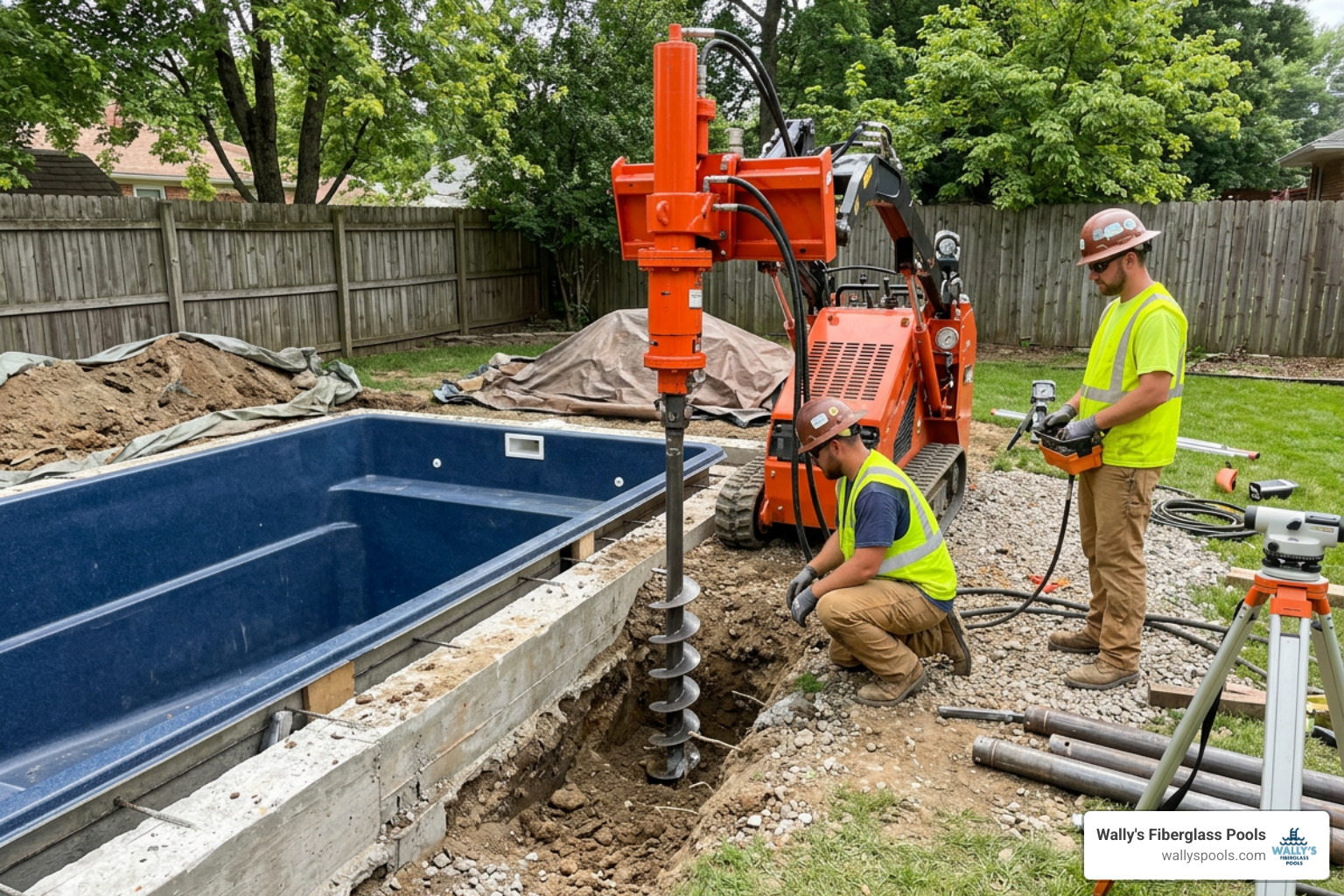
Engineered helical piers are one option for stabilizing vertical settlement where the pool structure and soil conditions allow their use. These high-strength steel shafts have spiral steel plates and are rotated into the ground with hydraulic equipment to reach suitable load-bearing soil layers. The support depth and design depend on the site assessment.
To anchor the pool:
- Excavation crews expose the structural concrete bond beam or carefully access support points beneath the pool’s perimeter.
- Heavy-duty foundation brackets are secured beneath the reinforced beam.
- Hydraulic jacks level and stabilize the structure, locking the pool at its proper elevation.
- For lateral movement on slopes, helical tieback anchors are driven horizontally into the hillside to tie the pool back into stable earth.
- In severe instances, a damaged section of the grade beam is cut away, reinforced with a steel rebar cage, and repoured using high-strength structural concrete to restore rigid perimeter support.
Repair Cost Estimates and Deep End Alternatives
Repair costs for addressing a settling fiberglass pool vary widely based on backyard access for excavation equipment, the severity of the drop, soil mechanics, and whether the surrounding concrete pool deck must be removed and replaced.
- Minor Void Grouting and Plumbing Correction: $3,500 – $8,000
- Helical Pier Underpinning and Structural Leveling: $12,000 – $22,000
- Complete Grade Beam Reconstruction with Deck Replacement: $20,000 – $35,000+
Some homeowners wonder if filling in the deep end with gravel, sand, or concrete will stop a sinking pool by reducing water volume. This is an ineffective alternative that often causes catastrophic failure. In one documented case, a homeowner spent $5,000 attempting surface crack repairs and washing sand underneath a settling deep end, only to have the deep end continue sinking, resulting in a severe structural crack across the center of the pool shell. Adding solid fill adds thousands of pounds of dead load weight without addressing the compromised sub-soil below, accelerating vertical settlement while destroying the pool’s functional design.
Solutions for a Fiberglass Pool Sinking on Sloped Terrain
When a pool settles on a sloped lot, structural underpinning must be paired with comprehensive site drainage remediation. Water flowing down from higher elevations must be intercepted before it ever touches the pool backfill zone. Installing deep French drains, solid PVC perimeter collection lines, and engineered retaining walls with gravity-fed drainage outlets relieves the hydrostatic and lateral soil pressure pushing against the pool shell, ensuring the piers remain stable for decades.
Legal Recourse, Warranties, and Choosing Qualified Contractors
Discovering that a pool installed only one or two seasons ago is sinking is understandably stressful. Knowing your consumer rights, warranty coverage, and how to select a true structural specialist is essential for protecting your backyard investment.
Warranty Protection and Legal Options for Recent Installs
If your pool was recently installed and is experiencing settlement, review your original installation contract and manufacturer documentation immediately:
- Manufacturer Shell Warranty: Fiberglass pool manufacturers provide structural warranties (often 25 years to lifetime) covering the composite laminate against water leakage or manufacturing defects. However, manufacturer warranties almost universally exclude damage caused by improper site preparation, shifting soils, or contractor installation errors.
- Contractor Workmanship Warranty: Professional pool builders typically offer a 1- to 3-year workmanship warranty covering leveling, plumbing, and backfill execution.
- Engineering Inspection & Legal Recourse: If an installer refuses to correct an installation that settles well beyond acceptable industry tolerances due to documented negligence (such as failing to compact sub-base materials or using unapproved backfill), hire an independent geotechnical engineer to produce a certified site report. This engineering report serves as vital evidence for mediation, contractor state licensing board complaints, or legal claims under Wisconsin consumer protection statutes.
How to Select a Qualified Foundation and Pool Specialist
Fixing a shifting pool requires a blend of pool plumbing mastery and foundation engineering experience. When evaluating contractors, ensure they have:
- Documented experience in deep foundation underpinning and helical piering specific to swimming pools.
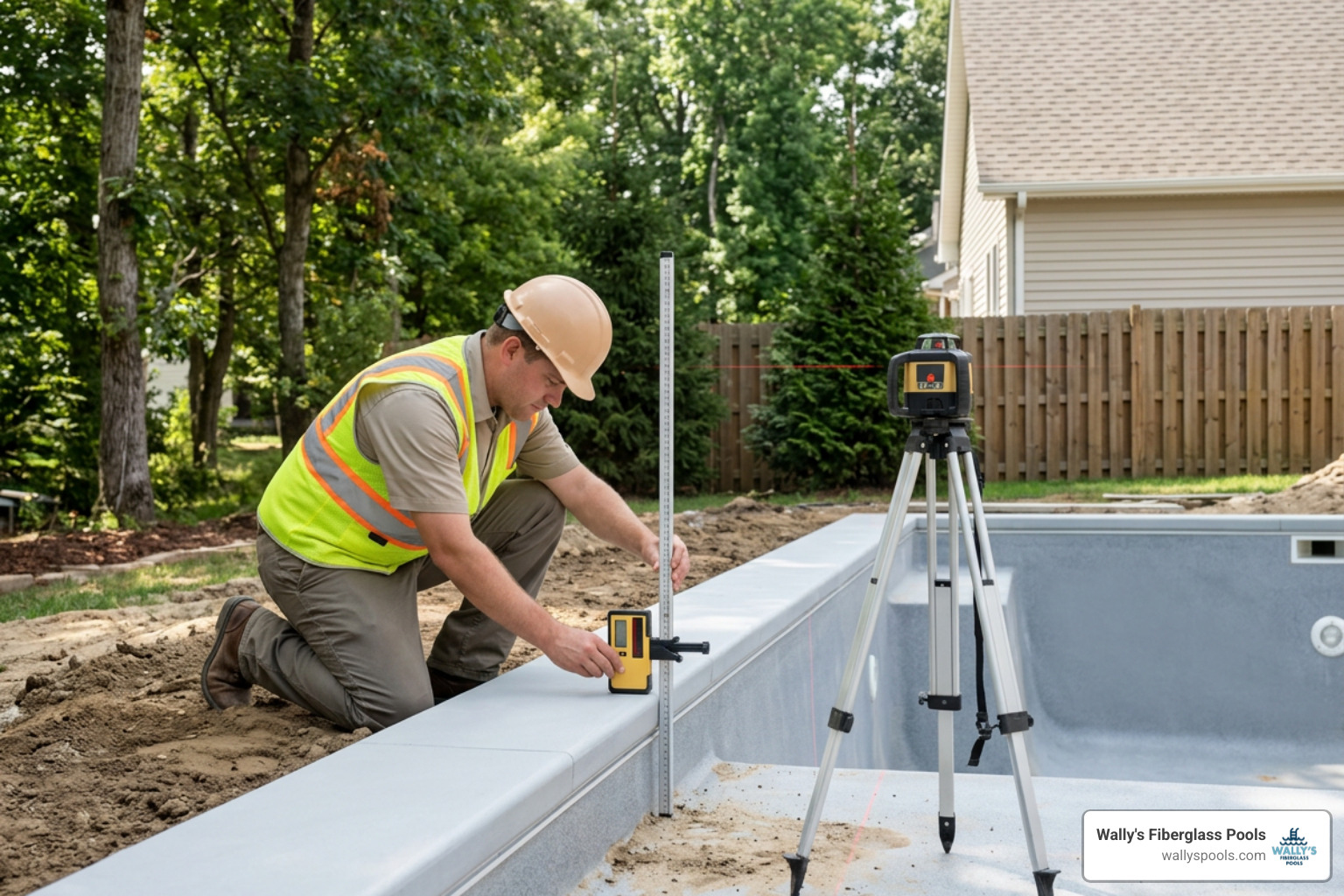
- Dedicated laser measurement tools to track millimeters of structural movement over time.
- Direct expertise in local soil profiles, especially Southeast Wisconsin clay and high water tables.
- Full liability insurance and specific licensing for structural excavation and pool renovation.
Working with experienced Fiberglass pool contractors ensures your pool foundation receives a permanent engineered solution rather than a cosmetic band-aid. If your existing pool is beyond cost-effective structural rescue, or if you are planning a brand-new project designed to withstand Wisconsin’s climate from day one, investing in professional Fiberglass pool installation with a clean gravel base and proper dewatering systems provides lasting peace of mind.
Frequently Asked Questions About Pool Settlement
Can you jack up or mudjack a sunken fiberglass pool?
Traditional slab mudjacking or standard high-pressure concrete injection should not be used directly against a fiberglass pool shell. Mudjacking injects heavy, wet slurry (a pumpable mixture of water and cement-based material) under pressure, creating concentrated loads that can crack, buckle, or puncture the flexible fiberglass bottom. Depending on the site and shell, specialists may consider low-pressure flowable self-compacting fills (materials placed at low pressure that flow into gaps without mechanical compaction) or targeted polyurethane foam injection for void filling. Structural lifting may require a separately engineered support system, such as helical piers; the repair method should be selected after professional evaluation.
Does filling in the deep end stop a pool from sinking?
No. Filling the deep end with stone, dirt, or concrete does not stop settlement. Solid backfill materials are significantly heavier than the water they displace, adding immense deadweight over the exact area where soil bearing capacity has already failed. This added load accelerates settlement, increases structural strain on the transition slope, and risks cracking the shell across the middle.
How much out-of-level tolerance is acceptable for a fiberglass pool?
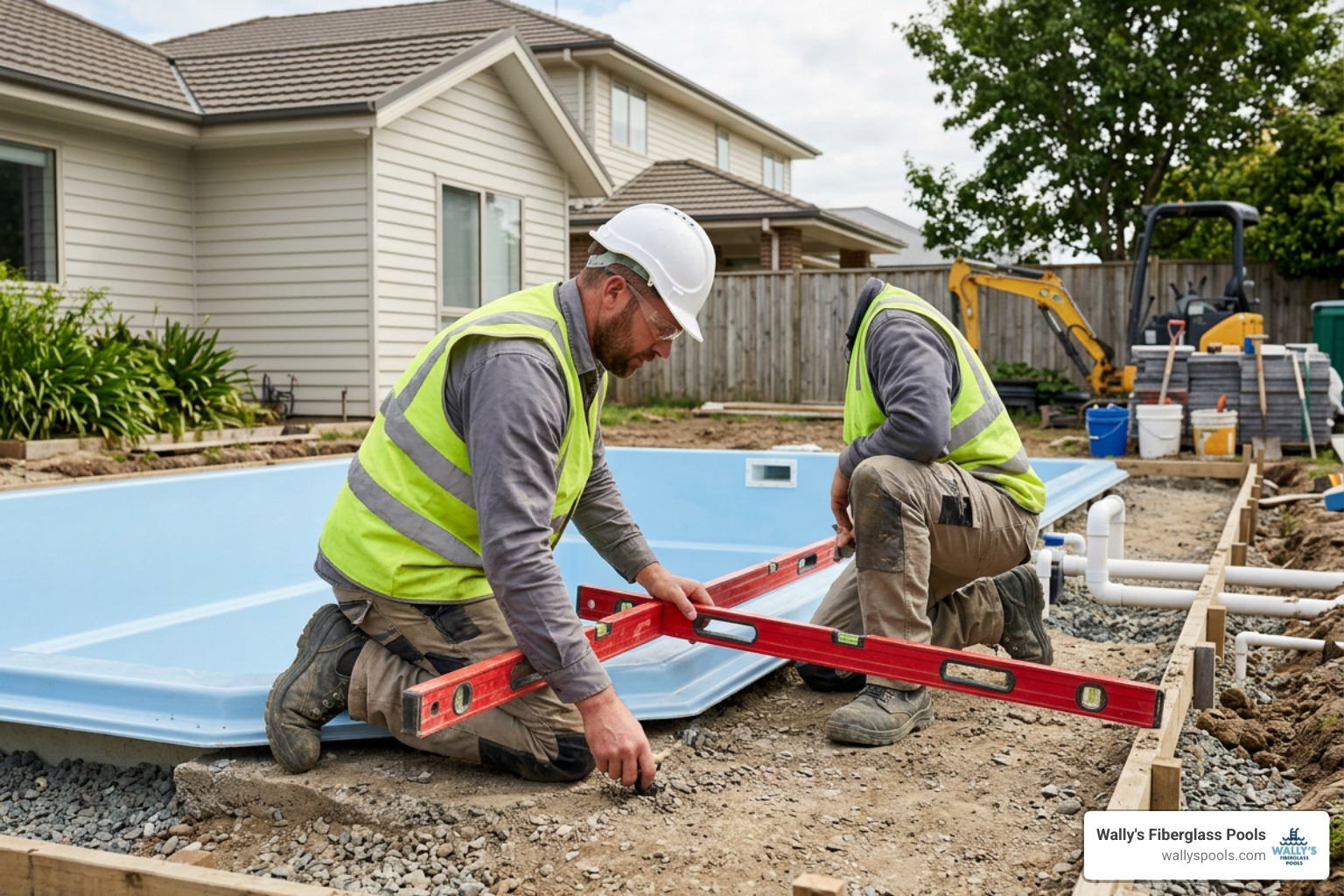
The general swimming pool industry tolerance allows up to 1 inch out of level across a 40-foot span, but quality builders aim for 0.5 inches or less during initial installation. If your pool was level at the time of construction and has since dropped 1 inch or more at one corner, it indicates active differential settlement that requires professional evaluation before the movement causes plumbing fractures or shell stress fractures.
Conclusion
A swimming pool represents a major backyard investment that can increase property values significantly while providing decades of family enjoyment. However, when unstable clay soils, severe freeze-thaw cycles, or poor drainage compromise the earth beneath the shell, taking fast, preventative action is the best way to safeguard your pool. Regular visual checks of your waterline, deck expansion joints, and equipment pads allow you to catch movement early.
At Wally’s Fiberglass Pools in Sussex, Wisconsin, we specialize in helping homeowners navigate every stage of pool ownership. From proper planning and precision installation to long-term maintenance and structural repair throughout Waukesha County, Lake Country, Milwaukee, and Walworth County, our team ensures your pool remains level, durable, and ready for summer fun. If you suspect your pool is shifting or settling, visit Wally’s Pools to connect with our team and schedule a comprehensive site evaluation.