How to Maintain Fiberglass Pool Chemistry: 5 Methods That Guarantee Results
Essential Parameters for Fiberglass Pool Chemical Balance
To maintain proper fiberglass pool chemical balance, keep pH between 7.2 and 7.4, free chlorine at 1.0 to 3.0 ppm, total alkalinity between 80 and 120 ppm, calcium hardness below 120 ppm (or per manufacturer specs), and cyanuric acid at 30 to 50 ppm. Always sanitize with liquid chlorine rather than calcium hypochlorite to prevent gelcoat scaling and cloudy water.
Because fiberglass pools feature a smooth, non-porous gelcoat finish without plaster or calcium, the water behaves differently than in concrete vessels. Maintaining these specific parameters prevents staining, scaling, gelcoat degradation, and equipment corrosion. Standard plaster pool guidelines recommend high calcium levels to protect concrete, but applying those rules to a fiberglass pool causes severe gelcoat calcification.
| Chemical Parameter | Ideal Fiberglass Target | Traditional Plaster Target | Primary Purpose |
|---|---|---|---|
| pH Level | 7.2 – 7.4 (max 7.6) | 7.4 – 7.6 | Protects gelcoat & optimizes chlorine efficacy |
| Free Chlorine | 1.0 – 3.0 ppm | 1.0 – 3.0 ppm | Sanitizes water, kills bacteria & algae |
| Total Alkalinity (TA) | 80 – 120 ppm | 80 – 120 ppm | Buffers pH swings against rain and bather load |
| Calcium Hardness (CH) | Less than 120 ppm (or per mfr) | 200 – 400 ppm | Protects equipment without causing shell scale |
| Cyanuric Acid (CYA) | 30 – 50 ppm | 30 – 60 ppm | Protects free chlorine from UV breakdown |
| Total Dissolved Solids (TDS) | < 1,500 ppm (non-salt) | < 2,000 ppm | Prevents equipment strain and cloudy water |
| Metals (Iron, Copper) | 0.0 ppm | 0.0 ppm | Prevents surface discoloration and staining |
Target Chemistry Ranges and Tolerances
Keeping each parameter within its recommended range ensures your pool remains safe for swimmers while safeguarding your investment.
- pH Level (7.2 – 7.4): A tight pH range is essential for fiberglass. When pH climbs above 7.8, minerals like calcium precipitate out of solution and bind to the gelcoat, leaving dull white deposits. If pH drops below 7.0, the acidic water can corrode pump seals, heater heat exchangers, and light fixtures.
- Free Chlorine (1.0 – 3.0 ppm): Chlorine is your primary sanitizer. Keeping it in this range ensures harmful pathogens and organic contaminants are destroyed quickly without causing strong chemical odors or skin irritation.
- Total Alkalinity (80 – 120 ppm): Total alkalinity acts as a chemical cushion for your pH. If alkalinity is too low, your pH will fluctuate wildly after heavy rainfall. If it is too high, lowering your pH becomes difficult, and scaling risks rise.
- Calcium Hardness (< 120 ppm or manufacturer recommendation): Concrete pools need 200 to 400 ppm of calcium so the water does not leech minerals directly from the plaster walls. Fiberglass shells contain zero calcium. In fact, keeping calcium hardness on the lower end prevents unsightly scaling, though you should check manufacturer guidelines if you operate a gas heater with a copper core.
- Cyanuric Acid (30 – 50 ppm): Also known as stabilizer, CYA acts as sunscreen for free chlorine molecules under direct sunlight. Keep CYA below 50 ppm (or 60–80 ppm for salt pools) to avoid “chlorine lock,” where chlorine becomes chemically bound and unable to sanitize.
- Total Dissolved Solids (< 1,500 ppm for standard pools): High TDS levels make water feel heavy, reduce sanitizer efficiency, and lead to hazy conditions that filtration alone cannot resolve.
Testing Methods: Strips, Reagent Kits, and Digital Testers
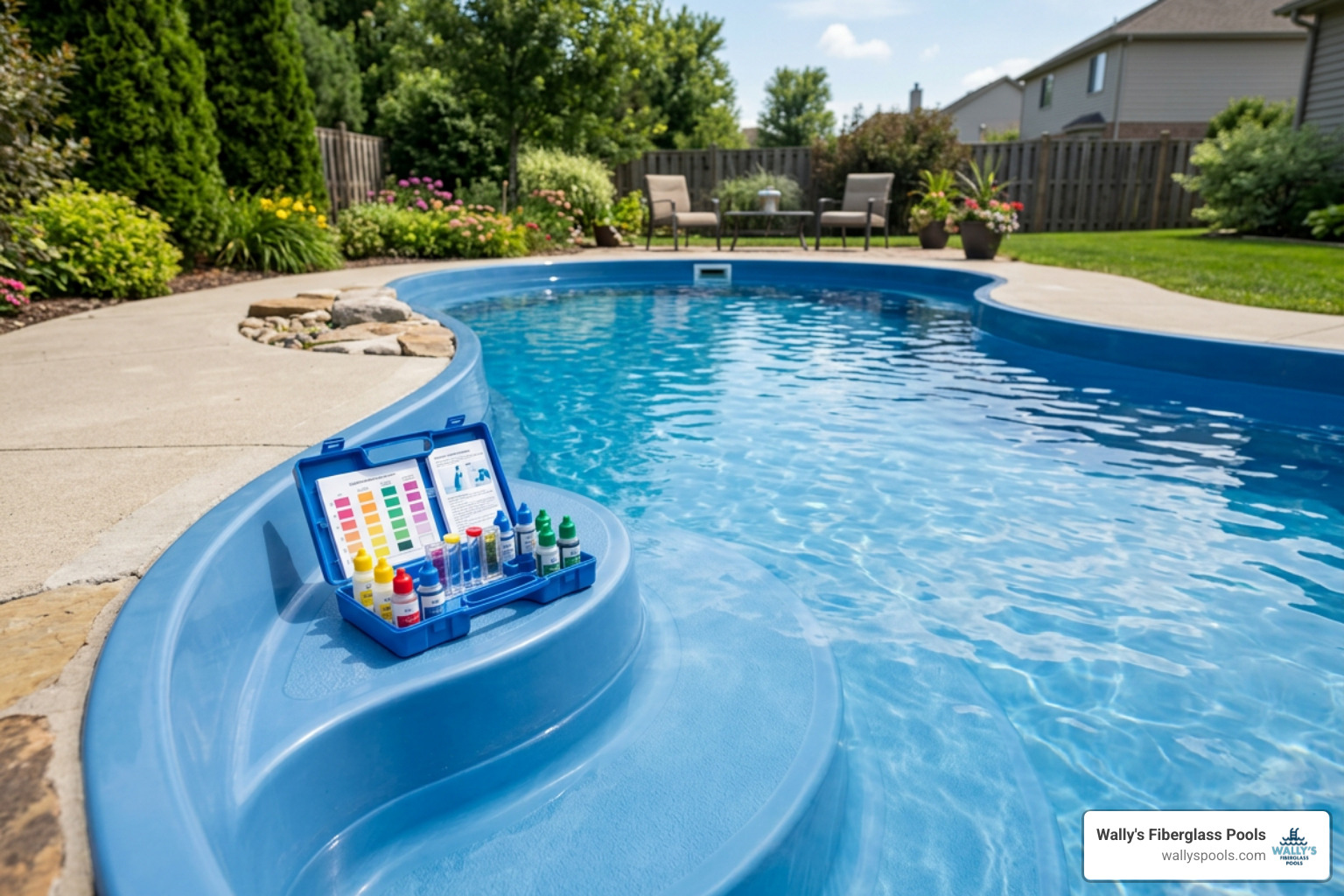
Accurate testing is the foundation of water balance. To collect a proper sample, submerge your clean testing container or strip elbow-deep (about 18 inches below the surface) away from return jets, skimmers, and steps.
Always store testing reagents in a cool, dark, dry spot. High heat inside a pool shed can degrade liquid testing reagents within a single summer season, producing false readings that lead to over-treating.
5 Proven Methods to Maintain Your Fiberglass Water Chemistry
Maintaining pristine water clarity does not require spending hours each day balancing test tubes. Implementing structured methods and using high-quality Pool Chemicals ensures your water stays safe with minimal effort.
Step-by-Step Order for Fiberglass Pool Chemical Balance
Adding pool chemicals in the wrong sequence can cause them to neutralize one another or cloud the water instantly. When adjustments are needed, always follow this proven order:
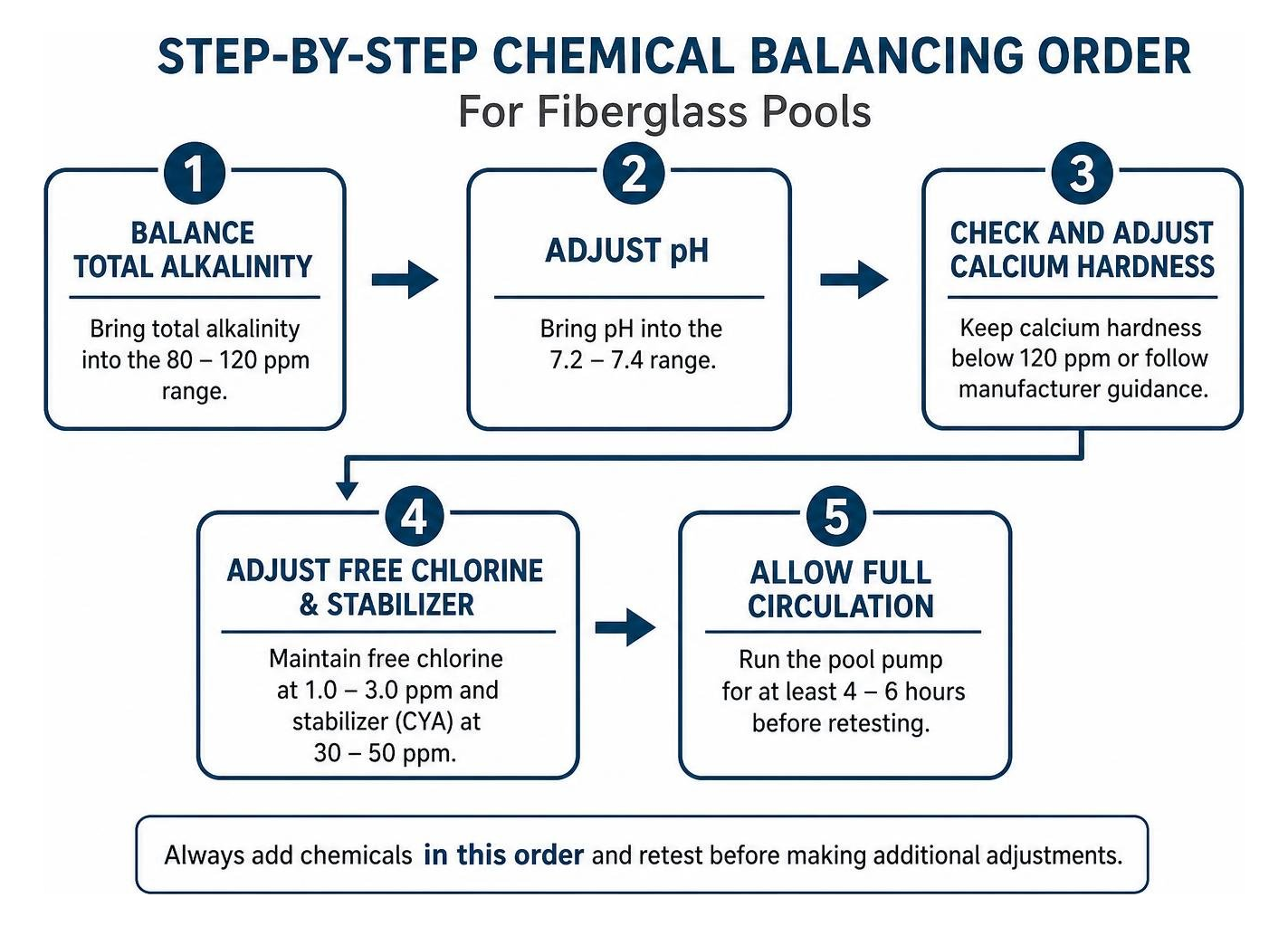
- Balance Total Alkalinity First: Total alkalinity governs pH stability. If TA is low, add sodium bicarbonate (baking soda). If TA is elevated, use muriatic acid poured directly into the deep end with the pump running.
- Adjust pH: Once alkalinity is stabilized, bring pH into the 7.2 to 7.4 range. Use sodium bisulfate (dry acid) or liquid muriatic acid to lower pH, or sodium carbonate (soda ash) to raise it.
- Check and Adjust Calcium Hardness: If make-up water from a local municipal supply or private well has altered your hardness levels, address it now.
- Adjust Free Chlorine & Stabilizer: Dose with liquid chlorine to maintain a residual between 1.0 and 3.0 ppm. If your CYA is below 30 ppm, dissolve pool stabilizer in a skimmer sock.
- Allow Full Circulation: Always run your pool pump for at least 4 to 6 hours after dosing before retesting the water.
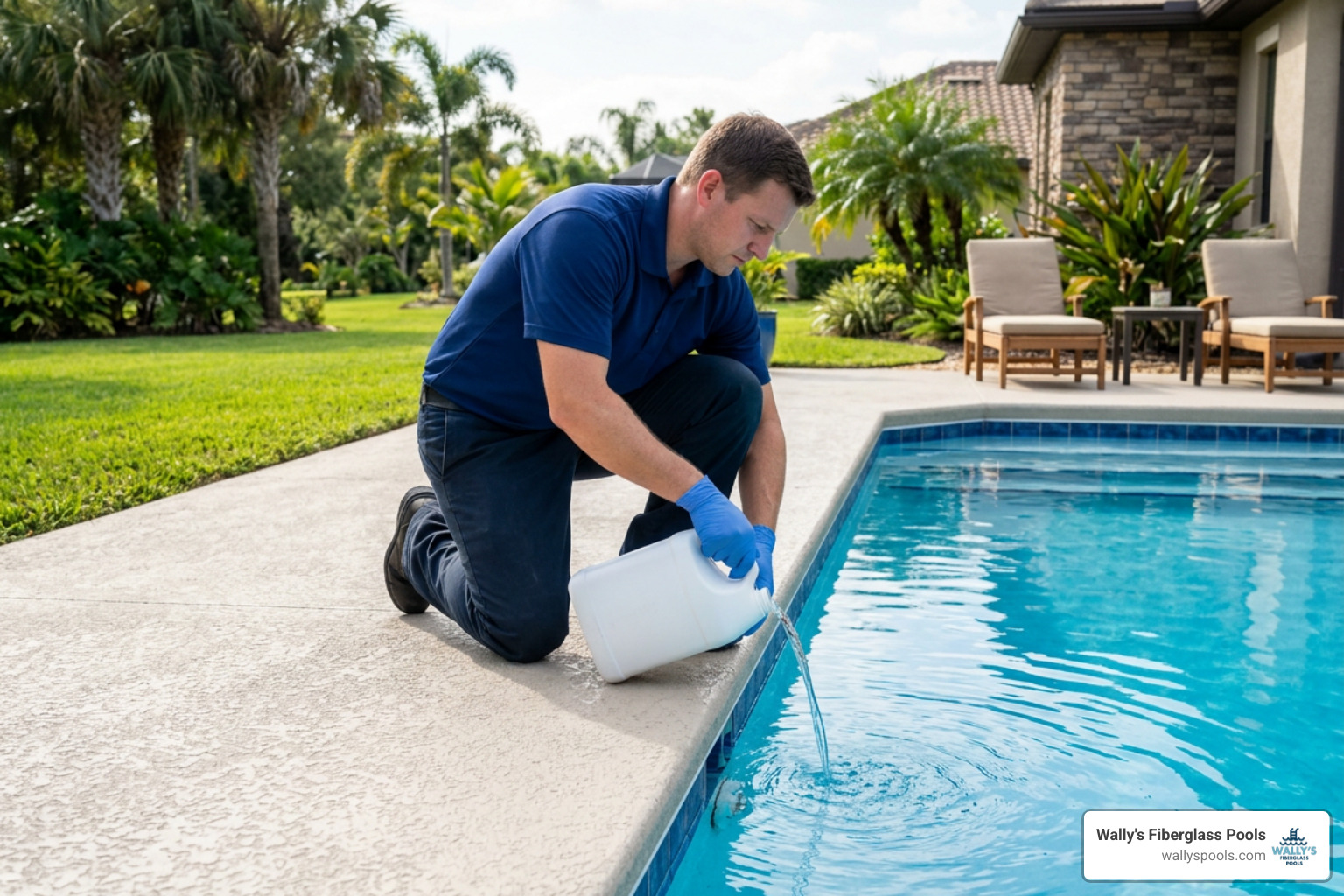
Method 2: Use Liquid Chlorine and Avoid Cal-Hypo Shock
One of the most critical rules of fiberglass pool care is avoiding calcium hypochlorite (cal-hypo) granular shock. Cal-hypo introduces substantial amounts of unneeded calcium directly into the pool. Over time, this calcium bonds with free carbonates at higher pH levels, leading to severe gelcoat scale, chalking, and cloudiness.
Instead, shock your pool using liquid chlorine (sodium hypochlorite) or non-chlorine potassium monopersulfate shock. Liquid chlorine dissolves instantly, leaves zero mineral residue, and oxidizes chloramines without shifting your calcium hardness.
Always shock in the evening after sunset. Direct UV sunlight breaks down unstabilized chlorine rapidly, diminishing the effectiveness of the treatment.
Method 3: Apply Regular Chelating and Stain-and-Scale Inhibitors
Because Southeast Wisconsin water often contains dissolved minerals and calcium, routine application of a sequestering or chelating agent is vital. Products designed for Fiberglass Pool Maintenance bond with microscopic minerals (such as iron, copper, and calcium) at a molecular level, keeping them suspended in the water so they cannot precipitate onto the gelcoat.
Add a maintenance dose of scale and stain control product weekly or bi-weekly according to label directions. This prevents surface staining, keeps salt-chlorine generator plates free of crusty buildup, and protects your pool heater’s internal elements.
Method 4: Monitor Cyanuric Acid and Total Dissolved Solids
Using stabilized chlorine pucks (trichlor) or granular shock (dichlor) introduces cyanuric acid into your water with every single application. Unlike chlorine, cyanuric acid does not evaporate or degrade. Over a few seasons, CYA can climb above 80–100 ppm, leading to chlorine lock.
When chlorine lock occurs, your test kit might show adequate free chlorine, yet the water turns hazy or develops algae because the sanitizer is chemically bound. The only way to lower high CYA or excessive TDS is to partially drain and refill the pool with fresh water. Regularly monitoring CYA ensures you switch to liquid chlorine before levels climb too high.
Off-Season Adjustments for Fiberglass Pool Chemical Balance
Wisconsin winters bring freezing temperatures and significant freeze-thaw cycles. Balancing your chemistry prior to closing protects your gelcoat while the pool sits dormant beneath a safety cover.
- Balance pH to 7.2–7.4 and ensure alkalinity sits between 80–120 ppm prior to closing.
- Add a concentrated chelating stain and scale inhibitor to keep minerals in suspension during cold-water dormancy.
- Dose with liquid chlorine to achieve superchlorination before covering the pool.
- Never use copper-based winter algaecides, which can cause blue-green surface staining over long winter months.
- For busy homeowners, choosing a professional seasonal plan like our Chemical Pool Service vs Full Maintenance – Which Plan Fits Your Budget? makes closing and opening worry-free.
Managing Calcium Hardness, LSI, and Gelcoat Chalking
A common misconception among new pool owners is treating a fiberglass pool identically to a traditional gunite or concrete vessel. Understanding how calcium interacts with a non-porous gelcoat will keep your pool surface smooth and vibrant for decades.
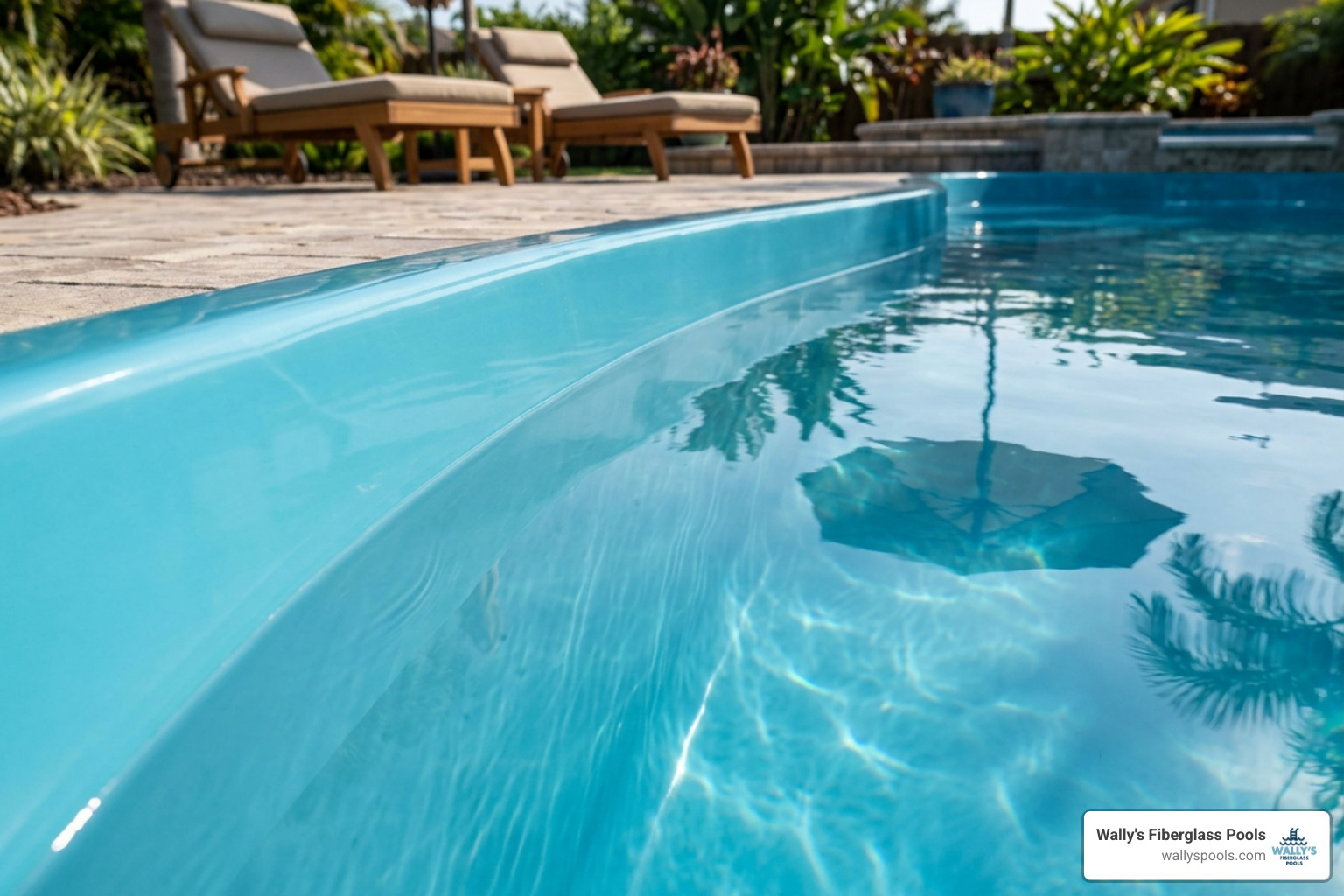
The Truth About Calcium Hardness in Non-Porous Shells
Traditional pool guidelines mandate high calcium hardness (200 to 400 ppm) because water is naturally hungry for minerals. If water lacks calcium, it will actively dissolve it out of plaster walls, causing pitting and roughness.
Fiberglass gelcoats contain no calcium carbonate. As a result, low calcium levels cannot leach minerals from the shell. While maintaining a baseline (around 150–200 ppm) may be required to protect heater copper components, purposely driving calcium hardness above 250 ppm in a fiberglass pool invites scaling and surface issues.
Preventing and Identifying Gelcoat Chalking vs. Scale
Over time, some pool owners notice a white, hazy film developing on their gelcoat. It is important to distinguish between calcium carbonate scale and gelcoat chalking:
- Calcium Scale: Mineral buildup sitting on top of the surface. You can test this by applying a small drop of diluted muriatic acid to an affected area above the waterline. If it foams and fizzes, it is calcium carbonate scale, which can be dissolved with scale treatments and pH control.
- Gelcoat Chalking: Surface oxidation of the resin caused by prolonged exposure to aggressive water chemistry, high pH, or improper manufacturing resin curing. Acid will not fizz on chalking. Preventing chalking requires keeping pH balanced (7.2–7.4) and using quality chelating agents like SC-1000 to eliminate oxidation triggers.
Applying the Langelier Saturation Index (LSI)
The Langelier Saturation Index (LSI) calculates the exact saturation level of calcium carbonate in water by evaluating five factors: pH, water temperature, calcium hardness, total alkalinity, and total dissolved solids (TDS).
In colder weather, water becomes naturally more aggressive (driving the LSI negative). As summer water warms up, the LSI shifts positive, increasing the likelihood of scale. Keeping your LSI near 0.0 year-round protects equipment without stressing the gelcoat.
Frequently Asked Questions About Fiberglass Pool Chemistry
Water balance questions naturally arise as seasons and swimming habits change. For specialized support, exploring our comprehensive Fiberglass Pool Service options can resolve persistent water quality challenges.
What is the ideal pH level for an inground fiberglass pool?
The ideal pH level for an inground fiberglass pool is 7.2 to 7.4. While concrete pools tolerate pH levels up to 7.6 or 7.8, fiberglass gelcoats are vulnerable to calcium precipitation and scaling above 7.6. Maintaining 7.2 to 7.4 keeps chlorine sanitizing power high and ensures maximum swimmer comfort.
Why should I avoid calcium hypochlorite shock in a fiberglass pool?
Calcium hypochlorite shock contains roughly 30% to 35% calcium by weight. When added to pool water, it directly increases calcium hardness. Because fiberglass does not require high calcium, repeated use of cal-hypo leads to calcium supersaturation, resulting in cloudy water, scaling across the shell, and stubborn waterline rings. Liquid chlorine (sodium hypochlorite) is the preferred alternative.
How often should I test pool chemistry during peak summer?
During peak summer in Wisconsin, test your free chlorine and pH 2 to 3 times per week. Total alkalinity should be checked weekly, while calcium hardness, cyanuric acid, and metals need testing once per month. After heavy rainstorms, high bather parties, or extreme heat waves, run an immediate test to catch drops in chlorine or shifts in pH early.
Conclusion
Maintaining crystal-clear, safe water in your fiberglass swimming pool does not need to be complicated. By respecting the unique characteristics of your smooth gelcoat surface—keeping your pH at 7.2 to 7.4, opting for liquid chlorine over cal-hypo, applying regular chelating inhibitors, and monitoring calcium—you will protect your investment for decades to come.
Whether you are enjoying warm summer days in Lake Country or preparing your pool for a long Wisconsin winter, proper water care ensures your pool remains an inviting backyard centerpiece. If you ever need hands-on assistance with water testing, seasonal maintenance, equipment repairs, or new installations across Southeast Wisconsin, reach out to our team at Wally’s Fiberglass Pools for dependable, local expertise.