The Easy Pool Chemical Maintenance Playbook for New Owners
The 5 Core Parameters for Easy Pool Chemical Maintenance
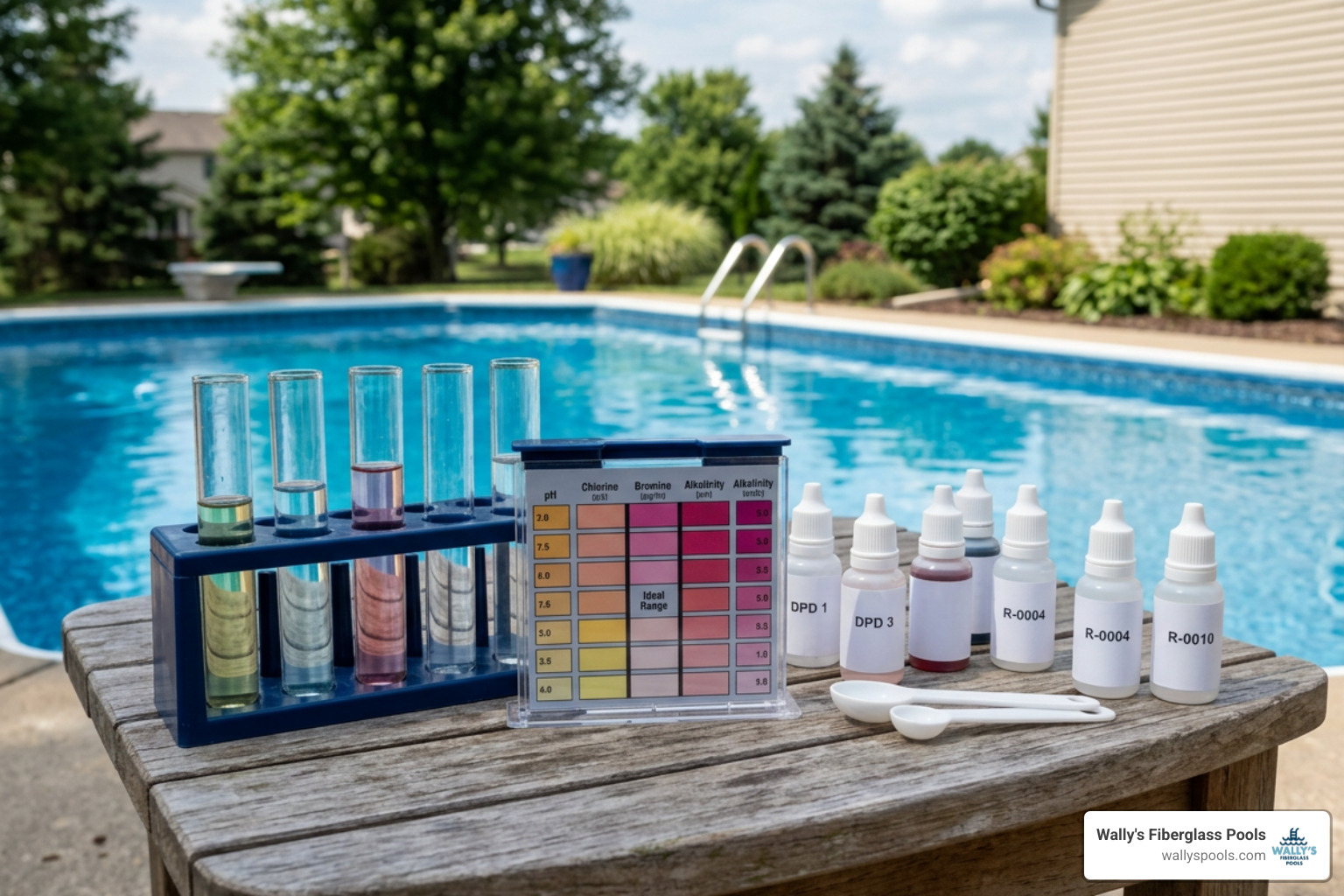
When you walk into a pool supply aisle, the sheer volume of buckets, bottles, and jugs can make water care feel like advanced biochemistry. In reality, you only need to master five core chemical parameters to keep your pool sparkling clean, comfortable for swimmers, and safe for equipment.
- Free Available Chlorine (FAC): This is the active sanitizer working to kill bacteria, viruses, and algae in your water. Aim for 1.0 to 3.0 ppm (or up to 4.0 ppm depending on pool type and usage).
- pH Level: Measures how acidic or basic your water is on a scale from 0 to 14. Your target is 7.2 to 7.6 (with 7.4 to 7.6 being ideal). When pH rises above 7.8, your chlorine loses over 50% of its sanitizing strength; when it drops below 7.2, water becomes corrosive to equipment and irritates swimmers’ eyes.
- Total Alkalinity (TA): Acts as a chemical buffer for your pH, preventing rapid swings (known as “pH bounce”). Keep this between 80 and 120 ppm (or 60 to 100 ppm for certain system types).
- Cyanuric Acid (CYA): Often called pool stabilizer or conditioner, CYA acts like sunscreen for your chlorine, shielding free chlorine molecules from being degraded by the sun’s ultraviolet rays. The sweet spot is 30 to 50 ppm. If CYA climbs over 80 to 90 ppm, it triggers “chlorine lock,” rendering your sanitizer ineffective.
- Calcium Hardness (CH): Measures dissolved calcium minerals in the water. We recommend maintaining 200 to 400 ppm. Water with too little calcium becomes aggressive and seeks minerals from plaster or equipment, while excessive calcium causes scaling along tile lines and inside heaters.
Whenever you adjust your water, follow a strict order of operations: Total Alkalinity first, pH second, Calcium Hardness third, and Sanitizer/Shock last. Because alkalinity buffers pH, adjusting pH before alkalinity will send your numbers drifting right back out of balance.
To eliminate guesswork when measuring out ounces or pounds of treatments, you can use a Pool Chemistry Calculator: Free Tool for Chlorine, pH, Alkalinity, CYA, and Salt Doses before adding products to your pool.
| Parameter | Ideal Range | Testing Frequency | Primary Purpose | Common Balancing Chemical |
|---|---|---|---|---|
| Free Chlorine | 1.0 – 3.0 ppm | 1–2 times weekly | Destroys pathogens & algae | Liquid chlorine, Trichlor tablets |
| pH | 7.2 – 7.6 | 1–2 times weekly | Comfort & sanitizer efficiency | Sodium bisulfate (down), Soda ash (up) |
| Total Alkalinity | 80 – 120 ppm | Bi-weekly / Monthly | Stabilizes & buffers pH | Sodium bicarbonate (baking soda) |
| Cyanuric Acid | 30 – 50 ppm | Monthly | UV protection for chlorine | Stabilizer / Conditioner granules |
| Calcium Hardness | 200 – 400 ppm | Monthly / Quarterly | Protects surfaces & plumbing | Calcium chloride |
Calculating Pool Volume for Accurate Chemical Dosing
Every chemical dosage instruction—whether on a product label or in a dosing guide—is based on total water volume. Adding treatments without knowing your pool’s capacity risks under-treating (leaving water vulnerable to algae) or over-shooting chemical targets (wasting money and irritating swimmers’ skin).
Use these standard formulas to find your pool volume in gallons:
- Rectangular Pools: $\text{Length (ft)} \times \text{Width (ft)} \times \text{Average Depth (ft)} \times 7.5$
- Circular Pools: $\text{Diameter (ft)} \times \text{Diameter (ft)} \times \text{Average Depth (ft)} \times 5.9$
- Oval Pools: $\text{Long Diameter (ft)} \times \text{Short Diameter (ft)} \times \text{Average Depth (ft)} \times 5.9$
- Freeform Pools: $\text{Surface Area (sq ft)} \times \text{Average Depth (ft)} \times 7.5$
Note: To calculate Average Depth, add the shallow-end depth to the deep-end depth and divide by 2.
For example, a rectangular pool measuring 16 feet wide by 32 feet long with an average depth of 5 feet holds $16 \times 32 \times 5 \times 7.5 = 19,200\text{ gallons}$.
Knowing this exact number lets you dose with confidence. As a standard rule of thumb, 1.5 pounds of sodium bicarbonate per 10,000 gallons will raise total alkalinity by approximately 10 ppm, while 1 pound of sodium bisulfate per 10,000 gallons lowers pH by roughly 0.4 units.
Always pre-dissolve dry chemicals in a 5-gallon bucket filled with pool water before pouring them around the perimeter to ensure even blending and prevent concentrated granules from settling on the bottom.
Step-by-Step Chemistry Protocols for Busy Homeowners
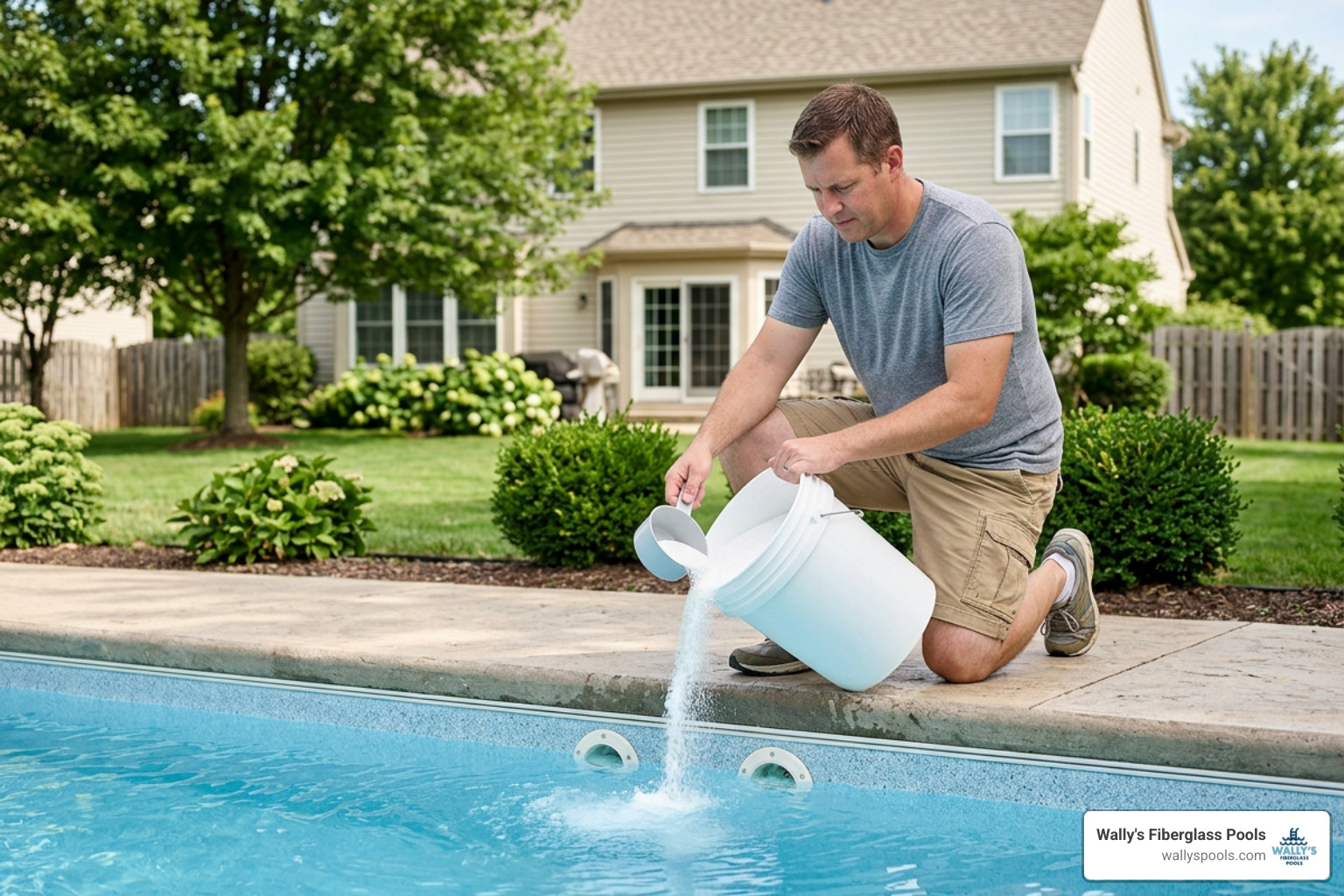
Achieving easy pool chemical maintenance does not require hours of daily work. By following a structured routine, you can keep your water balanced in minutes. When stocking your supply shed, consult a reliable Pool Chemical Buying Guide 2026: Everything You Need, Nothing You Don’t – Top Pool Picks to buy essential core chemicals in bulk and avoid overpriced retail additives you will never use.
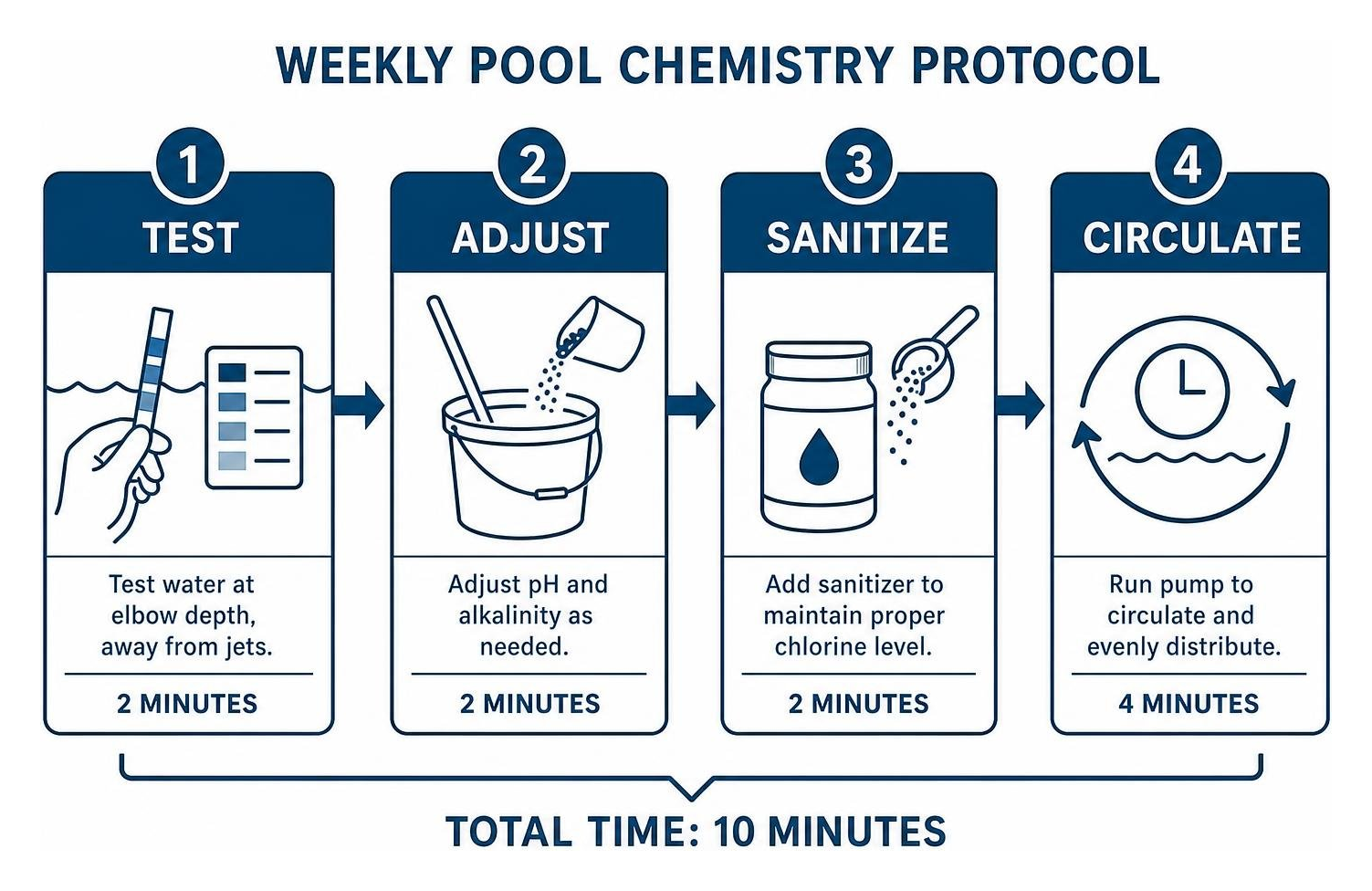
Step-by-Step 10-Minute Weekly Routine for Easy Pool Chemical Maintenance
We recommend choosing one consistent evening each week—such as Sunday after a weekend of swimming—to complete this fast, 10-minute checklist:
- Test the Water (2 Minutes): Dip a reliable multi-way test strip or use a liquid drop test kit at elbow depth, away from the return jets. Note your Free Chlorine and pH readings.
- Adjust the pH (2 Minutes): If your pH is above 7.6, add the required amount of pH decreaser (sodium bisulfate or muriatic acid). If below 7.2, add pH increaser (soda ash).
- Top Off Sanitizer or Shock (2 Minutes): Check your erosion feeder or floating dispenser and reload with 3-inch trichlor tablets as needed, or dose with liquid chlorine to maintain a baseline of 1–3 ppm. If the pool saw heavy weekend traffic or high heat, add a maintenance dose of shock (typically 1 lb of cal-hypo per 10,000 gallons) after sundown.
- Empty Skimmer and Pump Baskets (2 Minutes): Clear trapped leaves, insects, and pine needles. Clean baskets ensure strong water flow and prevent organic material from consuming active chlorine.
- Inspect Filter Pressure & Skim (2 Minutes): Check your filter pressure gauge. If the pressure reads 8 to 10 psi over your clean baseline, run a quick backwash cycle or rinse your cartridge. For smooth fiberglass shells, routine fiberglass pool maintenance requires minimal scrubbing since the non-porous gelcoat resists algae attachment better than rough concrete or vinyl seams.
All-in-One vs. Multi-Step Approaches to Easy Pool Chemical Maintenance
Pool owners generally choose between two chemical management philosophies: traditional multi-step dosing or modern all-in-one proactive solutions.
All-in-one solutions—such as E-Z POOL Weekly All-in-1 Concentrated Outdoor Swimming Pool Care Solution—simplify routine care by combining copper sulfate algaecides, oxygen-enriching oxidizers, water clarifiers, and scale inhibitors in a single concentrated blend.
- How It Works: The copper sulfate creates a residual defense against algae blooms, while the active oxygen component breaks down bather contaminants (sweat, oils, sunscreen) without generating irritating chloramines. Built-in clarifiers bundle microscopic particles so your filter captures them easily.
- Application and Dosage: A standard 10-pound bucket covers several months of treatment for residential pools. Typical application calls for a single measured scoop (around 0.5 to 1 lb per 10,000 to 20,000 gallons) sprinkled directly over the deep-end return jet once a week with the pump running.
- Compatibility: These formulas work across inground, above-ground, fiberglass, vinyl-liner, and traditional plaster pools.
While an all-in-one product streamlines your weekly routine, it does not fully eliminate the need to test pH or monitor baseline sanitizer levels. If you are debating between handling your own water chemistry versus hiring an outside specialist, reviewing the pros and cons of chemical pool service vs full maintenance can help you decide which approach matches your household schedule and budget.
Safe Handling and Seasonal Adjustments for Wisconsin Pools
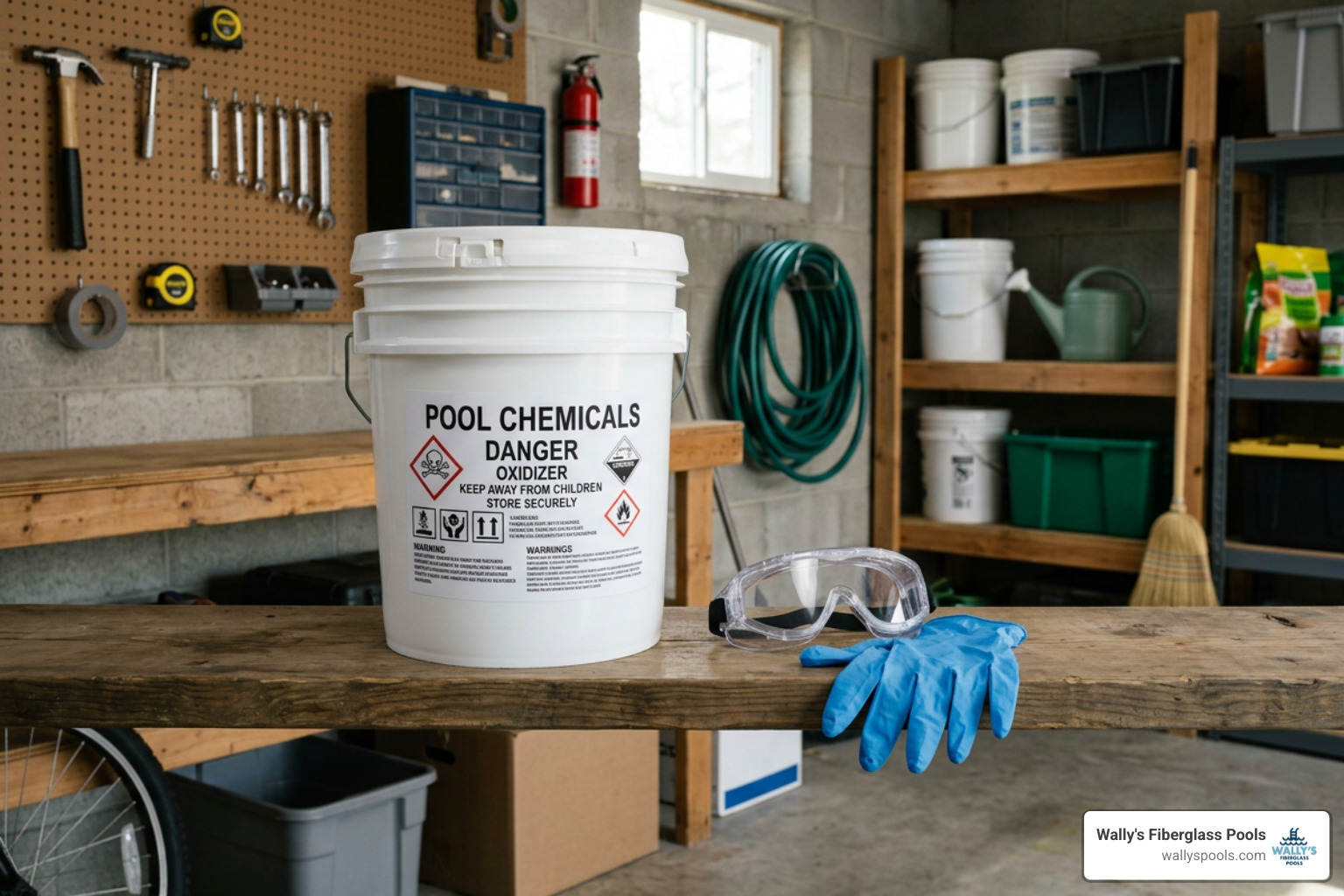
Handling swimming pool chemistry safely protects your family, pets, and backyard investment. Pool chemicals are concentrated oxidizers and acids that demand respect:
- Never Mix Chemicals: Never mix different dry chemicals together in the same container. Specifically, never mix calcium hypochlorite shock and trichlor tablets; combining them creates an exothermic reaction that produces toxic gas, fire, or explosions.
- Always Add Chemicals to Water: Never pour water into dry chemicals, which can cause violent bubbling or splash-backs. Fill a bucket with pool water first, then add the measured dry product slowly while stirring.
- Wear Protective Gear: Always use safety glasses and chemical-resistant gloves when pouring liquids or dispensing powders.
- Store in a Cool, Dry, Ventilated Area: Keep pool chemicals off bare concrete floors (use wooden pallets or plastic shelving) and out of direct sunlight. Ensure storage sheds stay sealed against humidity and locked away from children and pets.
Managing Seasonal Shifts in Southeast Wisconsin
Pool owners in Lake Country, Waukesha County, and across Southeast Wisconsin face unique climate conditions. Our weather swings from humid 90°F summer stretches to sub-zero winter freezes, which impacts water balance:
- Spring Openings: Early-season rains bring acidic runoff and organic pollen into the pool. Test alkalinity and pH immediately upon opening, and bring free chlorine up to 5 ppm with an initial shock dose to clear dormant winter debris.
- Summer Storms and Heatwaves: Extended sunny spells over 85°F degrade chlorine rapidly, while Lake Country downpours introduce nitrogen compounds that feed algae. Shock the pool at sundown after severe thunderstorms to restore free chlorine reserves before water turns hazy.
- Fall Closing and Freeze-Thaw Protection: Preparing for Wisconsin winters requires adjusting your water chemistry before blowing out the plumbing lines. Balance your pH (7.4–7.6), total alkalinity (100–120 ppm), and add a premium winter algaecide and non-chlorine oxidizer. Proper closing chemistry protects fiberglass shells, vinyl liners, and tile against staining and scale damage during freeze-thaw cycles.
When stocking up on water care supplies for opening or closing, sourcing commercial-grade pool chemicals ensures you get pure, stable formulations that withstand Wisconsin weather.
Frequently Asked Questions About Pool Chemical Care
How do all-in-one pool water clarifiers and sanitizers work?
All-in-one pool treatments use a dual-action approach: mineral algaecides combined with non-chlorine oxidizers.
The copper sulfate in these formulas disrupts algae cellular respiration, stopping single-cell green and mustard algae before they multiply. Meanwhile, the active oxygen components rapidly break down swimmer waste, oils, cosmetics, and environmental pollen. Built-in polymeric clarifiers then attract tiny suspended particles, clumping them together into larger units that are easily trapped by your sand, cartridge, or DE filter.
Used once weekly, this approach reduces chemical odor, softens the water feel, and cuts down on the need for frequent shock treatments.
Why is my pool cloudy or green even when chlorine levels test normal?
If your test strips show adequate free chlorine (2 to 4 ppm) but the water remains cloudy or green, you are likely experiencing chlorine lock or elevated chloramines:
High cyanuric acid (above 80–100 ppm) locks onto free chlorine molecules, preventing them from sanitizing the water even though test kits confirm chlorine is present. Routine physical pool maintenance—such as backwashing the filter, vacuuming settled debris, and ensuring proper turnover—works alongside water chemistry to keep your pool clear.
How does seasonal Wisconsin weather affect pool chemistry routines?
Wisconsin seasons create distinct chemistry challenges:
- Heavy Rain Dilution: Heavy spring and summer rains dilute chemical concentrations, wash atmospheric contaminants into the water, and lower pH and alkalinity. Always test your water after a major storm.
- High UV Index in Mid-Summer: July and August sunshine burns off unstabilized chlorine in as little as two hours. Keeping CYA between 30 and 50 ppm prevents rapid sanitizer depletion.
- Temperature Drops: As water cools in September and October, chemical reactions slow down and chlorine lasts longer. However, cold water is more prone to scale formation if calcium hardness and pH run high, making proper winter balance essential before closing for the season.
Conclusion
Keeping your swimming pool clean and inviting does not require complicated chemistry or hours of maintenance. By following a steady 10-minute weekly routine, monitoring your core balance parameters, and adjusting for Southeast Wisconsin’s seasonal shifts, you can enjoy crystal-clear water all summer long without the stress.
Whether you need help balancing your pool, opening or winterizing for the season, or are thinking about installing a low-maintenance inground fiberglass pool for your backyard, our team at Wally’s Pools is here to support you across Lake Country and the greater Milwaukee area. Reach out to us today for personalized pool care advice, equipment service, or to start planning your backyard oasis!