The Ultimate Guide to Comparing Pool Automation Systems
Why Pool Automation Systems Matter for Wisconsin Pool Owners
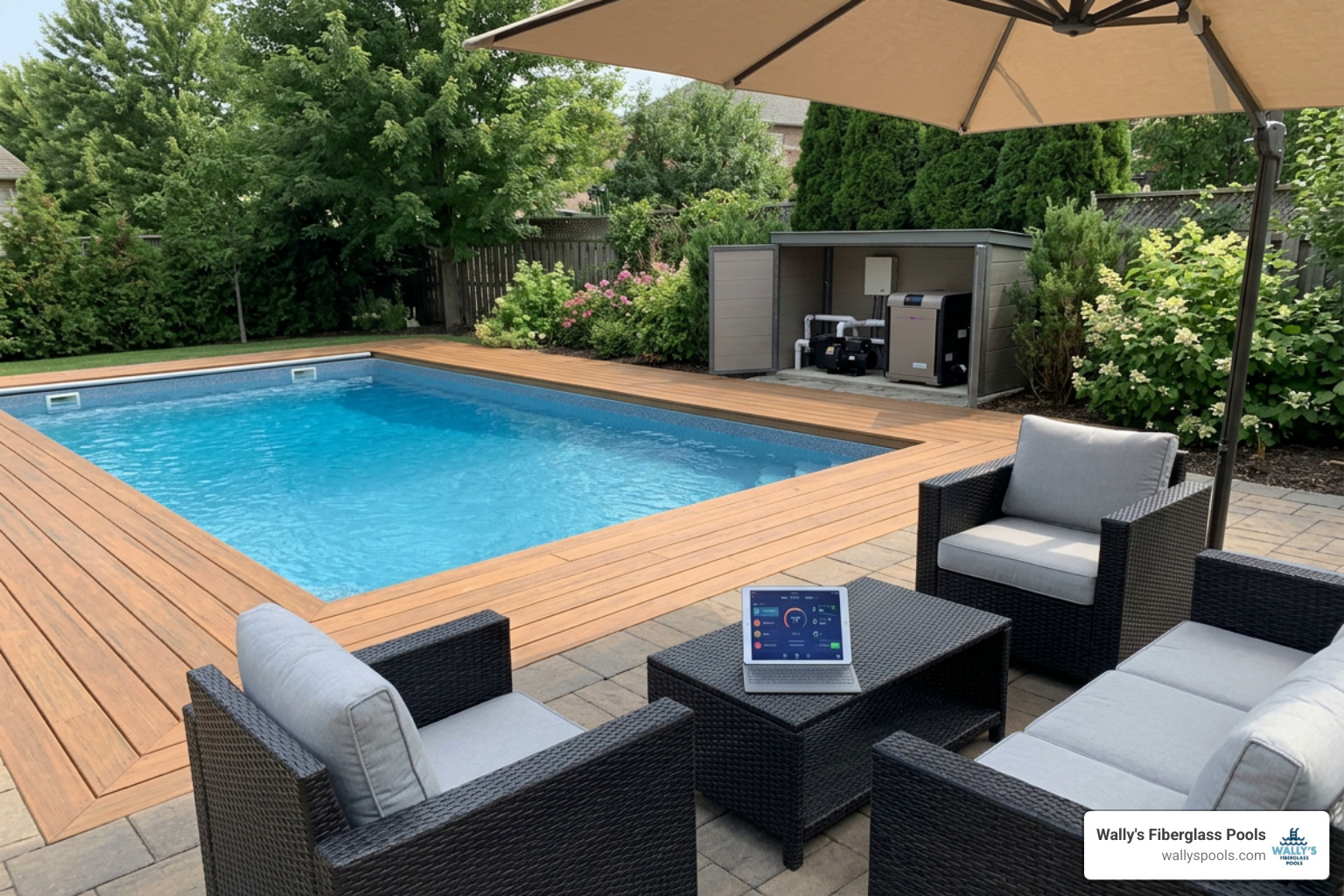
Pool automation systems let you manage filtration, heating, lights, sanitization, and water features from one control panel or mobile app. For most Southeast Wisconsin homeowners, the best choice is the system that fits the equipment you already have, supports freeze protection, and can grow with future upgrades such as a variable-speed pump, salt system, or spa.
A quick way to compare options:
- Count what needs control. Include pumps, heater, lights, water features, valves, cleaner, and sanitizer.
- Check compatibility. Some controllers work best within one equipment brand, while others can manage mixed equipment pads.
- Prioritize Wisconsin-ready protection. Look for dependable scheduling, remote alerts, weather-rated hardware, and automatic freeze settings.
- Plan for efficiency. A variable-speed pump paired with smart schedules can substantially reduce pump energy use, in some cases by as much as 70 percent.
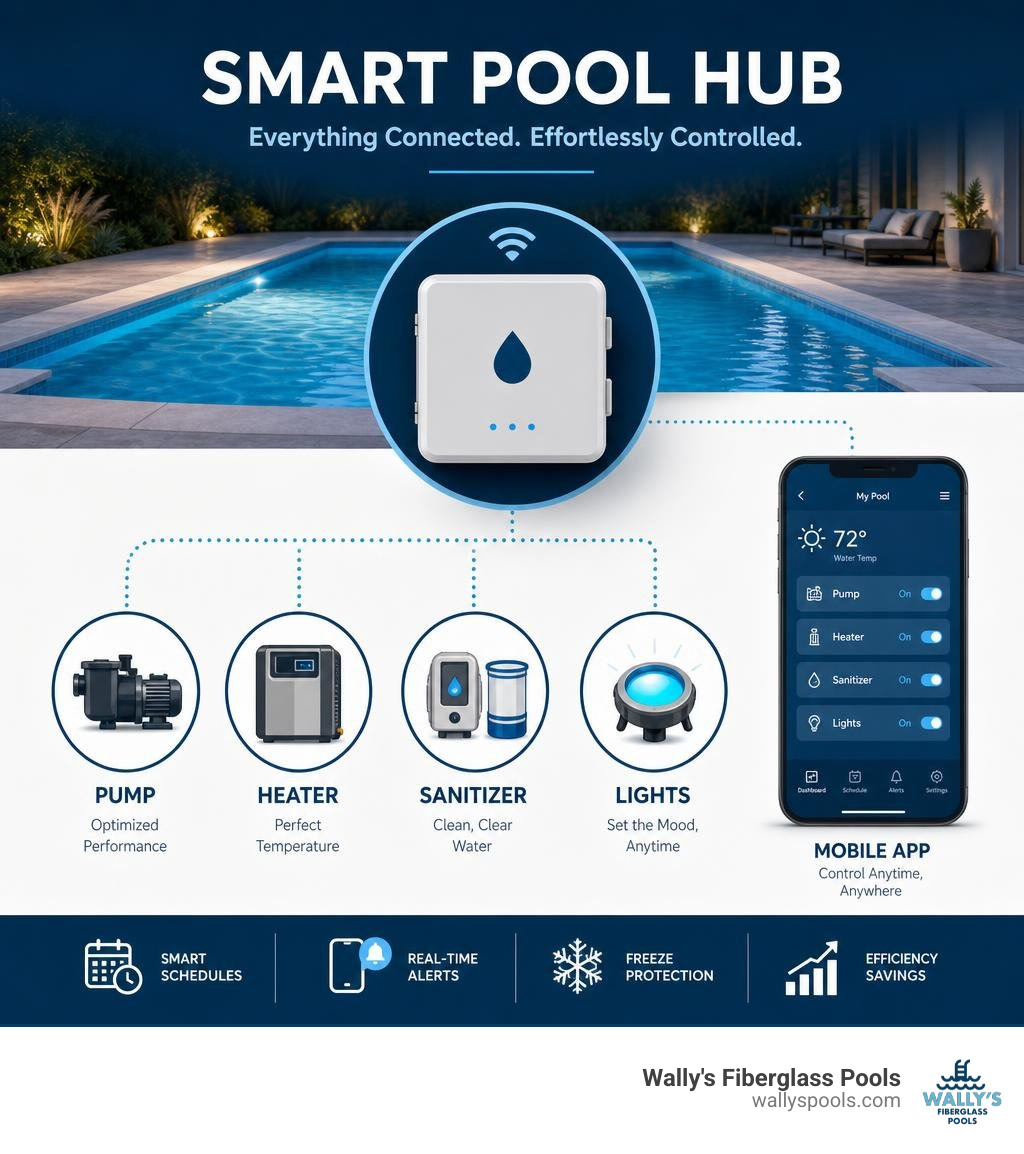
Pool control has come a long way from a mechanical timer that simply turns a pump on and off. Modern smart hubs coordinate equipment, track operating conditions, send phone alerts, and can help keep a Lake Country or Milwaukee-area pool ready without constant trips to the equipment pad.
I am Wally Haines from Wally’s Pools, a Sussex, Wisconsin-based fiberglass pool specialist, and this guide will help you compare the features that matter before you invest.
Essential Architecture of Modern Smart Pool Technology
Modern pool automation functions as the central brain of your backyard. Instead of walking out to an equipment pad in the dark or rain to turn on a heater, flip a breaker, or manually turn stiff plumbing valves, an automation panel brings every electrical and hydraulic component into a unified network.
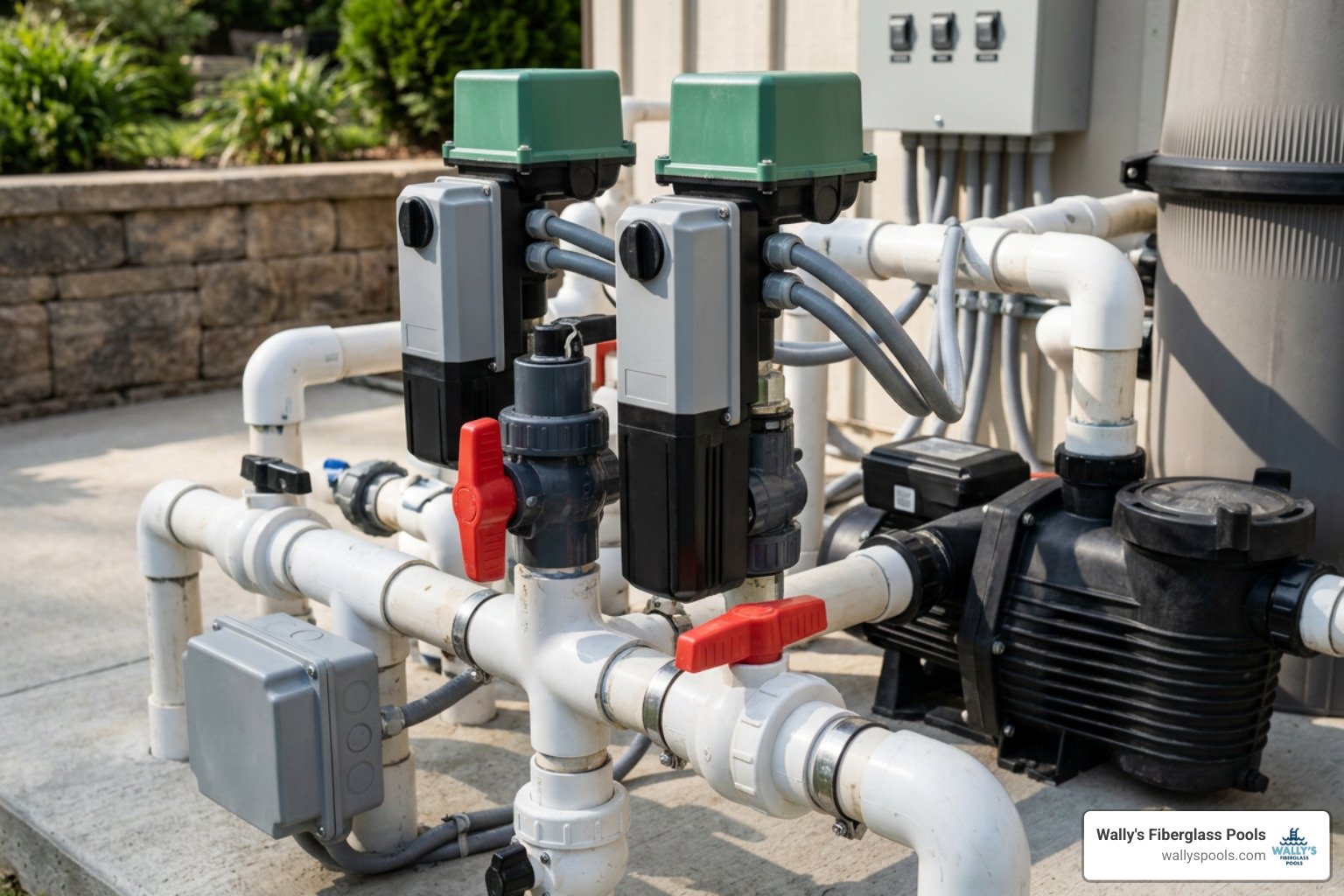
The physical architecture combines high-voltage electrical distribution with sensitive, low-voltage computational controls:
- Load Center and Relay Boards: Weatherproof electrical enclosures house high-voltage relays that handle line power (120V/240V) for single-speed devices, blowers, transformers, and booster pumps. Low-voltage boards process commands from digital interfaces.
- Variable-Speed Pump Communication: Digital communication ports link the controller to variable-speed pump drives, directing precise motor RPMs for specific tasks like skimming, heating, or running laminar deck jets.
- Motorized Valve Actuators: Small, weatherproof 24V electric motors mount directly onto 2-way and 3-way diverter valves. When you toggle between pool circulation, spa spillover mode, or deep-heat suction, the actuators physically turn the valves to redirect water flow automatically.
- Environmental and Flow Sensors: Water temperature thermistors, air temperature sensors, electronic flow switches, and pressure transducers feed operational data directly into the central microprocessors.
- Predictive Diagnostics: Modern smart platforms track baseline motor amps, water temperature shifts, and hydraulic flow. When a filter begins loading up with debris or a flow rate dips below safe operating limits for your heater, the system flags the issue before mechanical damage occurs.
Evolution from Mechanical Timers to Digital Hubs
For decades, backyard pool scheduling depended entirely on mechanical Intermatic time clocks with yellow dials and manual on/off trippers. These electromechanical devices could handle simple start/stop times for a single pump, but they had no ability to adapt to changing water temperatures, communicate with multiple devices, or respond to freezing air.
The introduction of multi-relay digital controllers transformed the equipment pad. Today, entry-level systems like the IntelliConnect Pool Control and Monitoring System allow homeowners to control up to five primary pieces of pool equipment right from a smartphone app via integrated Wi-Fi.
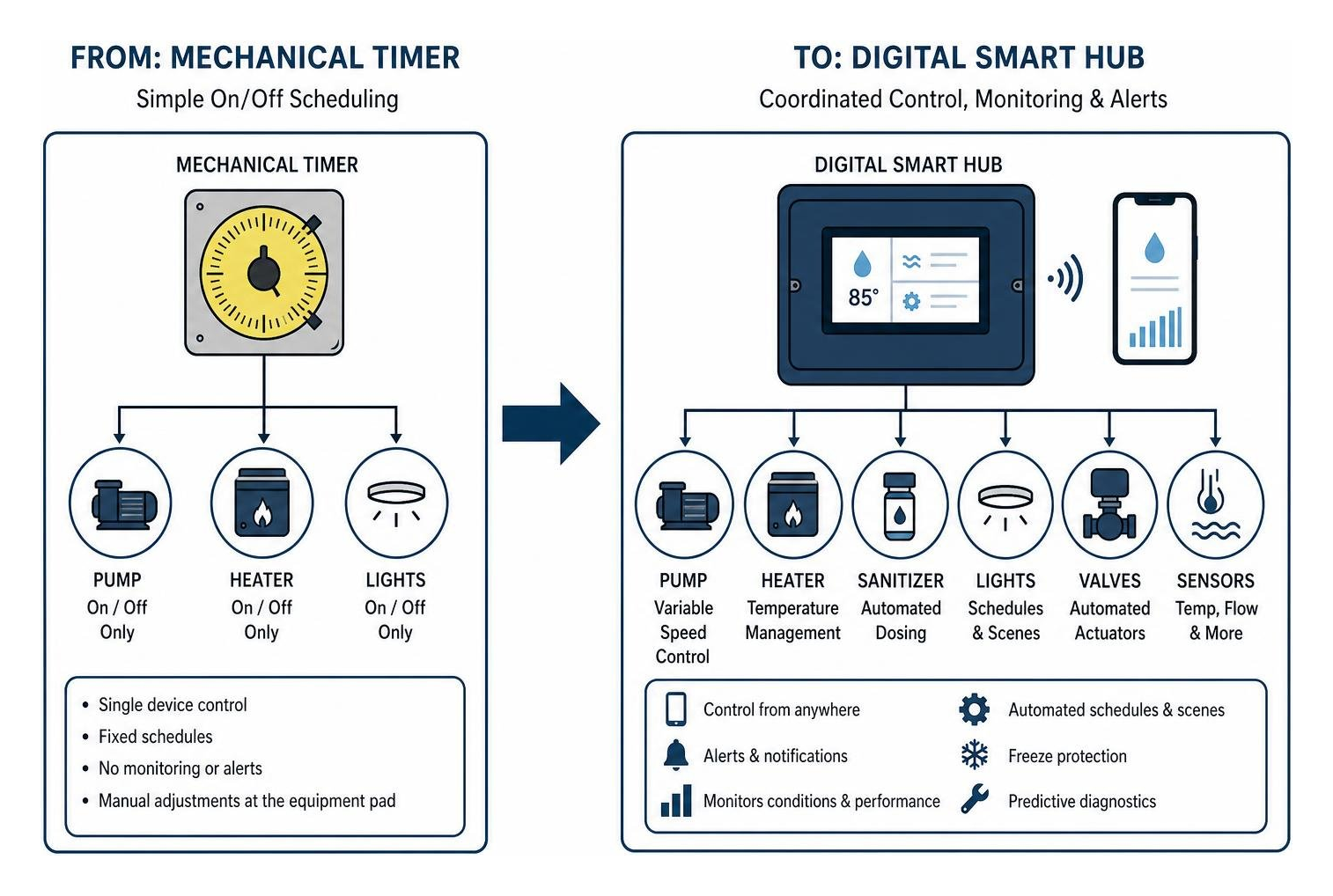
Modern hubs receive over-the-air firmware upgrades, support full color touchscreens at the equipment pad, and maintain cloud connections that give you complete oversight whether you are relaxing inside your home or away on vacation.
Essential Hardware: Pumps, Sensors, and Control Panels
A reliable automation setup starts with proper sizing and hardware matching. The central control unit houses the main circuit board and circuit breaker panel. It routes commands to high-efficiency variable-speed pumps that adjust speeds dynamically based on current heating, sanitizing, or water feature requirements.
Motorized valve actuators handle complex water redirection, ensuring that spa jets, waterfalls, or shear descents activate seamlessly without manual intervention. Digital chemistry probes and electronic flow switches monitor flow velocities and water conditions in real time, making regular fiberglass pool maintenance faster, more predictable, and easier to manage throughout the swimming season.
Comparing the Top Pool Automation Systems on the Market
Choosing the right platform requires balancing equipment compatibility, ecosystem flexibility, long-term warranties, and total installed costs. While major manufacturers design platforms to optimize their proprietary lines, brand-agnostic options have expanded significantly to support mixed equipment pads.
The table below breaks down the primary pool automation platforms:
| Platform / Brand | Best Suited For | Connectivity Options | Smart Integrations | Base Unit Price | Standard Warranty |
|---|---|---|---|---|---|
| Pentair IntelliCenter | Pentair variable-speed pumps, lights, and IntelliChlor systems | Onboard Wi-Fi, Ethernet, Wireless Link | Amazon Alexa, Google Home, Control4 | ~$2,500 | 3 Years |
| Hayward OmniLogic | Hayward equipment suites, OmniDirect LED systems, salt cells | High-gain Wi-Fi, Ethernet | Amazon Alexa, Google Home, Crestron, Control4 | ~$2,300 | 1–3 Years |
| Jandy AquaLink RS / iAquaLink | Jandy pumps, heaters, TruSense water chemistry modules | Wi-Fi, Wired Ethernet, Serial Interface | Amazon Alexa, Apple Watch, Control4, Crestron | ~$2,000 | 3 Years |
| CircuPool CORE CONTROL | Retrofit salt chlorination and multi-relay pump control | Wi-Fi Antenna | Dedicated Mobile App (iOS / Android) | ~$1,400–$1,800 | 8-Year Limited |
| NorsupOne V3 | Solar-integrated pads, automated multi-chemical dosing | Ethernet, Wi-Fi, 4G Cellular SIM | Dedicated App, Installer Service Portal | ~$2,400–$3,000 | 2–3 Years |
| Poolside Tech The Attendant | Brand-agnostic pads combining multiple equipment manufacturers | Wi-Fi, Ethernet | Amazon Alexa, Google Home, Apple Siri, Home Assistant | ~$2,500 | Lifetime |
Leading platforms such as Hayward’s Smart Pool & Spa Control suite illustrate how modern hardware scales effortlessly from simple backyard setups to complex, multi-feature pool and spa installations.
Entry-Level vs. Premium Pool Automation Systems
Entry-level automation systems, such as the Hayward OmniHub or Pentair IntelliConnect, are designed for straightforward pools with standard filtration, heating, and lighting requirements. These systems typically manage two to four relays alongside smart variable-speed pump communication. They provide app-based scheduling and temperature control at an accessible entry price point.
In contrast, premium flagship units like the IntelliCenter® Pool Control System | Pool Automation | Pentair and Hayward OmniLogic deliver industrial-grade expansion capabilities. These systems support:
- Up to 16 variable-speed pumps, blowers, and booster pumps.
- Multiple valve actuators for shared equipment setups (pool/spa combinations, separate splash pads, and laminar deck jets).
- Integrated high-voltage subpanels with 100A to 125A load centers to streamline electrical sub-paneling on the pad.
- Dedicated expansion personality boards that let you add landscape lighting, deck heaters, and automated misting systems as your backyard evolves.
Equipment Compatibility and Brand-Agnostic Platforms
Historically, swimming pool manufacturers relied on proprietary RS485 communication protocols. If you installed a Pentair controller, it could easily control the motor RPMs of a Pentair IntelliFlo pump, but it could only turn a competing pump on or off using a simple high-voltage relay without digital speed management.
To eliminate equipment lock-in, newer controllers have embraced broader communication standards:
- Universal Translators: Platforms like Poolside Tech’s The Attendant communicate across multiple manufacturer protocols, allowing you to pair a Pentair pump with a Hayward gas heater and a Jandy valve actuator without losing digital intelligence.
- Modbus and Open Protocols: Modern European platforms like the NorsupOne V3 controller integrate Modbus interfaces. This open-architecture standard enables smart hubs to manage variable-speed pumps, automated backwash valves, and inverter heat pumps across diverse brands.
Smart Home Integration and Mobile App Connectivity
Backyard control now extends directly into primary home automation ecosystems. Leading platforms integrate smoothly with voice assistants like Amazon Alexa and Google Assistant, letting you trigger customized backyard lighting scenes or heat up the spa using simple voice commands. Advanced systems also integrate directly into whole-home smart platforms like Control4, Crestron, Elan, and RTI.
Reliable network connectivity is vital for consistent operation. While Wi-Fi antennas with external range extenders handle most suburban backyards, installations placed far from home routers often benefit from hardwired Cat6 Ethernet connections or controllers equipped with dedicated 4G LTE cellular backup modules to avoid signal dropouts.
Water Chemistry Automation and Energy Efficiency Benefits
Automated water chemistry transforms pool maintenance from an ongoing guessing game into a continuous, self-regulating process. Closed-loop chemical dosing systems monitor water quality using immersion sensors installed directly into the return plumbing manifold.
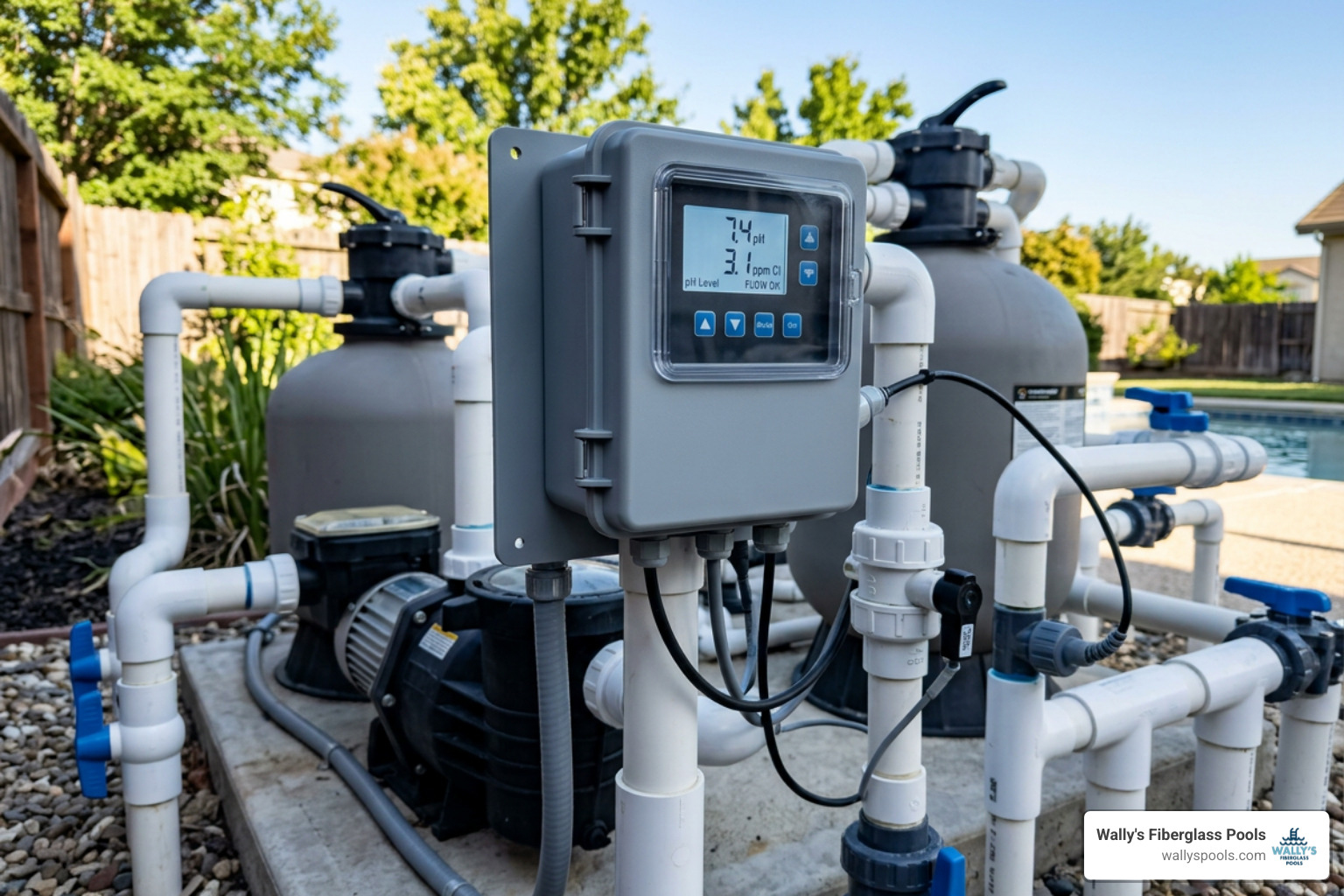
Dual-probe systems monitor:
- Oxidation-Reduction Potential (ORP): Measures the sanitizing effectiveness and active chlorine power of the water in millivolts (mV).
- pH Levels: Tracks acid-base balance continuously, automatically triggering a peristaltic metering pump to inject liquid acid (or CO2) whenever pH drifts above target thresholds.
Systems like the CircuPool CORE CONTROL 55 | WiFi Automation Platform | Elect combine high-output salt chlorination (generating up to 2.0 lbs of pure chlorine daily for pools up to 55,000 gallons) with automated smart relays and integrated water sensors, keeping water clear with minimal chemical handling.
Automated Sanitization and Chemical Monitoring
Fluctuating bather loads, summer thunderstorms, and hot sun can rapidly deplete chlorine reserves. Smart chemical controllers identify these shifts instantly. When ORP drops below the designated setpoint (typically 650–750 mV), the controller directs the electrolytic salt cell or liquid sanitizer feed to adjust output until balance is restored.
These systems include integrated safety switches to protect equipment, such as low-salt warnings, no-flow safety interlocks, and chemical feed limits that prevent over-chlorination. Routine reviews in our Category: Pool Maintenance guides show that stable sanitization and balanced pH also extend the operating lifespan of interior pool gelcoats and surrounding plumbing equipment.
Maximizing Energy Savings with Variable-Speed Schedules
Pumping pool water through filters and heaters represents a significant portion of annual pool utility costs. The affinity laws of hydraulics dictate that cutting a pump’s motor speed in half reduces its electrical power demand by roughly seven-eighths.
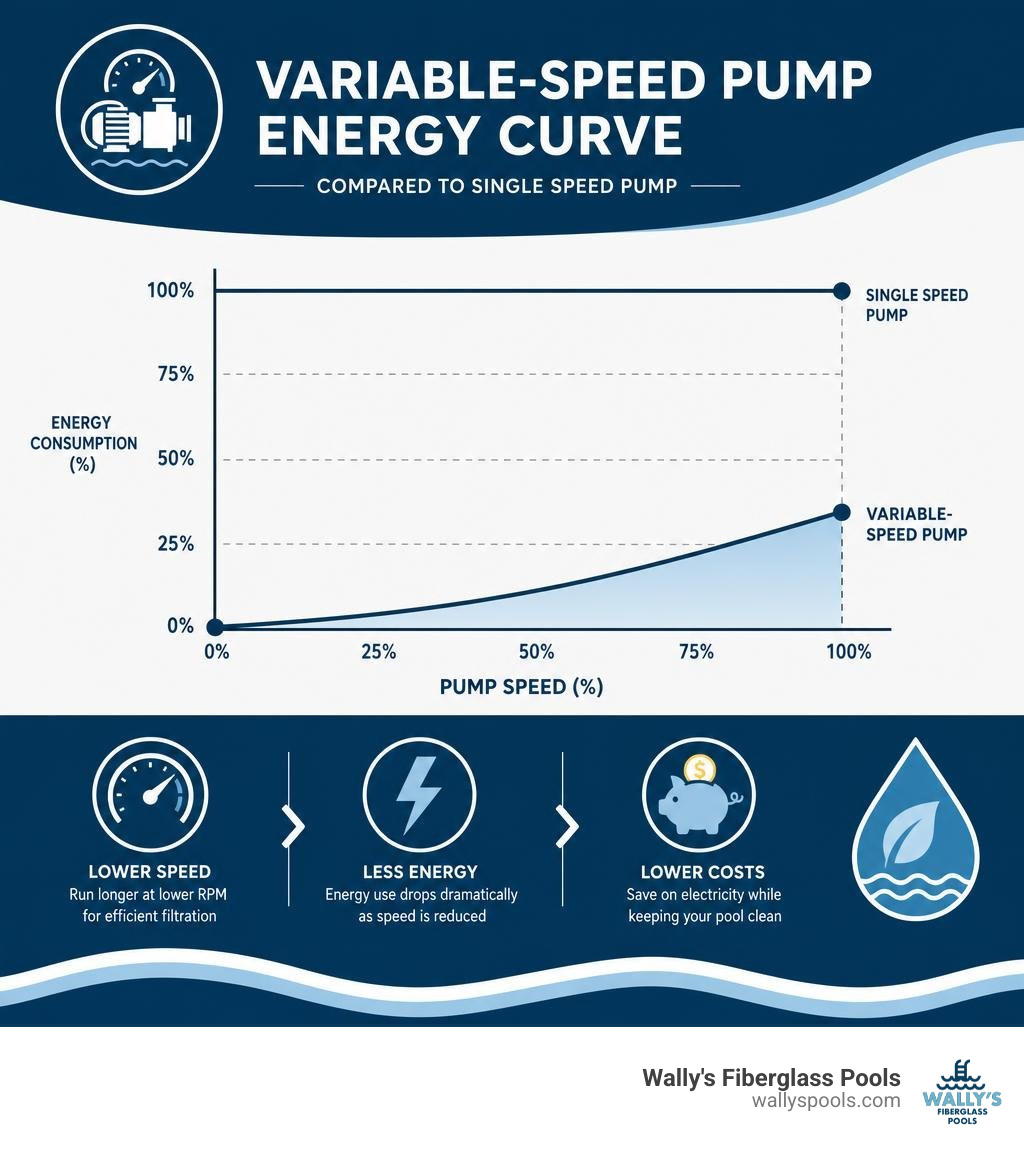
By using automation to operate a variable-speed pump at lower RPMs for long filtration windows and ramping up speeds only when solar heaters, gas heaters, or water features require higher flow, homeowners can achieve up to a 70 percent reduction in pump energy consumption. Automation hubs also let you schedule high-draw cleaning cycles during off-peak electrical billing periods, maximizing equipment efficiency and reducing operating costs.
Costs, Equipment Lifespan, and Climate Considerations
The initial investment for a modern pool automation system varies based on equipment pad complexity, the number of automated valves, and the level of chemical monitoring added:
- Base Hardware Cost: Entry-level smart hubs range from $1,200 to $1,800, while premium commercial-grade residential load centers with built-in salt generation capabilities range from $2,000 to $3,200.
- Professional Electrical and Mechanical Installation: Installing subpanels, high-voltage conduits, grounding rods, low-voltage communication cabling, and motorized valve actuators typically adds $1,500 to $3,000 depending on pad layout.
- Total Expected Investment: A complete, turnkey automation installation generally ranges between $3,500 and $6,200.
- Manufacturer Warranties: Standard warranties range from 1 to 3 years for mainstream platforms, while specialized systems like Poolside Tech offer lifetime protection on core processing electronics.
Retrofitting Existing Setups with Pool Automation Systems
You do not need to build a brand-new pool to enjoy smart automation. Older mechanical equipment pads can be modernized using modular retrofit kits. During an equipment review, technicians evaluate:
- Current subpanel electrical capacity (ensuring 50A to 100A availability for auxiliary pool equipment).
- Plumbing clearance for motorized valve actuators on suction and return manifolds.
- Variable-speed pump drive compatibility with digital communication cards.
Upgrading an older pad brings modern smartphone scheduling and remote control to existing equipment, and our Fiberglass Pool Service team can help identify the best retrofit path for your current equipment layout.
Designing Weather-Resilient Setups for Midwest Climates
In regions experiencing dramatic temperature shifts, automated climate features are essential. During sudden cold snaps in late spring or early autumn, built-in freeze protection sensors monitor ambient air temperatures. When temperatures drop toward 34°F–36°F, the automation system overrides standard schedules to run filtration pumps continuously, circulating water through exposed pipes to prevent freezing damage.
All outdoor electronics must be housed in UV-stabilized, NEMA 3R or NEMA 4X weatherproof enclosures with dedicated surge protection to guard against electrical spikes from summer storms. For homeowners coordinating seasonal openings or winterizations across our Southeast Wisconsin Service Locations, automation ensures that freeze protocols protect your plumbing right up until formal winter closing.
When planning a new backyard project with a professional Fiberglass Pool Installation, integrating a modern automation platform from day one ensures that all underground conduits, plumbing loops, and smart actuators work together seamlessly.
Frequently Asked Questions About Smart Pool Controls
Can pool automation systems be retrofitted to older pools without replacing all equipment?
Yes. Most older pools can be retrofitted with smart automation without replacing functional pumps or heaters. Modular automation systems can control standard high-voltage relays to power single-speed pumps, gas heaters, and existing lighting. If you decide to upgrade to a variable-speed pump later, modern digital hubs can expand to support full digital motor communication.
How do automated freeze protection sensors protect pool plumbing during sudden cold snaps?
Automated controllers utilize external ambient air temperature thermistors that constantly monitor outside air. When the sensor detects temperatures dropping near freezing (typically 35°F), the controller automatically activates the filtration pump and rotates motorized valves across all plumbing lines. Constant water circulation prevents ice crystals from forming in exposed above-ground plumbing lines and equipment headers.
What is the average total cost to purchase and professionally install a complete automation system?
A complete pool automation setup typically costs between $3,500 and $6,200 installed. This investment covers the main weather-rated load center, digital circuit boards, smart relays, motorized valve actuators, ambient temperature sensors, Wi-Fi antennas, and professional mechanical and high-voltage electrical installation. Adding closed-loop chemical dosing modules (pH and ORP management) can add $800 to $1,800 to the total installation.
Conclusion
Upgrading to a smart pool automation platform simplifies routine pool care, lowers energy bills, and protects your equipment against unexpected weather changes. Whether you select an equipment-matched platform like Pentair IntelliCenter or Hayward OmniLogic, or a versatile brand-agnostic hub, centralizing your controls lets you spend less time managing valves and more time enjoying your pool.
At Wally’s Fiberglass Pools, we help homeowners across Sussex, Lake Country, Waukesha County, Milwaukee, and Lake Geneva design, build, and automate low-maintenance backyard pools tailored to Wisconsin’s seasons. If you are ready to explore smart pool controls or plan your upcoming pool project, visit Home to connect with our team today.