5 Quick Ways to Extend the Life of Your Filter Cartridges
Cartridge Filter Maintenance Starts With Clean Pressure and Gentle Cleaning
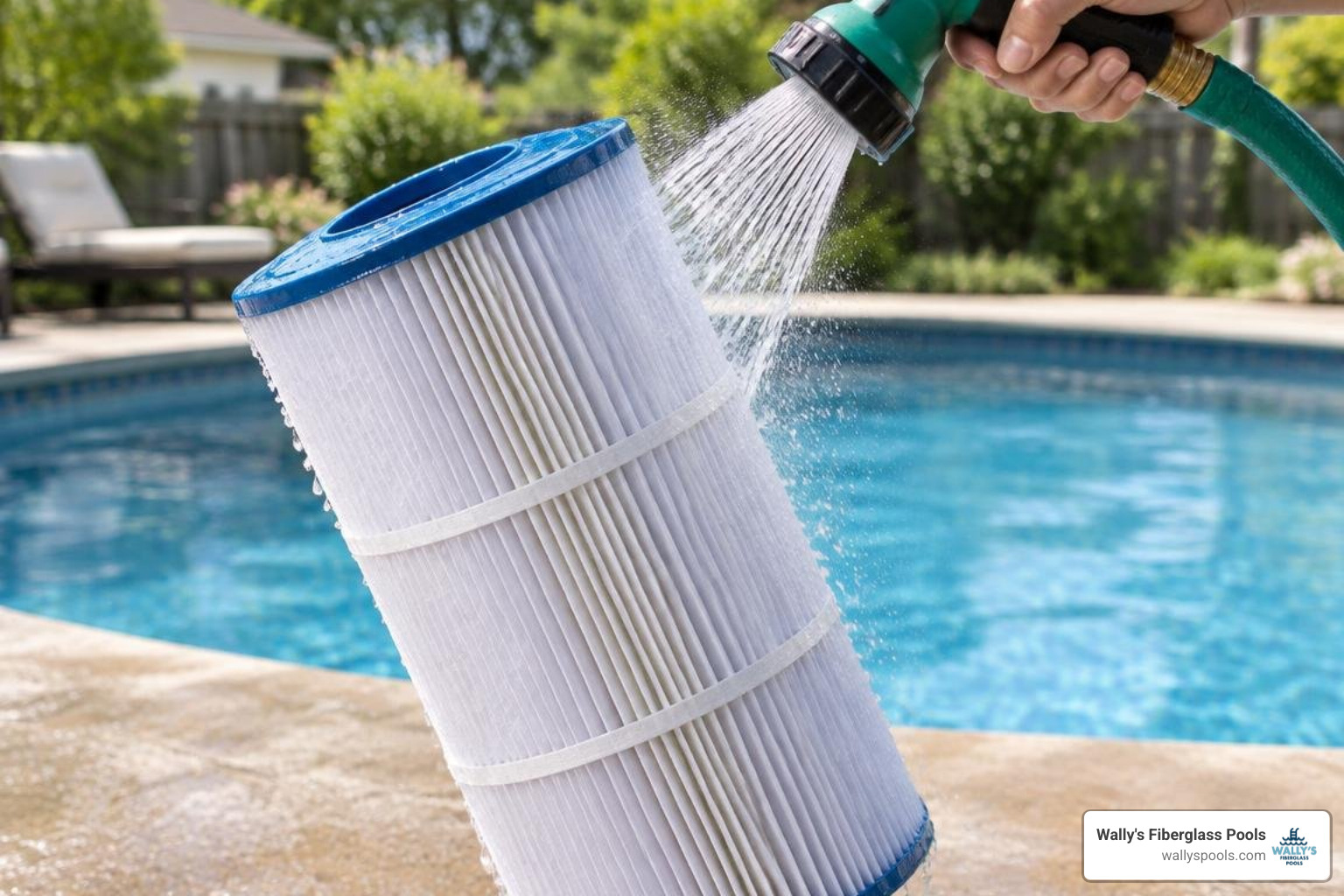
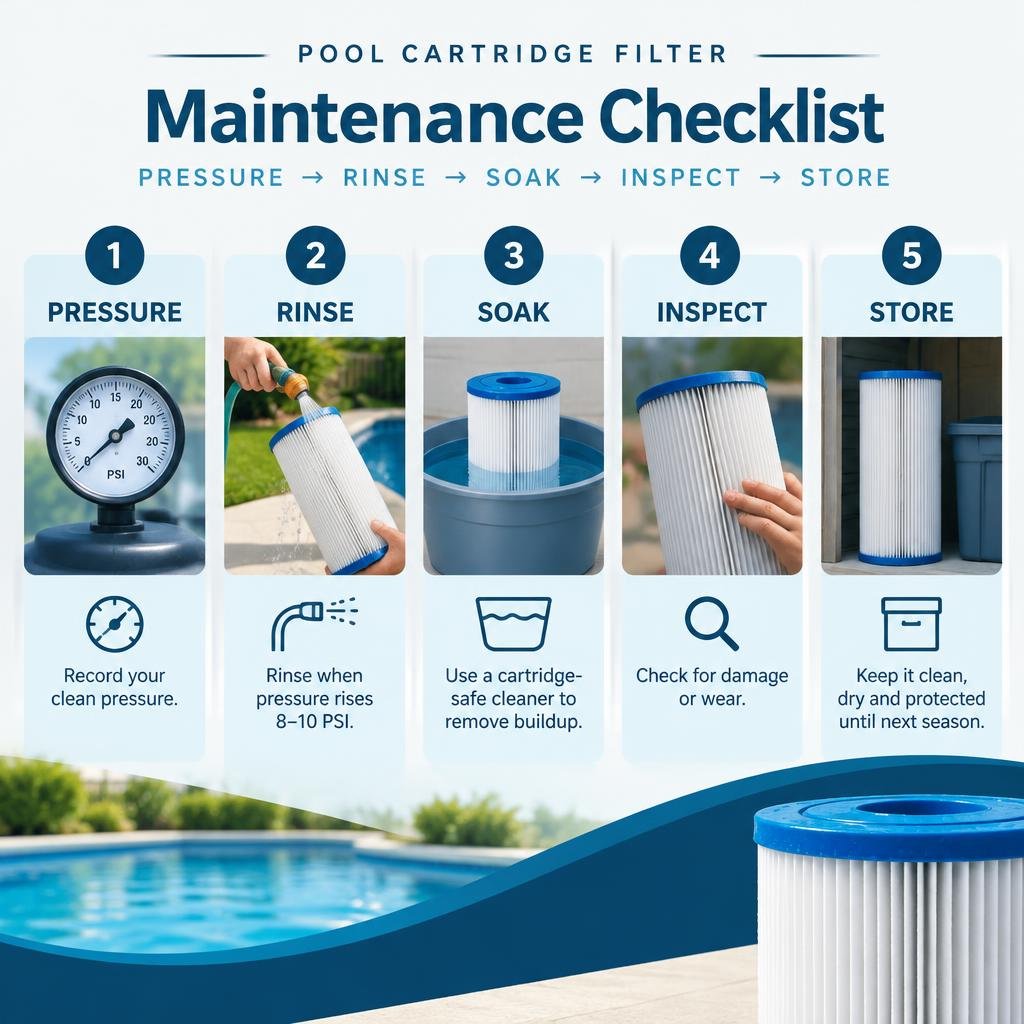
For effective cartridge filter maintenance, record your filter’s clean pressure after a fresh cleaning, then rinse the cartridge when pressure rises about 8-10 PSI above that baseline. Shut off power, release all tank pressure, remove the cartridge, and use a garden hose to gently rinse between the pleats. Never use a pressure washer. A deep soak with a cartridge-safe cleaner helps remove sunscreen, body oils, and scale that a hose cannot reach.
Your pool filter acts like its lungs. It catches debris before it can cloud the water or restrict circulation. In Southeast Wisconsin and Lake Country, pollen, storm debris, and heavy summer pool use can clog a cartridge faster than expected.
Regular care protects water flow, reduces strain on the pump, and can help a cartridge last about three years under normal conditions. This guide shares five quick, practical ways to get more life from your filter cartridges.
I’m Wally Haines from Wally’s Pools, a Sussex-based fiberglass pool specialist serving homeowners across Southeast Wisconsin.
Explore more about cartridge filter maintenance:
Understanding Cartridge Filter Maintenance and Pressure Baselines
Cartridge filtration systems capture microscopic contaminants down to 10–15 microns. In contrast, standard sand filters typically filter particles down to 20–40 microns, while diatomaceous earth (D.E.) filters can trap particles as fine as 3–5 microns (the human eye only sees particles down to 35 microns). Because cartridge elements rely on dense, pleated polyester media rather than loose media, they do not require messy backwashing. Instead, all captured dirt, body oils, and organics remain trapped within the pleats until you manually rinse them out.
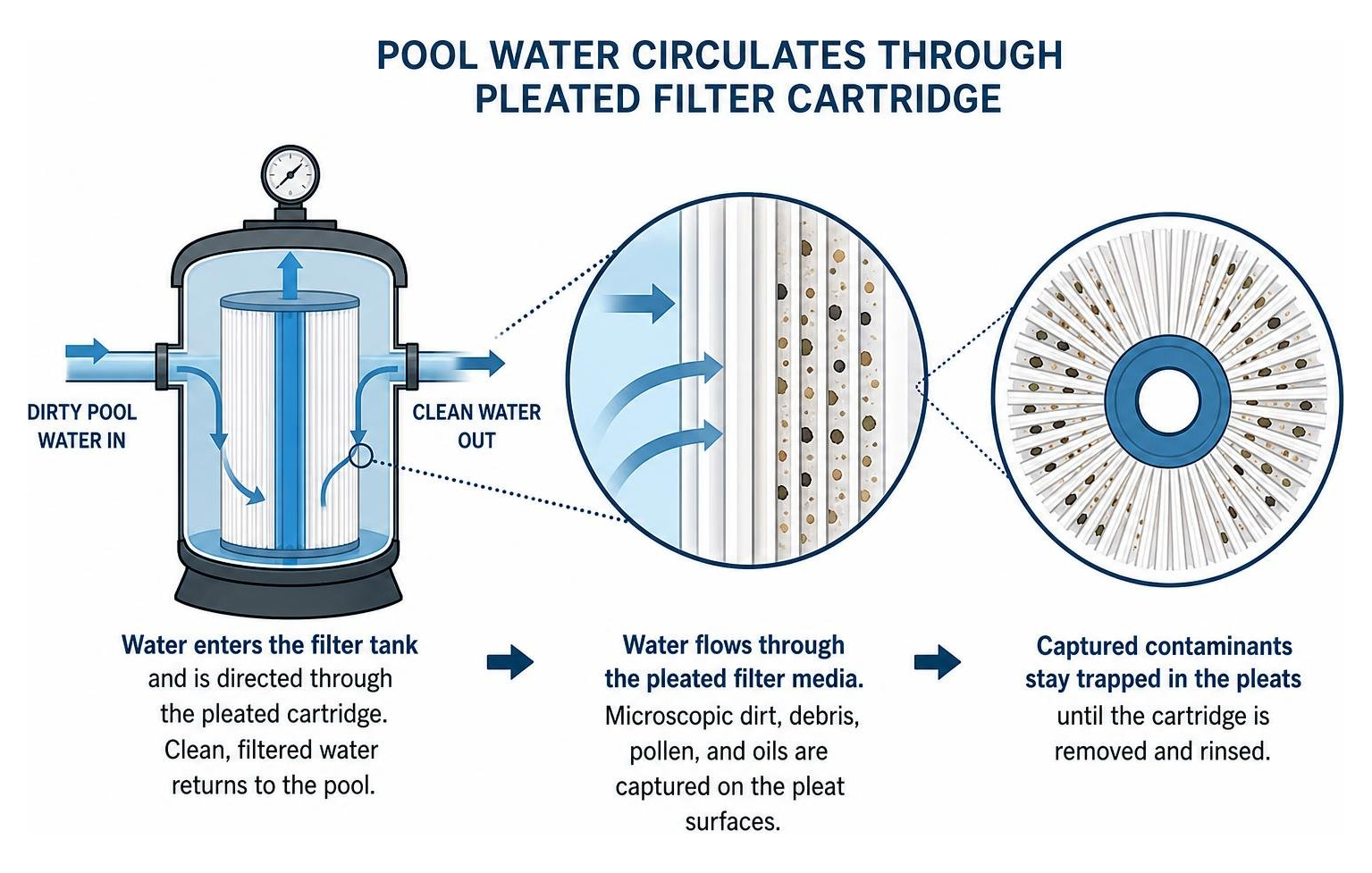
Every pool system has an “original clean starting pressure.” This is the pressure reading in pounds per square inch (PSI) displayed on your filter tank’s pressure gauge immediately after you install a brand-new or freshly deep-cleaned cartridge.
As debris accumulates across the surface area of the pleats, water meets greater resistance. This restriction reduces the overall gallons-per-minute (GPM) flow back into your swimming pool while increasing internal tank pressure. Running your pump against high internal pressure forces the motor to work harder, increasing electrical draw and risking heat-related equipment failure. Establishing a consistent schedule for regular fiberglass pool maintenance begins by writing your clean baseline PSI directly inside your equipment pad enclosure.
Routine Cartridge Filter Maintenance Frequency and Pressure Triggers
You should clean your pool cartridge filter whenever the pressure gauge increases by 8–10 PSI above your clean starting pressure (or roughly 25% above baseline at identical pump RPMs). If your clean filter reads 12 PSI, plan to clean the cartridge the moment the gauge climbs to 20–22 PSI.
In Southeast Wisconsin—where summer weather brings sudden thunderstorms, heavy tree pollen from lakefront oaks, and intense weekend bather loads—relying strictly on a calendar can leave your filter clogged. While inspecting your pressure gauge weekly is best practice, a general seasonal rhythm works well:
| Operating Condition | Clean Baseline Gauge Reading | Cleaning Trigger (PSI Rise) | Recommended Maintenance Interval |
|---|---|---|---|
| Peak Summer (High Use) | 10–14 PSI (Normal) | +8 to +10 PSI (18–24 PSI) | Every 2 to 4 Weeks |
| Spring Startup & Fall | 10–14 PSI (Normal) | +8 to +10 PSI (18–24 PSI) | Every 4 to 8 Weeks |
| Post-Storm / Algae Cleanup | 10–14 PSI (Normal) | Rapid spike to +10 PSI | Immediate manual rinse & soak |
| Low-Use / Off-Season | System Winterized | N/A | Deep soak before winter indoor storage |
5 Proven Strategies to Maximize Filter Cartridge Longevity
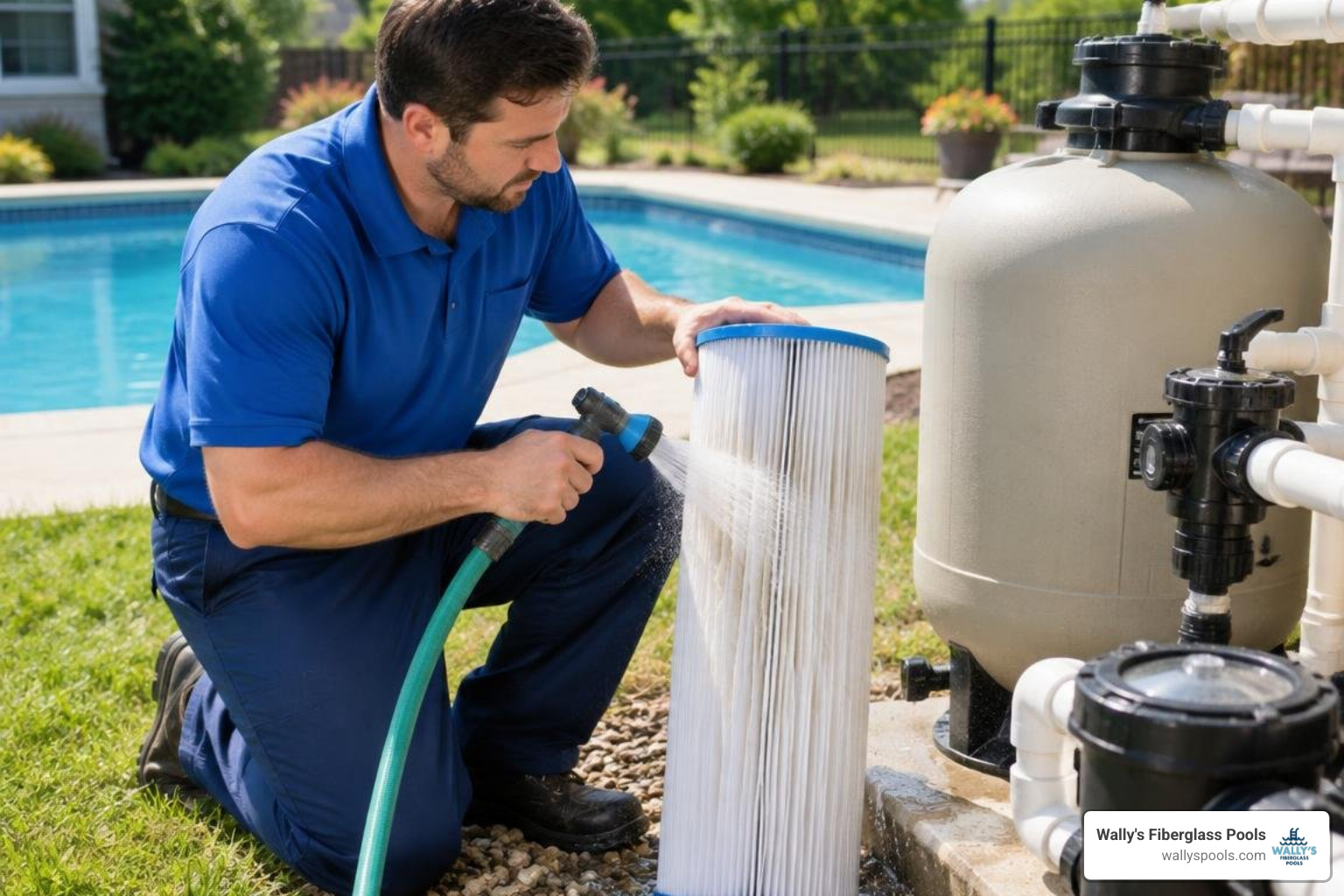
A high-quality cartridge filter element represents an investment in water clarity. While typical elements average a three-year lifespan, poor handling can ruin the fabric in a single season. Using the right essential pool cleaning equipment and gentle techniques protects the spun-bonded polyester pleats and ensures strong filtration year after year.
1. Master the 45-Degree Low-Pressure Hose Rinse
The most common DIY mistake pool owners make is grabbing a high-pressure washer or blasting water straight into the pleats. A pressure washer’s concentrated stream will tear microscopic polyester fibers, widen the pores, and flatten pleat spacing, permanently ruining filtration ability.
- Use a Standard Garden Hose: Attach a standard brass twist nozzle, multi-pattern spray nozzle, or specialized filter-cleaning wand.
- Maintain a 45-Degree Angle: Hold the spray nozzle 6 to 8 inches away from the pleats at a 45-degree downward angle. This lifts debris up and out of the valleys between pleats rather than pushing grit deeper into the core.
- Work Top-to-Bottom: Methodically work your way around the cylinder from top to bottom, rotating the cartridge slowly until the runoff water transitions from murky brown to clear.
2. Implement a Deep Chemical Soak and Degreasing Routine
Water alone cannot dissolve organic fats, sunscreens, hair products, and body oils that bind to polyester fabric. If oils remain on the cartridge, hosing simply spreads the oily sheen across the pleats.
- Use an Enzyme or Degreaser First: Soak the element in a commercial pool filter cleaner or a mild trisodium phosphate (TSP) solution (1 cup TSP per 5 gallons of warm water) for 8 to 12 hours (overnight). Biodegradable all-purpose cleaners like Simple Green also safely loosen organic soils without degrading cartridge polymers.
- Never Acid-Wash an Oily Cartridge: Applying muriatic acid before removing oils creates a permanent, sticky paste that ruins the fabric. Only perform a mild acid soak (1 part muriatic acid to 20 parts water for 10 minutes) if you are removing stubborn calcium scale, and always do so after the degreasing step has been fully rinsed out.
- Consult your manufacturer’s documentation for model-specific chemical contact limits.
3. Adopt the Two-Cartridge Rotation System
Having a spare cartridge on hand simplifies maintenance and doubles the service life of both elements:
- Zero System Downtime: When the operating filter needs a chemical soak, swap in your clean spare immediately. Your pool pump stays running, keeping your water crystal clear.
- Complete Drying Extends Media Strength: Allowing a washed cartridge to air dry completely in the shade before its next use lets the polyester fibers reset and tightens the media.
- Less Wear and Tear: Rotating two cartridges distributes wear evenly across seasons, protecting your investment.
4. Protect O-Rings, Clamps, and Housing Seals
Filter upkeep involves the entire pressure vessel, not just the pleated element. Filter tanks operate under significant pressure—often up to a maximum working limit of 50 PSI on units like the Pentair Clean & Clear Plus.
- Silicone-Based Lubricant Only: Every time you open the tank, clean the main tank O-ring and apply a thin coat of pure silicone-based or water-based pool lubricant. Never use petroleum-based lubricants (like Vaseline), which cause rubber seals to swell, crack, and fail.
- Inspect the Clamp Ring and Spring Coil: For systems secured with a tension clamp, ensure the clamp ring sits squarely around the tank lip. Tighten the barrel nut until the spring coils touch, and gently tap the clamp ring with a rubber mallet or dead-blow hammer while tightening to distribute tension evenly.
- Keep Air Relief Valves Clear: Ensure the manual air relief valve and pressure gauge are free of internal mineral buildup. Replace the pressure gauge immediately if the needle fails to drop to zero when the pump is turned off.
5. Essential Cartridge Filter Maintenance and Storage for Wisconsin Winters
In Waukesha County, Walworth County, and the greater Milwaukee metro, winter brings severe freeze-thaw cycles that can crack pool equipment.
- Drain the Tank Completely: Remove the bottom drain plug on the filter housing during fall closing so trapped water cannot freeze and fracture the tank bottom.
- Perform an End-of-Season Deep Clean: Thoroughly hose down and soak the cartridge in filter cleaner, rinse it completely, and let it dry in a warm, dry location.
- Store Indoors: Store dry cartridges inside a basement, insulated garage, or climate-controlled utility area. Storing wet cartridges outdoors or in unheated sheds exposes plastic end caps and structural support bands to sub-zero brittleness, resulting in cracked structural components by spring.
Step-by-Step Guide to Safely Cleaning Your Filter System
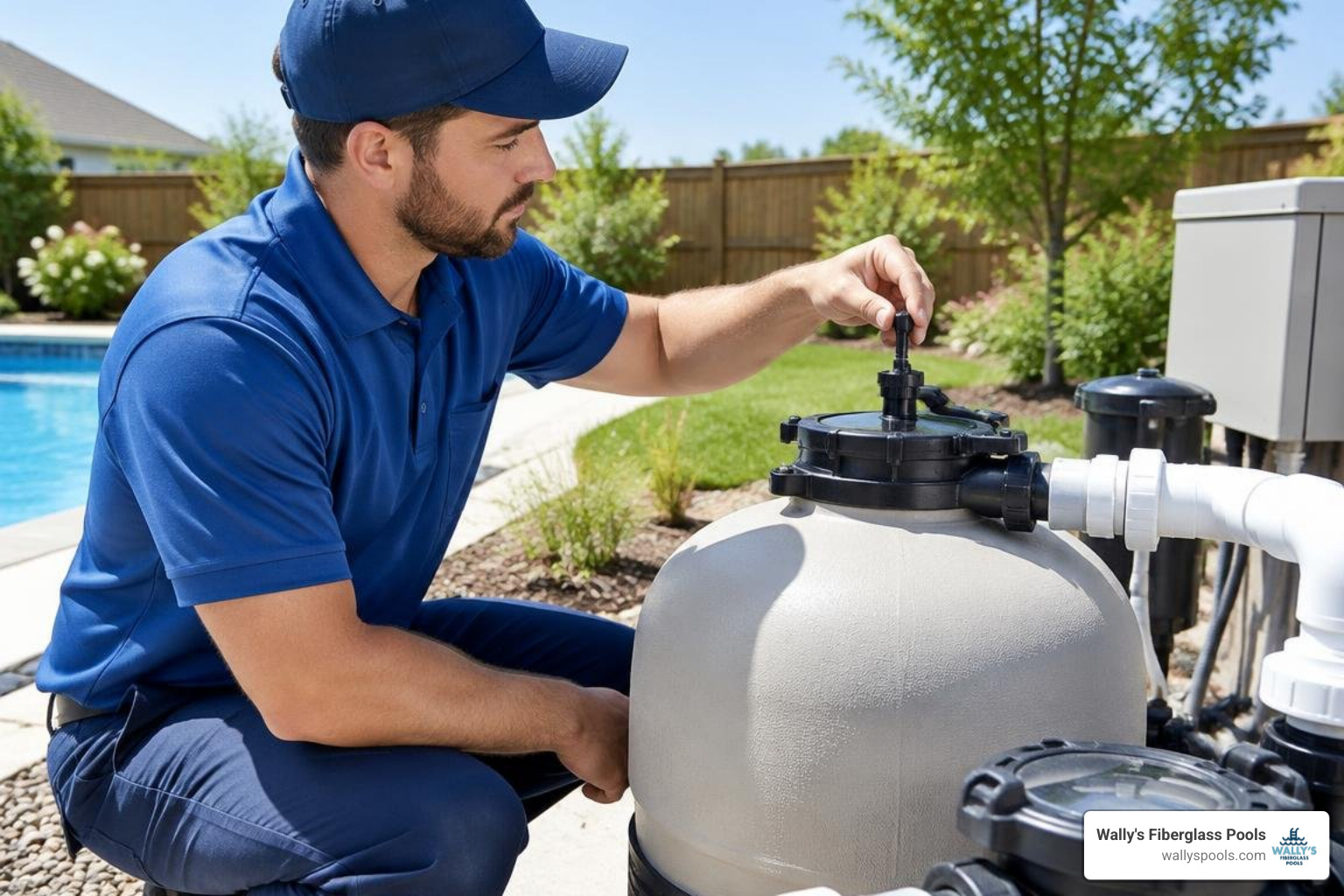
Cleaning a cartridge filter system takes about 30 to 45 minutes. Because pool filters operate as pressurized vessels, always prioritize safety. If you need assistance, consult our team for professional fiberglass pool service.
- Shut Off All Power: Turn off the pool pump at the automation panel and switch off the main circuit breaker to prevent accidental startup.
- Open the Manual Air Relief Valve: Turn the valve on top of the filter tank counter-clockwise. You will hear trapped air hissing out. Wait until the pressure gauge needle drops fully to 0 PSI.
- Remove the Tank Drain Plug: Open the drain plug at the bottom of the filter vessel to let water empty out of the tank.
- Remove the Clamp Assembly: Using a 7/8-inch socket wrench or the manufacturer-designated tool, loosen the clamp nut and lift the clamp ring away. Remove the upper tank lid carefully without lifting from the air relief valve.
- Extract the Cartridge: Lift the cartridge element (or elements) out of the tank body. Inspect the lower manifold and tank interior, rinsing away accumulated sand or sediment.
- Rinse and Soak the Pleats: Hose the cartridge from top to bottom at a 45-degree angle. If organic oils or mineral scale are present, soak the element in a specialized cleaner.
- Clean and Lubricate the O-Ring: Wipe the tank O-ring clean, inspect it for cracks or flattening, and apply silicone lubricant before reseating it in the lower tank groove.
- Reinstall Cartridge and Lid: Center the clean cartridge over the bottom plumbing adapter. Place the top lid back on the tank, align the clamp assembly, and tighten until the spring coils touch.
- Restart and Bleed Air: Keep the top manual air relief valve open. Step clear of the tank and turn the pump breaker back on. As the pump primes and water fills the vessel, air will vent from the valve. When a steady stream of water shoots out without sputtering, close the valve tightly.
- Record Starting Pressure: Check your pressure gauge, confirm there are no leaks around the clamp or drain plug, and write down your new clean baseline PSI.
When to Replace vs. Clean Cartridge Filter Elements
Even with meticulous care, filter media eventually degrades. Spun-bonded polyester fibers slowly stretch and trap permanent scale that chemical soaks can no longer remove. Under typical residential operating conditions, cartridge elements last an average of three years.
Look for these clear signs that it is time to install pool equipment replacement options instead of cleaning:
- Persistent High Pressure: The pressure gauge remains 5–8 PSI above original baseline even after a full overnight chemical soak and thorough rinse.
- Frayed or Fuzzy Pleats: The polyester fabric appears fuzzy, separated, or exhibits visible tears and holes.
- Cracked End Caps: The rubber or polyurethane end caps show splits, brittleness, or structural cracking.
- Broken Reinforcement Bands: The outer plastic retention bands snapped, causing the pleats to collapse inward and crush together.
- Rapid Pressure Spikes: System pressure shoots up 10 PSI within days of a deep cleaning, indicating deep-core clogging.
For additional equipment guidance, review your manufacturer manual for your specific filter model.
Frequently Asked Questions About Pool Filter Care
Can I use a pressure washer or dish soap on my pool cartridge filter?
No. Pressure washers tear delicate polyester fibers and crush pleat spacing. Standard household dish soap should also be avoided—it contains sudsing agents that are difficult to rinse out completely, causing foamy pool water. Stick to a garden hose with a standard spray nozzle and dedicated enzyme or TSP-based pool filter degreasers.
How long do pool filter cartridges typically last?
Under normal conditions with proper water balance (maintaining correct pH and calcium hardness) and regular cleaning intervals, quality pool cartridge filters last approximately 3 to 5 years (averaging 3 years in most seasonal pools). High bather loads, poor water chemistry, or aggressive pressure washing can cut that lifespan down to a single season.
How do I safely release pressure before opening the filter tank?
Always shut off power to the pump at the breaker panel first. Next, turn the manual air relief valve on top of the filter tank counter-clockwise until you hear air hissing out. Do not attempt to loosen the clamp ring or remove the tank lid until the hissing stops completely and the pressure gauge needle points firmly to 0 PSI.
Conclusion
Routine cartridge filter care keeps your pool water sparkling, lowers monthly energy costs, protects your pump motor, and saves money on premature cartridge replacements. By monitoring your baseline pressure gauge, using gentle 45-degree rinsing angles, soaking away stubborn oils, and storing clean elements indoors during Wisconsin winters, you will get maximum performance from your filtration system all season long.
Homeowners across Sussex, Pewaukee, Oconomowoc, Brookfield, Lake Geneva, and surrounding Southeast Wisconsin communities count on Wally’s Fiberglass Pools for expert pool service, equipment upgrades, and seasonal maintenance. If you need help servicing your pool equipment pad or getting your pool ready for the season, contact our local team today!