How to Never Worry About Pool Chemical Balance Again
Essential Pool Chemicals for Crystal-Clear Water
Keeping your swimming pool sparkling clean does not require a degree in biochemistry. At its core, water care relies on understanding how a few core products interact to keep water sanitized, comfortable, and chemically balanced. Following a practical pool chemical maintenance playbook allows you to manage daily disinfection and prevent organic contaminants from taking over your backyard oasis.
Pool water is constantly exposed to environmental debris, sunlight, rain, and bather waste like sweat, lotions, and oils. Without active sanitation and proper balance, bacteria multiply rapidly, algae blooms form within hours, and pool surfaces can suffer permanent damage. Regulators like the Environmental Protection Agency provide detailed EPA guidelines for sodium hypochlorite to ensure swimming pool sanitizers are used effectively to eliminate harmful microorganisms while protecting swimmer health.
Sanitizers and How Pool Chemicals Kill Contaminants
Sanitizers are the backbone of any water treatment program. Their primary job is to destroy pathogenic microorganisms, oxidize organic debris, and prevent algae growth.
When chlorine is added to pool water, it dissolves to form two compounds: hypochlorous acid (HOCl) and hypochlorite ions (OCl⁻). Hypochlorous acid is the active, powerful disinfecting agent. It penetrates the cell walls of bacteria, algae spores, and viruses, destroying their internal structures through cell oxidation within seconds. Hypochlorite ions are far slower oxidizers. The proportion of HOCl versus OCl⁻ depends heavily on your pool’s pH, which is why keeping pH in the optimal zone is vital for sanitizer efficacy.
| Sanitizer Type | Active Form | Best Used For | Key Advantage | Key Consideration |
|---|---|---|---|---|
| Liquid Chlorine (Sodium Hypochlorite 10-12.5%) | Hypochlorous Acid | Routine chlorination & shocking | Fast-acting; adds zero cyanuric acid (CYA) | Bulky jugs; degrades over time in heat |
| Trichlor Tablets (Trichloro-s-triazinetrione 90%) | Hypochlorous Acid | Daily maintenance via chlorinators | Slow-dissolving; convenient | Lowers pH; steadily adds CYA to water |
| Cal-Hypo Granules (Calcium Hypochlorite 56-70%) | Hypochlorous Acid | Weekly shocking & fast algae treatment | Powerful oxidizer; does not contain CYA | Adds calcium hardness; must be dissolved carefully |
| Bromine Tablets (BCDMH) | Hypobromous Acid | Indoor pools & hot tubs | Stable at high temperatures; low odor | Cannot be stabilized against UV rays in direct sunlight |
| Potassium Monopersulfate (Non-Chlorine Shock) | Active Oxygen | Routine oxidation of organics | Eliminates chloramines; swim in 15 minutes | Does not kill algae or act as a primary sanitizer |
Understanding these distinctions helps you manage chemical dosage effectively. To dive deeper into the chemical reactions taking place in your water, explore a comprehensive chlorine chemistry guide that outlines free, combined, and total chlorine dynamics.
Stabilized vs. Non-Stabilized Chlorine
One of the most important concepts in outdoor pool chemistry is the difference between stabilized and non-stabilized chlorine.
The sun’s ultraviolet (UV) rays destroy free chlorine rapidly. On a sunny Wisconsin summer afternoon in Waukesha or Walworth County, unshielded free chlorine can degrade by up to 90% in just two hours. To prevent this, outdoor pools use cyanuric acid (CYA), often called chlorine stabilizer.
- Stabilized Chlorine (Trichlor and Dichlor): These products have cyanuric acid bonded directly to the chlorine molecule. As the chlorine dissolves and sanitizes your water, the CYA remains behind. Trichlor 3-inch tablets are the standard stabilized chlorine for floating dispensers and inline feeders.
- Non-Stabilized Chlorine (Liquid Sodium Hypochlorite and Calcium Hypochlorite): These sanitizers contain no cyanuric acid. When added to the water, they sanitize immediately without increasing your CYA levels.
While cyanuric acid is essential for protecting chlorine from UV loss, it does not evaporate or filter out. Over a long season, continuous use of stabilized trichlor tablets causes CYA to accumulate. When CYA levels rise above 50 to 80 ppm, it causes a phenomenon known as “chlorine lock.” The excess stabilizer binds so tightly to the chlorine molecules that it prevents hypochlorous acid from oxidizing contaminants, leaving the pool vulnerable to algae blooms even when your test kit reads high total chlorine levels.
For routine maintenance in outdoor pools, maintaining CYA between 30 and 50 ppm provides ideal sun protection without locking up your free chlorine.
Shock Treatments vs. Routine Sanitization
Many pool owners ask why they need to shock their pool if they already keep chlorine tablets in a feeder. Routine sanitization maintains a baseline level of Free Available Chlorine (1.0 to 4.0 ppm) to handle everyday contamination. Shocking—also called superchlorination—means drastically elevating the sanitizer level to achieve “break-point chlorination.”
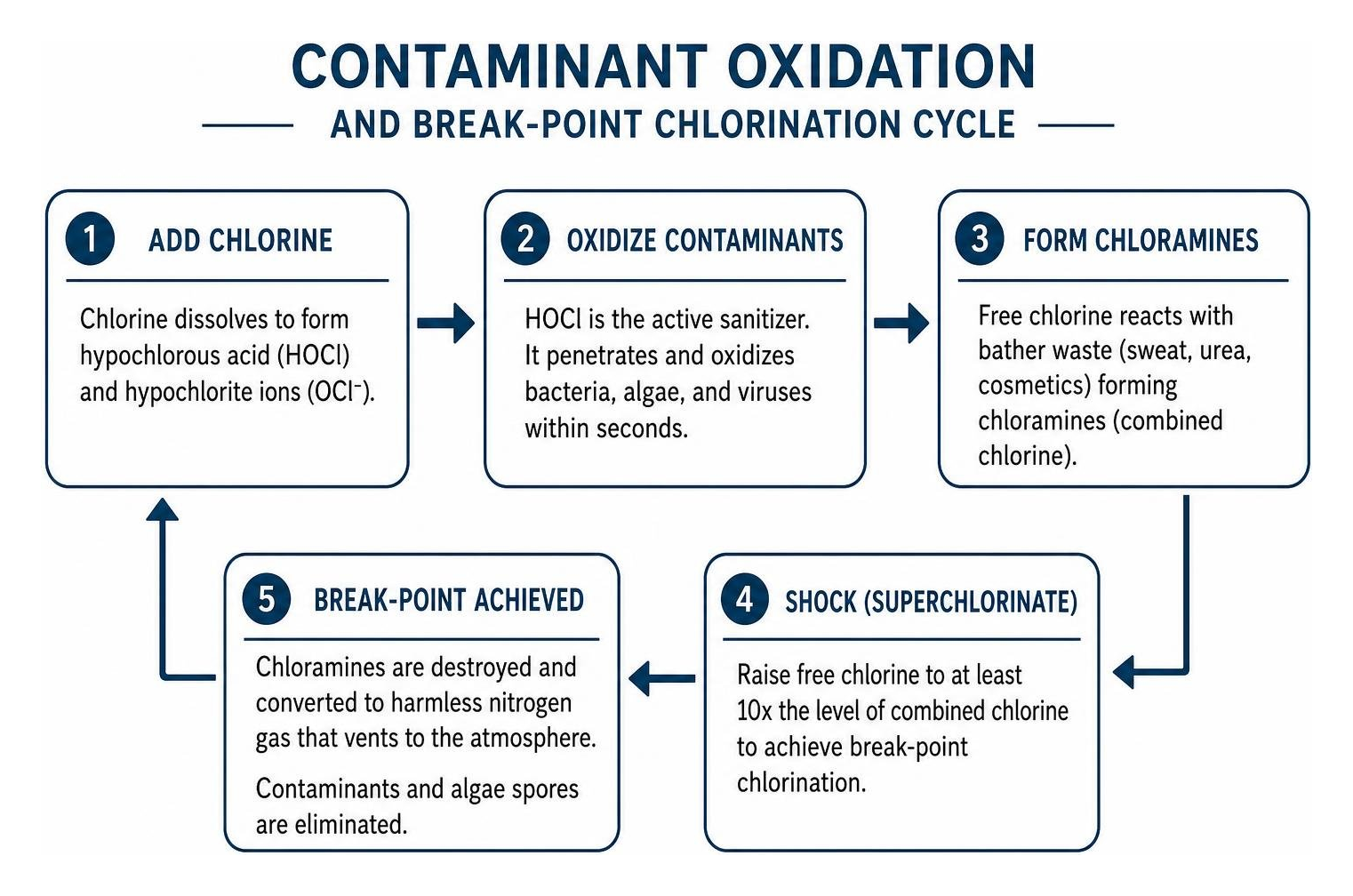
When free chlorine reacts with bather waste (such as sweat, urea, and cosmetics), it forms chemical byproducts called chloramines, or combined chlorine. Chloramines are weak disinfectants that cause strong chemical smells and eye irritation.
Superchlorinating your pool accomplishes several critical tasks:
- Breaks down chloramines: Elevating free chlorine to 10 times the level of combined chlorine breaks the chemical bonds of chloramines, converting them into harmless nitrogen gas that vents into the atmosphere.
- Eliminates resistant algae spores: Algae spores can build resistance to low baseline sanitizer levels; a sudden, high shock dose wipes them out before visible blooms appear.
- Destroys organic bather loads: After a pool party, storm, or heavy pollen drop, shocking clears out organic waste that would otherwise overwhelm your filtration system.
We recommend shock treating your pool once a week in the late afternoon or evening. Applying shock after sundown prevents UV rays from degrading the high chlorine dose before it has time to work overnight. Regular weekly shock treatments prevent up to 90% of common pool water problems.
Mastering Water Balancing: pH, Alkalinity, and Calcium Hardness
Water balance refers to the relationship between pH, total alkalinity, and calcium hardness. If sanitizer is the shield that defends your pool against germs, water balance is the foundation that keeps the water comfortable for swimmers and safe for your pool equipment and surfaces. Proper fiberglass pool chemistry prevents etching, staining, and scale formation, ensuring the smooth gelcoat surface remains pristine for decades.
Total Alkalinity and pH Stabilization
Total alkalinity (TA) and pH work hand-in-hand. Understanding their relationship eliminates most water balancing headaches.
- pH (Ideal Range: 7.2–7.6): The pH scale measures how acidic or basic your water is. If pH drops below 7.2, the water becomes acidic, leading to eye sting, skin irritation, metal corrosion on heaters, and rapid degradation of pool equipment. If pH rises above 7.6, the water becomes scale-forming, hypochlorous acid efficiency drops significantly, and water turns cloudy.
- Total Alkalinity (Ideal Range: 80–120 ppm): Total alkalinity measures the water’s ability to neutralize acids, acting as a chemical buffer for pH. When alkalinity is too low (below 80 ppm), pH becomes erratic, swinging wildly with every rainfall or chemical addition. When alkalinity is too high (above 120 ppm), pH becomes locked at high levels and resist downward adjustment.
To adjust these parameters, always balance total alkalinity first:
- To raise alkalinity: Add sodium bicarbonate (alkalinity increaser).
- To lower alkalinity and pH: Add liquid muriatic acid or dry acid (sodium bisulfate).
- To raise pH without significantly affecting alkalinity: Add soda ash (sodium carbonate).
Calcium Hardness and Cyanuric Acid Control
Calcium hardness measures the concentration of dissolved mineral calcium in your pool water. The ideal target range is 200 to 400 ppm.
Water naturally seeks equilibrium. If your pool water has low calcium hardness (under 200 ppm), it becomes aggressive and seeks calcium from surrounding materials. While this is notorious for pitting plaster and dissolving grout in concrete pools, soft water can also corrode internal heater cores, pump seals, and metal fittings in fiberglass installations. Conversely, excessive calcium hardness (over 400 ppm) leads to calcium carbonate precipitation, creating rough, crusty white scale lines along the waterline and inside plumbing.
To increase calcium hardness, add calcium chloride according to package dosage guidelines. If calcium hardness or cyanuric acid levels become excessively high due to years of hard water top-offs or overusing stabilized chlorine, chemical reducers are rarely practical. The most reliable solution is a partial drain and refill with fresh water.
Solving Water Quality Issues with Specialty Treatments
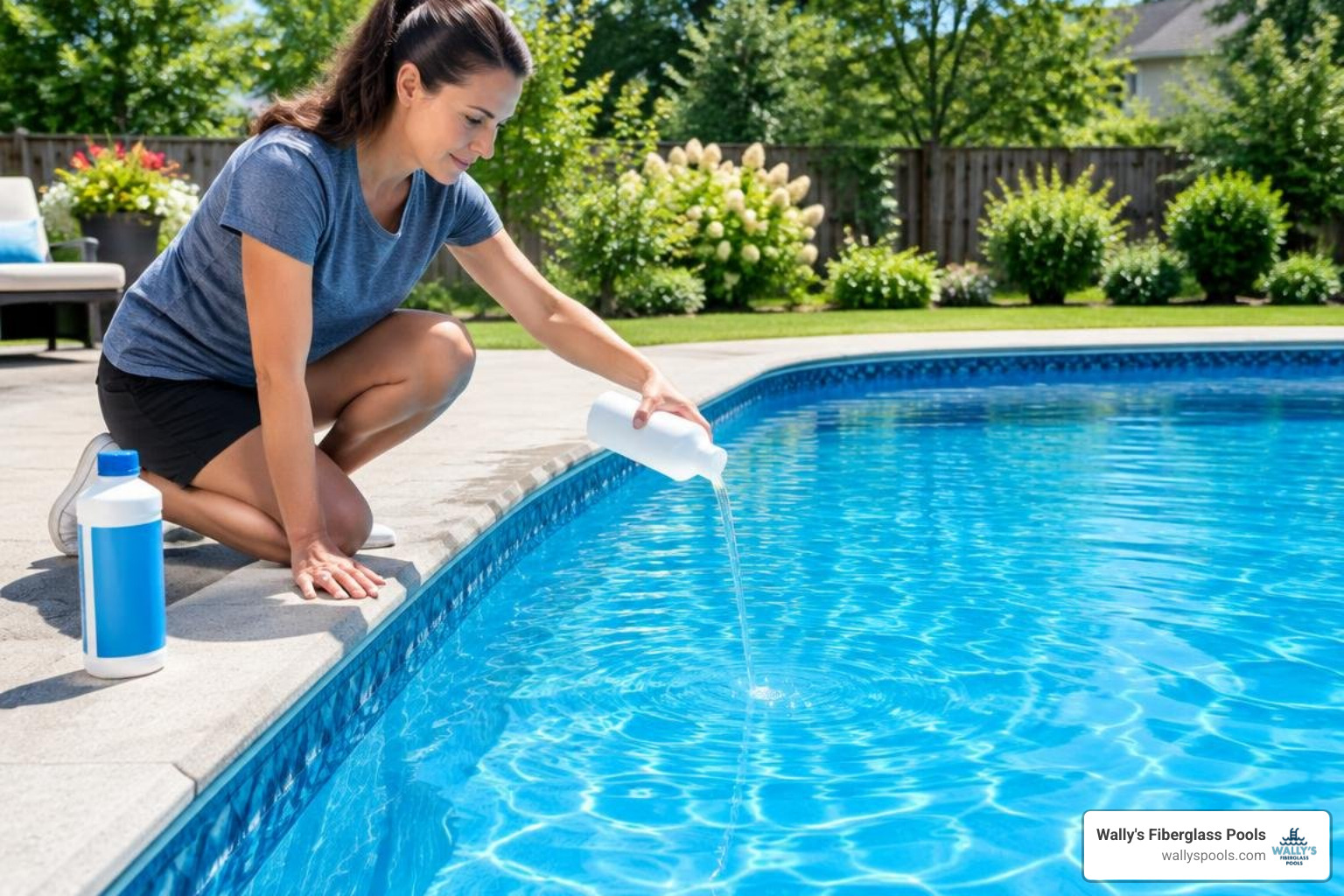
Even with consistent sanitizing and balancing, seasonal weather events and heavy bather loads can cause unexpected water issues. Specialty chemical treatments provide targeted solutions to restore water quality. For ongoing upkeep, having the right pool maintenance solutions on hand ensures quick recovery from storms, cloudy water, and heavy usage.
Choosing Specialty Pool Chemicals for Algae and Clarity
When water loses its sparkle or develops a green, yellow, or black haze, specific treatments restore clarity quickly.
- Quaternary Ammonium Algaecides (“Quats”): Excellent for routine algae prevention. They work by lowering the surface tension of water and breaking down algae cell membranes. However, over-dosing can cause water foaming.
- Polyquat Algaecides: Non-foaming, broad-spectrum algaecides that prevent and treat established green and mustard algae. They are safe for all pool finishes and will not stain surfaces.
- Water Clarifiers: Coagulants that bind micro-particles together into larger clusters, enabling your pool filter to capture fine debris that would otherwise pass through the media.
- Pool Flocculants: Heavy-duty clearing agents that drop suspended particles directly to the pool floor, allowing you to vacuum dead algae and fine silt directly to waste without clogging the filter.
Enzymes and Metal Removers
Modern pool care relies increasingly on natural bio-enzymes and metal control agents to minimize chemical demand:
- Pool Enzymes: Natural protein formulas that break down non-living organic contaminants—including body oils, suntan lotions, pollen, and pet dander. By digesting organic scum lines, enzymes prevent filter clogging and significantly lower chlorine consumption.
- Metal Sequestering Agents: In Southeast Wisconsin communities where pool water is sourced from private well systems, dissolved minerals like iron, copper, and manganese are common. When chlorine oxidizes these metals, it can stain pool walls green, brown, or rust-colored. Liquid metal sequestrants chemically bind with dissolved mineral ions, keeping them in solution until filtration or dilution removes them safely.
Testing Frequency, Chemical Safety, and Environmental Best Practices
Maintaining safe water requires regular monitoring, safe storage, and responsible handling.
How Often to Test
- 2–3 Times Per Week: Test Free Chlorine and pH during the active swimming season.
- Weekly: Test Total Alkalinity.
- Monthly: Test Calcium Hardness, Cyanuric Acid, and Total Dissolved Solids (TDS).
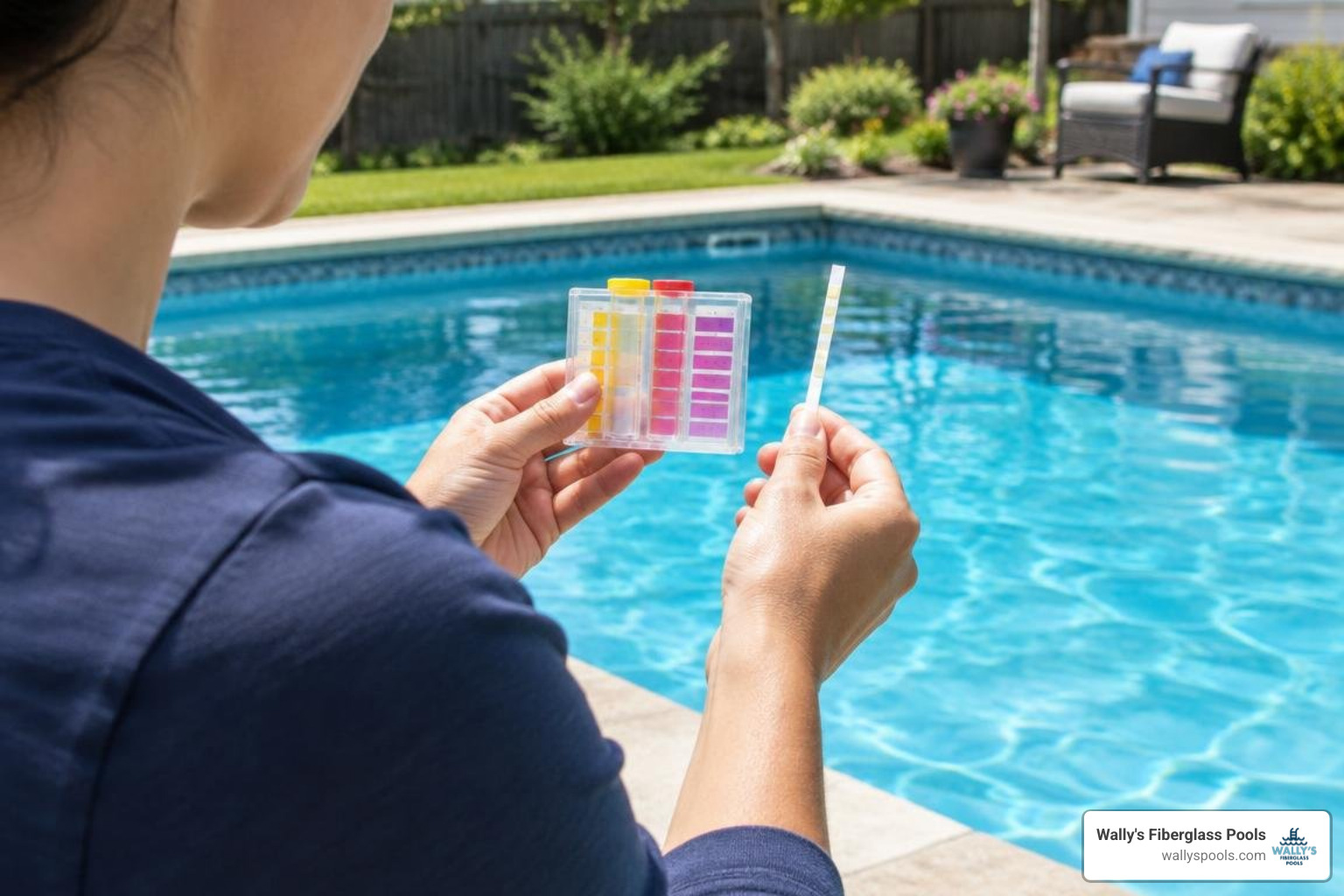
High-quality liquid reagent kits (using DPD reagents) or calibrated digital photometers deliver the most accurate results, while test strips provide rapid day-to-day readings. If managing weekly chemical testing and dosing feels overwhelming, exploring professional pool chemical services ensures your water stays balanced without the guesswork.
Chemical Safety and Storage Rules
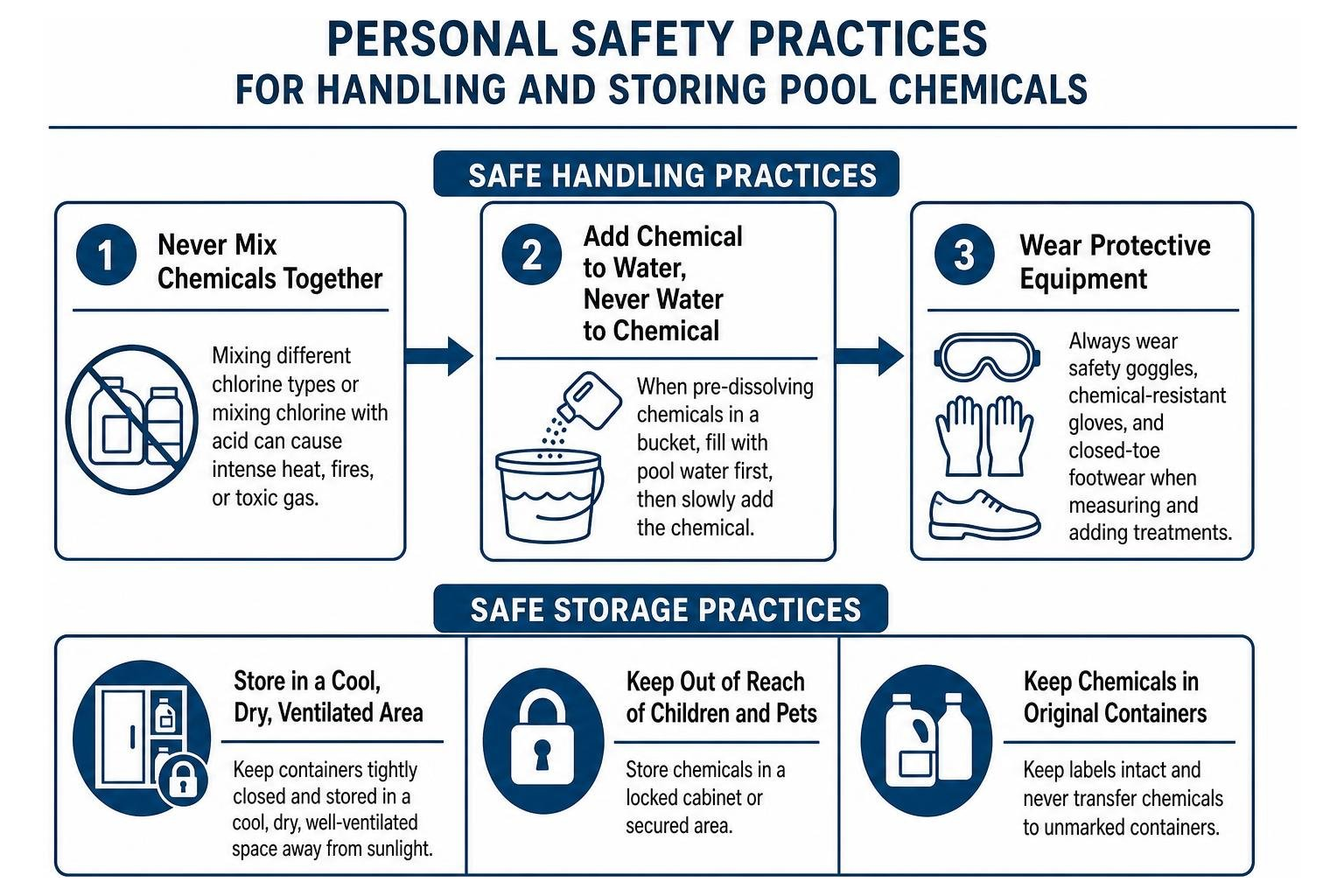
Pool chemicals are powerful oxidizers and corrosive agents that demand careful handling:
- Never Mix Chemicals Together: Mixing different chlorine types (such as calcium hypochlorite and trichlor) or mixing chlorine with acid can trigger intense heat, chemical fires, or explosive releases of toxic chlorine gas.
- Add Chemical to Water, Never Water to Chemical: When pre-dissolving chemicals in a bucket, fill the bucket with pool water first, then slowly add the chemical to prevent exothermic splash-back.
- Wear Protective Equipment: Always wear safety goggles, chemical-resistant gloves, and closed-toe footwear when measuring and adding treatments.
- Store in a Cool, Dry, Ventilated Space: Keep containers tightly sealed in their original packaging, elevated off concrete floors, and out of direct sunlight and reach of children.
Environmental Stewardship
When backwashing filters or performing seasonal drain-downs in Wisconsin, avoid discharging chlorinated water directly into local storm drains or freshwater wetlands. Chlorine and algaecides are toxic to fish and aquatic ecosystems. Allow free chlorine to drop to 0 ppm over several days before draining, or use a chemical neutralizer like sodium thiosulfate to de-chlorinate the discharge water completely.
Frequently Asked Questions About Pool Chemistry
How often should pool water be tested during peak swim season?
We recommend testing your water two to three times per week during the warm summer months. Hot summer temperatures, intense UV exposure, and heavy bather loads accelerate chlorine consumption and cause rapid pH fluctuations. Testing several times a week allows you to make minor chemical adjustments before water balance drifts out of range.
What causes a strong chlorine odor in a swimming pool?
A pungent “chlorine smell” is caused by chloramines (combined chlorine), not an excess of free chlorine. When hypochlorous acid binds to organic nitrogen and ammonia from sweat, oils, and bather waste, it forms irritating chloramines. This odor indicates the pool does not have enough active free chlorine and requires shock treatment to oxidize the chloramines and restore sanitary conditions.
Can you mix different pool chemicals together before adding them?
No, never mix different pool chemicals together. Combining products—such as mixing liquid chlorine with muriatic acid, or blending cal-hypo shock with trichlor tablets—produces violent chemical reactions, severe heat, fire hazards, and dangerous toxic gas clouds. Always add chemicals to the pool water separately, with the circulation pump running, allowing sufficient time for each product to distribute thoroughly between applications.
Conclusion
Keeping your swimming pool balanced, clear, and inviting does not require complicated science or endless trial and error. By maintaining your core sanitizers, keeping pH and total alkalinity aligned, and adopting a consistent weekly testing routine, you can prevent cloudy water, algae, and equipment corrosion before they begin.
For homeowners across Sussex, Lake Country, Waukesha County, and Southeast Wisconsin, local weather, seasonal temperature shifts, and freeze-thaw cycles make timely pool care essential. Whether you are balancing a new inground pool or looking for expert service and equipment support, Wally’s Fiberglass Pools is here to help you enjoy effortless swimming all season long.