Real World Cost Breakdown for Inground Fiberglass Pool Repair
What Does Fiberglass Pool Crack Repair Cost in Southeast Wisconsin?
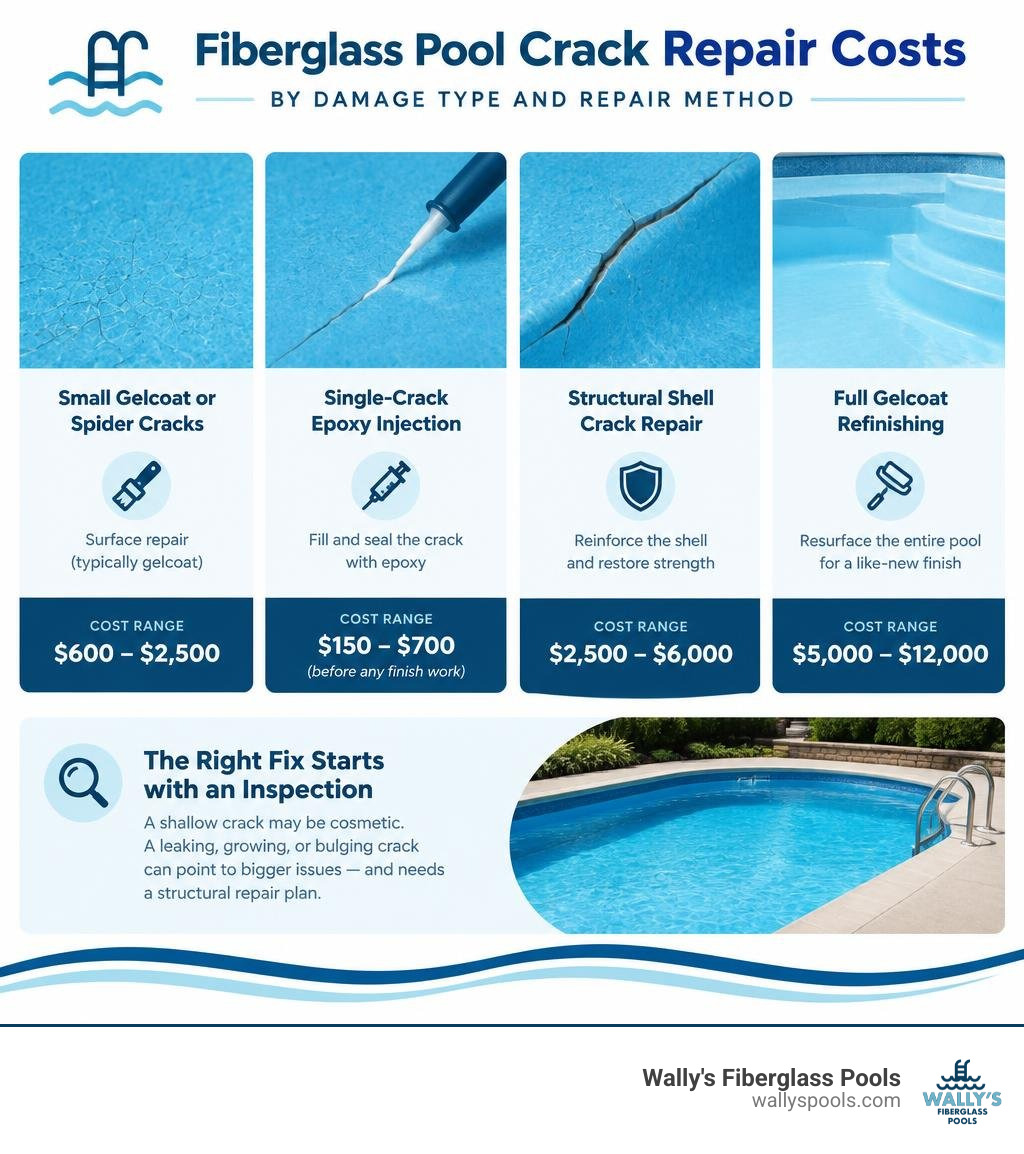
Most homeowners pay $600 to $6,000 for fiberglass pool crack repair, with an average near $2,000. The price depends on whether the crack is limited to the gelcoat or extends into the fiberglass shell.
- Small gelcoat or spider cracks: about $600 to $2,500
- Single-crack epoxy injection: about $150 to $700, before any finish work
- Structural shell crack repair: about $2,500 to $6,000
- Widespread damage needing full gelcoat refinishing: about $5,000 to $12,000
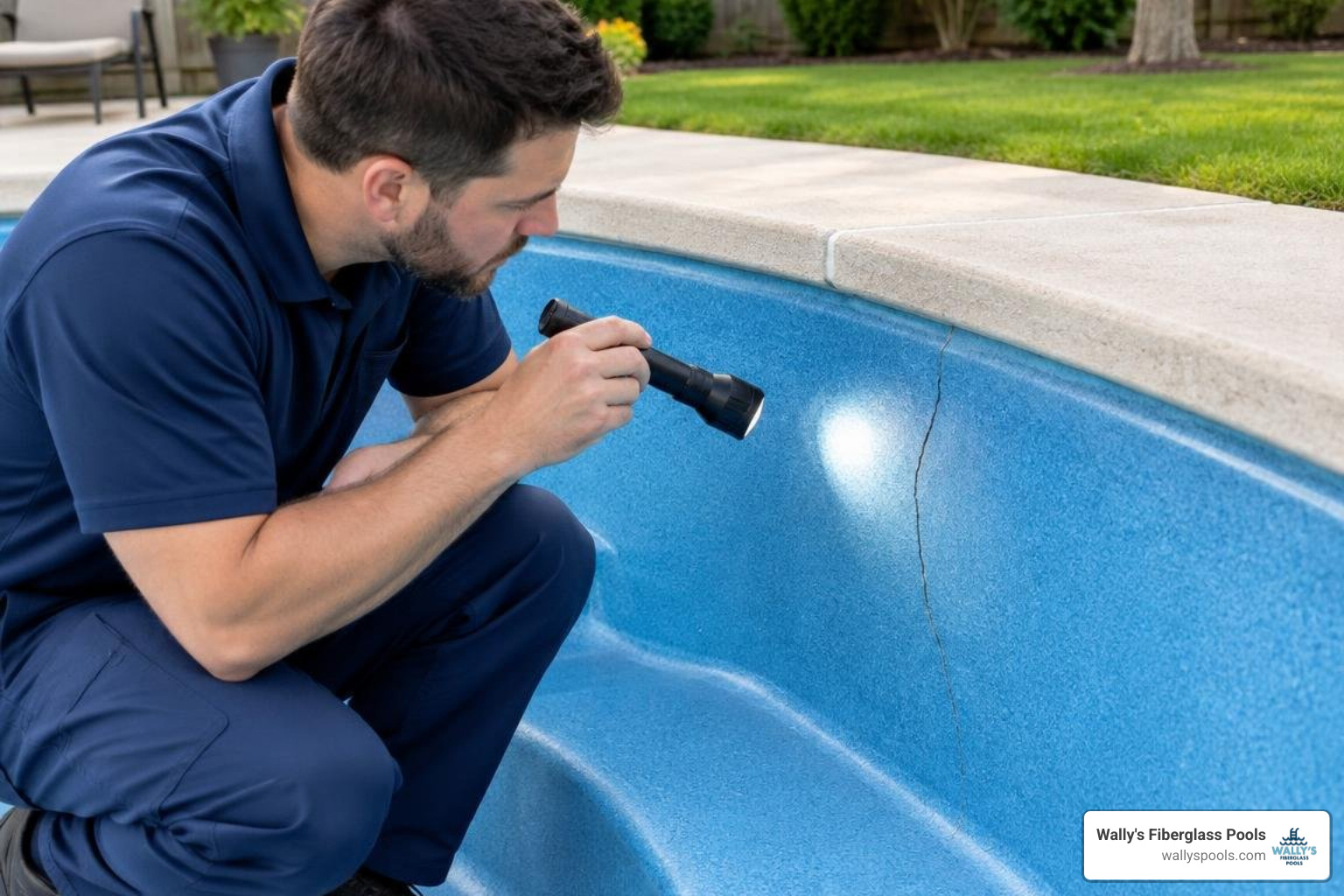
For homeowners in Lake Country, Waukesha County, and the Milwaukee area, the most important first step is a proper inspection. A shallow surface crack may be cosmetic. A crack that leaks, grows, or appears with a bulging wall or uneven floor can point to movement, backfill trouble, or hydrostatic pressure – and it needs a structural repair plan.
Repairing one crack is usually far less expensive than resurfacing the whole pool, which commonly costs $5,000 to $15,000. But a low-cost patch is not a good value if it covers damage below the gelcoat. The right fix starts with identifying the cause, then repairing the shell and finish together.
I am Wally Haines from Wally’s Pools, a Sussex-based fiberglass pool specialist serving Southeast Wisconsin, and this guide will help you understand what a repair should include before you compare estimates.
Simple fiberglass pool crack repair cost word guide:
Average Fiberglass Pool Crack Repair Cost by Damage Type
Evaluating damage on an inground pool shell requires separating superficial aesthetic flaws from structural failures. When we evaluate an inground fiberglass pool across Lake Country or Walworth County, we examine the depth of the fracture, whether laminate plies have separated, and if the pool is losing water.
Minor cosmetic issues involve only the non-structural outer shell coating, while structural fractures compromise the underlying glass-reinforced composite. The cost of labor, specialized composite resins, and surface matching shifts based on this initial diagnosis. Detailed national and regional pricing is tracked in the Fiberglass Pool Crack Repair Cost Guide: Price Ranges, Components, and Savings 2026 – Current Cost .
| Damage Category | Description | Average Cost Range | Expected Repair Timeline |
|---|---|---|---|
| Minor Gelcoat Scratch / Chip | Shallow surface nick or chip above or below waterline | $300 – $600 | 1 – 2 Days |
| Spider Cracks (Crazing) | Hairline surface web patterns isolated to gelcoat | $800 – $2,500 | 2 – 3 Days |
| Single Structural Crack | Full-depth fracture through structural laminate plies | $2,500 – $6,000 | 3 – 5 Days |
| Osmotic Blistering | Moisture pockets / delamination in laminate shell | $3,000 – $8,000 | 7 – 10 Days |
| Bulging Wall / Floor Shift | Structural deflection caused by backfill voids/pressure | $2,500 – $5,000 | 3 – 6 Days |
| Complete Interior Resurface | Full multi-coat gelcoat or composite restoration | $5,000 – $12,000 | 10 – 14 Days |
Spider Cracks vs Structural Fiberglass Pool Crack Repair Cost
Spider cracks, also known as gelcoat crazing, are superfine, web-like hairline fractures that develop exclusively in the hard top surface layer. They occur when localized stress exceeds the flexibility of the gelcoat—often due to minor thermal shock, manufacturing variances, or natural ground settling. Because spider cracks do not reach the underlying structural woven fiberglass layers, they do not cause leaks. Repairing localized spider cracking involves grinding down the compromised gelcoat, preparing an epoxy or vinyl-ester barrier, and spraying a color-matched marine topcoat, running between $800 and $2,500.
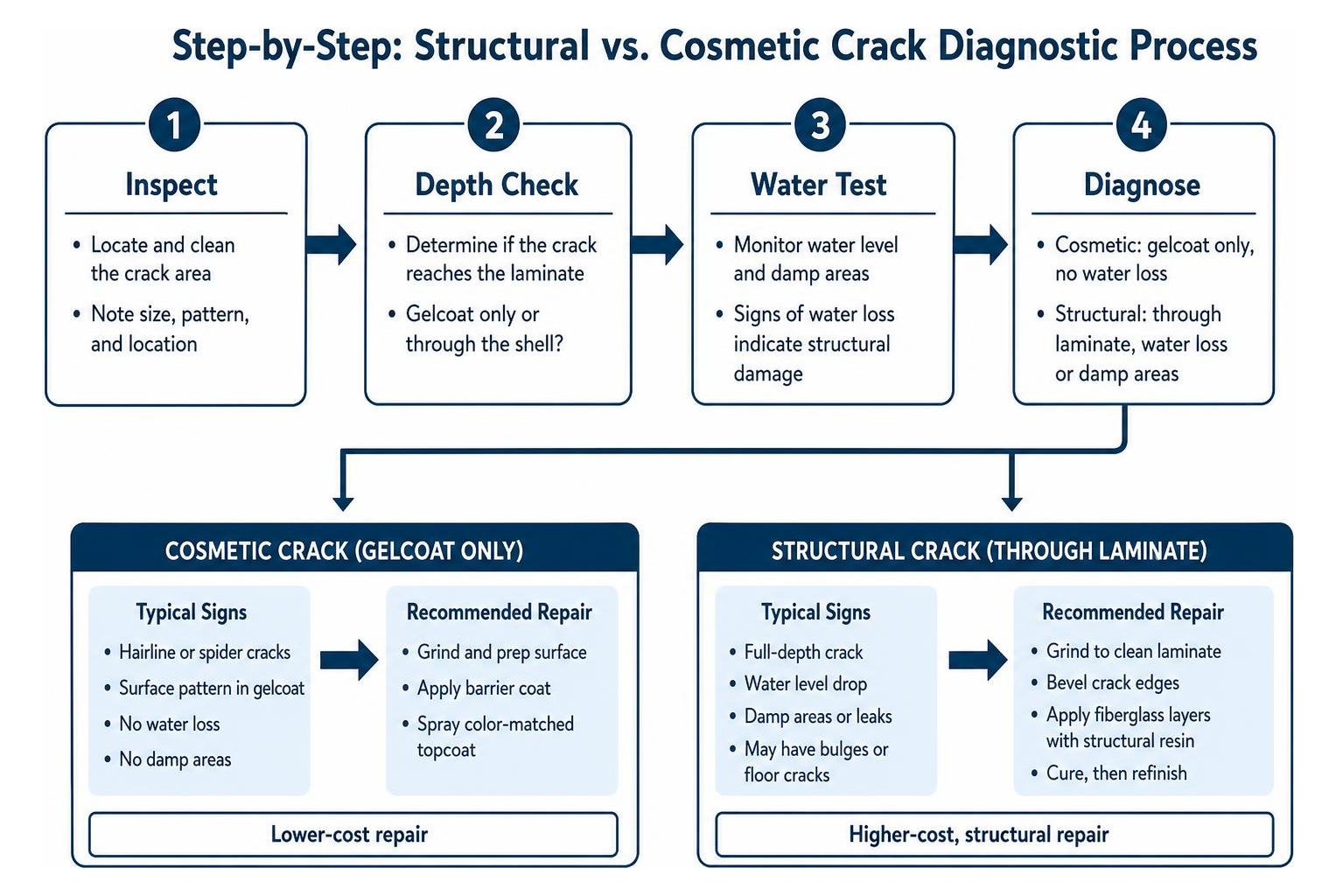
Structural cracks represent genuine laminate failure where the woven glass fabric and resin core have split. These fractures can allow pool water to escape into surrounding soils or permit high groundwater to seep into the shell. Structural repairs require grinding through the gelcoat, beveling the laminate edges, laying down multi-axial fiberglass cloth with marine-grade vinyl-ester or epoxy structural resin, and post-curing before applying cosmetic coats. Homeowners needing heavy laminate reconstruction can consult our dedicated Fiberglass Pool Repair division to address these deeper structural fractures.
Bulging Shells, Floor Cracks, and Osmotic Blister Repairs
Bulges along the pool walls or hollow-sounding floor sections point to external pressures rather than isolated material defects. When backfill material settles, washes away, or lacks proper compaction, void spaces form behind the fiberglass shell. Heavy saturated soil or rising groundwater fills these voids, applying hydrostatic force that pushes flexible walls inward, creating floor fractures and bulges.
Remediating a bulging wall or floor crack requires backfill stabilization—relieving external hydrostatic pressure, injecting gravel or self-compacting material beneath voids, and structurally reinforcing the fiberglass. Wall and floor stabilization typically runs between $2,500 and $5,000.
Osmotic blisters occur when moisture penetrates the gelcoat and reacts with water-soluble materials in the resin, creating fluid-filled bubbles that delaminate the shell. Professional repair involves opening each blister, flushing out acidic fluid, baking or thoroughly drying the laminate core, applying an impervious vinyl-ester barrier coat, and recoating the area, costing between $3,000 and $8,000. For further technical specifics on laminate and gelcoat diagnostics, review Fibreglass Pool Repair: Damage Types, Methods & Costs .
Repair Methods and Material Price Breakdown
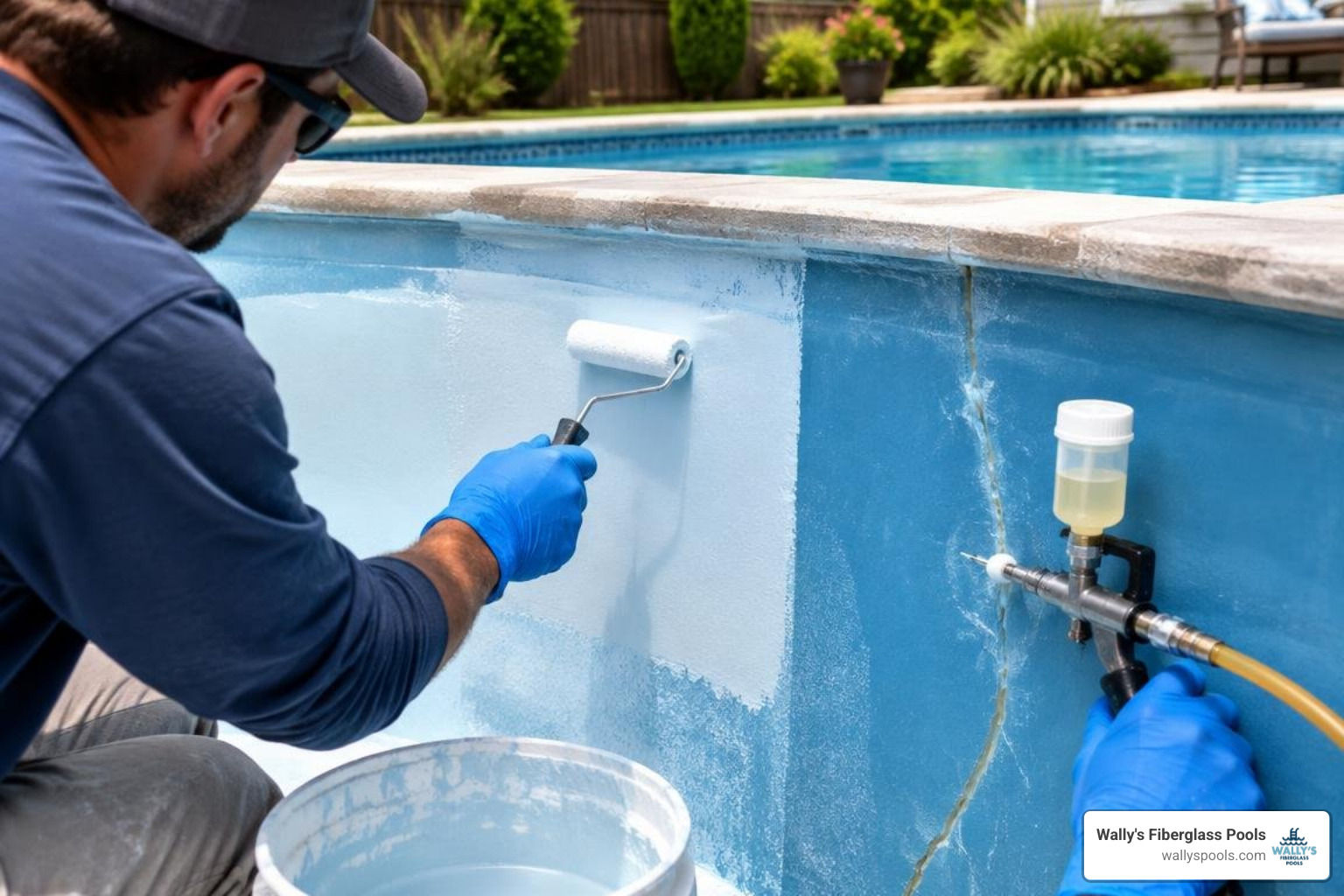
Different damage types demand specific repair protocols and material grades. Using low-grade marine putty or pool paint as a shortcut will fail rapidly under continuous chemical exposure and hydrostatic load.
How Repair Methods Influence Fiberglass Pool Crack Repair Cost
The specific repair process directly determines your bottom-line project quote:
- Epoxy Injection ($150 – $700): Used primarily to stabilize narrow, stable cracks. High-strength structural epoxy is injected under pressure into the crack channel to seal moisture pathways before surface laminating.
- Surface Patch and Resin Bonding ($300 – $1,400): Involves mechanical grinding around the damaged perimeter, laying bonded structural fiberglass matting saturated with vinyl-ester resin, and fairing the surface flat.
- Gelcoat Refinishing ($400 – $2,500): Application of marine-grade ISO/NPG gelcoat sprayed at a thick 25 to 30 mils, followed by progressive wet sanding and compounding. Maintaining balanced chemistry helps with Protect Your Gelcoat and Remove Tough Buildup Fast to extend the life of these fresh topcoats.
Specialized contractors focus on marine-grade thermoset resins rather than cosmetic paints, which is why Wally’s Pools uses only professional-grade composite materials for every repair.
Step Repairs and Localized Structural Patching
Pool steps, tanning ledges, and swim-outs endure concentrated downward foot traffic and localized hydraulic stress. If the backfill beneath steps settles, stepping onto the tread causes flexing, leading to crazing, hairline splits, or hollow delamination.
Restoring structural stability to pool steps requires:
- Drilling discrete access ports into the hollow step tread.
- Injecting expanding, high-density, closed-cell structural foam or composite grout to re-establish a solid base.
- Structurally wrapping the top tread with bi-directional woven fiberglass roving.
- Applying a slip-resistant, color-matched gelcoat top layer.
Step repairs average between $800 and $2,200 depending on the degree of backfill voiding. Homeowners looking to understand step construction and repair mechanics can explore DIY Swimming Pool Fiberglass Step Repair Made Simple.
Key Factors Influencing Repair Pricing in Cold Climates
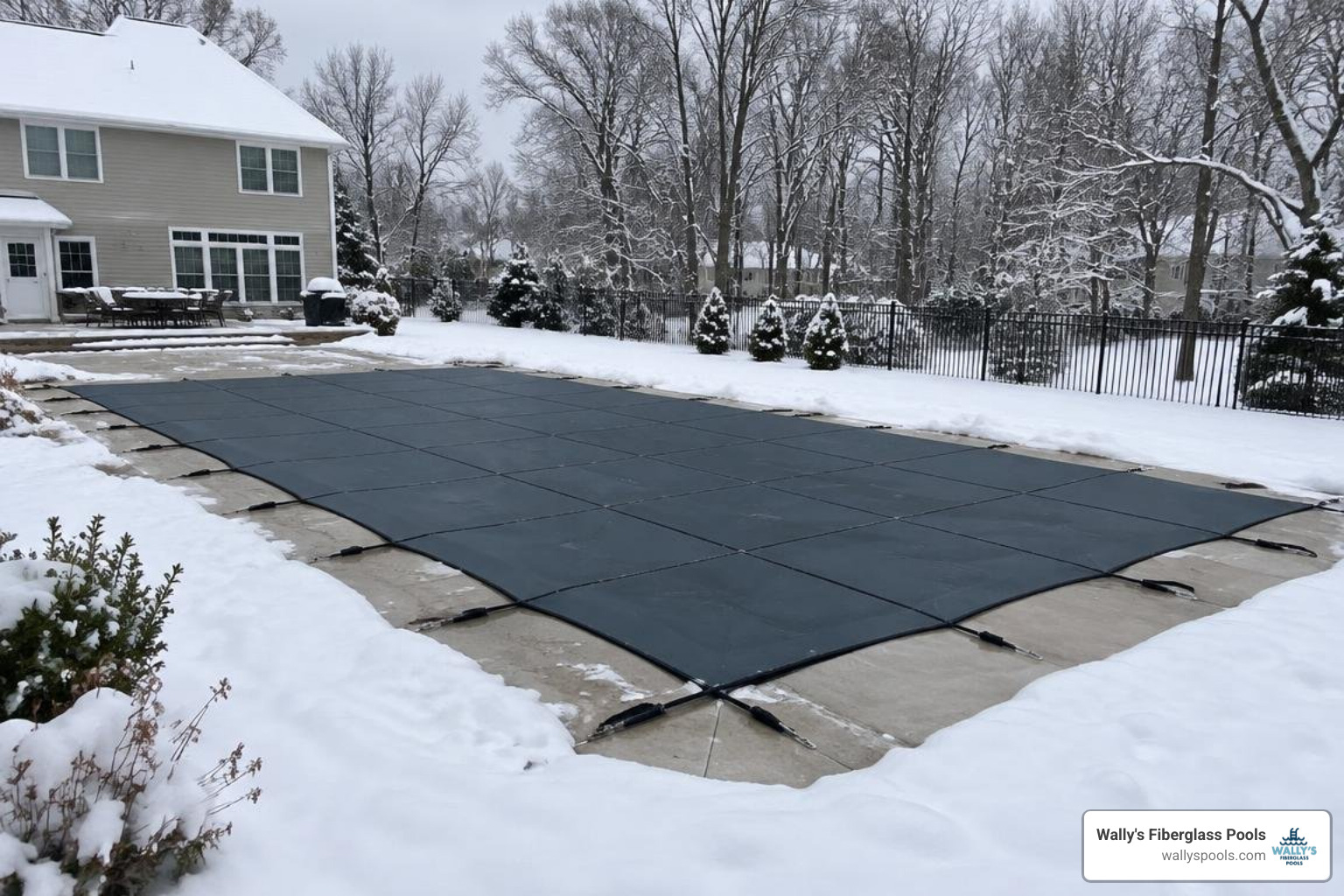
Operating in Southeast Wisconsin, Lake Geneva, and Waukesha County presents distinct environmental challenges compared to southern pool markets. Our heavy clay soils, high water tables around inland lakes, and deep winter frost lines dictate specific engineering protocols for crack repairs.
Freeze-Thaw Cycles, Ground Movement, and Hydrostatic Pressure
Wisconsin winters drive frost deep into backyard soils. When expansive clay soils freeze, they expand, putting lateral pressure against pool walls—a phenomenon known as frost heave. Come springtime, melting snowpacks rapidly elevate the water table, creating heavy hydrostatic uplift pressure beneath the pool shell.
If a pool’s drainage system is undersized or backfill was done using unwashed native soils rather than clean, self-draining 3/4″ clear crushed stone, shifting occurs. This movement can pinch the pool shell or cause differential settlement, resulting in structural stress fractures across the floor or corners. Addressing these cracks requires evaluating surrounding site drainage and soil compaction to ensure the repair does not reopen during the next freeze-thaw cycle.
Pool Draining, Water Balancing, and Labor Rates
Many major fiberglass repairs require dropping the water level or completely emptying the pool. Draining a fiberglass pool incorrectly can result in severe shell deformation or pool popping if high groundwater is present.
Managing this dewatering risk, alongside skilled composite technician labor rates ($75 to $150 per hour), directly shapes the final estimate. Once repairs cure, refilling the pool and executing complete water balancing adds $300 to $700 in water hauling, filtration startups, and sanitizer balancing. Homeowners can schedule comprehensive system checks through our seasonal Fiberglass Pool Service programs.
Repair Scope and Long-Term Budgeting
When addressing fiberglass issues, you must determine whether an isolated spot repair, a full surface restoration, or long-term structural remediation provides the best return on investment.
Maintaining long-term shell resilience relies on consistent Fiberglass Pool Maintenance to prevent chemical degradation of the gelcoat.
When Extensive Gelcoat Repair Is Needed
If damage is isolated to a couple of small impact fractures, localized spot repair is practical and cost-effective ($600 – $1,800). However, if your pool exhibits widespread crazing across multiple walls, extensive osmotic blister clusters, or heavy chalking and color fading after 20+ years of service, localized patches will result in an uneven, checkered appearance.
In these circumstances, complete gelcoat resurfacing ($5,000 – $12,000) or high-performance composite refinishing ($7,000 – $15,000) is the better path. Resurfacing strips away the degraded top layer, seals the structural laminate with modern epoxy or vinyl-ester barriers, and applies a brand-new UV-stable topcoat that restores the shell for another 15 to 25 years.
Professional Repair vs. DIY Patch Kits
Inexpensive DIY fiberglass repair kits cost between $50 and $150 online, leading some pool owners to consider a self-repair. While a DIY patch may temporarily mask an above-water scrape, using store-bought polyester resin kits below the waterline carries substantial risks:
- Poor Chemical Bonding: Standard polyester boat resins do not bond cleanly with aged vinyl-ester pool shells, causing patches to peel within months.
- Color Mismatches: Factory gelcoats fade under sunlight and chlorine; straight-from-the-can repair colors leave obvious, blotchy blemishes.
- Structural Failures: Applying a cosmetic patch over an active, flex-prone structural crack leaves the underlying laminate broken, allowing water to continue eroding backfill behind the wall.
- Voided Warranties: Improper surface grinding or draining without hydrostatic relief can permanently distort the shell and void manufacturer warranties.
Hiring an experienced fiberglass composite technician ensures structural laminate integrity, precise color blending, and long-term durability.
Frequently Asked Questions About Fiberglass Pool Crack Repairs
Does a cracked fiberglass pool always need to be drained?
Not in every scenario, but most major repairs require dry working conditions. Shallow scratches or chips located well above the water line can be prepped, filled, and cured without lowering the water. Special two-part underwater epoxy putties exist for emergency temporary patches below the waterline, but these are short-term fixes. Permanent structural repairs, laminate rebuilding, and cosmetic gelcoat spraying require lowering the water below the repair zone or fully draining the shell under monitored groundwater conditions.
Will repairing a crack fix an active pool leak?
Yes, provided the leak originates from that specific shell fracture. If water is escaping through a torn laminate layer, grinding out the fissure, sealing the channel with structural epoxy injection, and laminating multi-axial fiberglass cloth will restore watertight integrity. However, pool water loss often stems from underground plumbing breaks, leaking return fittings, failing skimmer gaskets, or light niche conduits. A professional pressure test of the plumbing lines should accompany crack repairs to verify all water loss sources.
How long will a fiberglass crack repair last?
A structural repair executed with high-grade marine vinyl-ester resin, multi-axial fiberglass fabric, and premium ISO/NPG gelcoat will last 10 to 20+ years—often matching the remaining lifespan of the pool shell. The longevity of the finish depends on keeping your pool water balanced, avoiding excessive sanitizer spikes, and maintaining proper ground drainage around your pool deck.
Conclusion
Addressing fiberglass pool cracks early protects the long-term structural integrity of your investment. A small surface craze or minor gelcoat scratch is a straightforward cosmetic fix, but leaving a structural laminate crack untreated can lead to severe water loss, washed-out backfill, and costly wall shifts.
At Wally’s Fiberglass Pools, we specialize in high-durability fiberglass installations, structural repairs, and specialized maintenance for backyards across Sussex, Lake Country, Waukesha County, Milwaukee, and Walworth County. We understand the precise engineering required to withstand Wisconsin’s demanding climate, deep winter freezes, and shifting spring soils.
If you have spotted a crack, blister, or suspicious water loss in your pool, visit Wally’s Fiberglass Pools today to schedule a detailed assessment and restore your pool to pristine condition.