Step-by-Step Guide to Compare Fiberglass Pool Costs
Understanding the Total Fiberglass Pool Cost in 2026
When evaluating estimates for a new backyard project, looking strictly at the pool shell price gives an incomplete picture. The raw shell accounts for only a fraction of the total investment, typically ranging from $10,000 to $35,000 depending on dimensions and built-in features. The complete, ready-to-swim project cost reflects professional excavation, specialized equipment pads, heavy freight shipping, precise plumbing runs, electrical hookups, backfill material, and local municipal permits.
To set realistic expectations for your project, the table below outlines the general turnkey cost ranges across common shell sizes in 2026.
| Pool Size Tier | Typical Dimensions | Average Water Surface Area | Turnkey Installed Cost Range (2026) | Best Suited For |
|---|---|---|---|---|
| Plunge / Compact | 10′ x 16′ to 12′ x 20′ | 150 – 240 sq. ft. | $35,000 – $50,000 | Urban lots, small patios, cocktail dipping |
| Small Family | 12′ x 24′ to 14′ x 28′ | 280 – 390 sq. ft. | $50,000 – $68,000 | Moderate backyards, casual recreation |
| Mid-Size Standard | 15′ x 30′ to 16′ x 32′ | 450 – 512 sq. ft. | $65,000 – $85,000 | Active families, lap swimming, integrated steps |
| Large / Multi-Zone | 16′ x 36′ to 16′ x 40′ | 570 – 640 sq. ft. | $80,000 – $115,000+ | Large yards, integrated tanning ledges and spas |
Surrounding site conditions, customized patios, and luxury add-ons naturally push high-end custom builds upward, but these baselines help establish an accurate starting budget.
Average Fiberglass Pool Cost by Shell Size
Understanding how size influences final pricing helps you determine the best balance of swimming space and project budget. For instance, compact plunge pools average between $20,000 and $30,000 for the shell and basic delivery, reaching $35,000 to $50,000 fully installed. They deliver the benefits of low water volume and minimal chemical consumption while fitting neatly into tighter suburban properties.
Mid-size pools ranging from 25 to 35 feet long represent the most popular choice for Wisconsin homeowners. A standard 16×32 pool lands right around a $74,000 likely turnkey mark in 2026, offering ample room for games, integrated tanning ledges, and deep-end bench seating. Large 40-foot shells start around $60,000 to $80,000 for basic installations, with total costs climbing toward $100,000 or more once expansive decking and custom automation packages are incorporated.
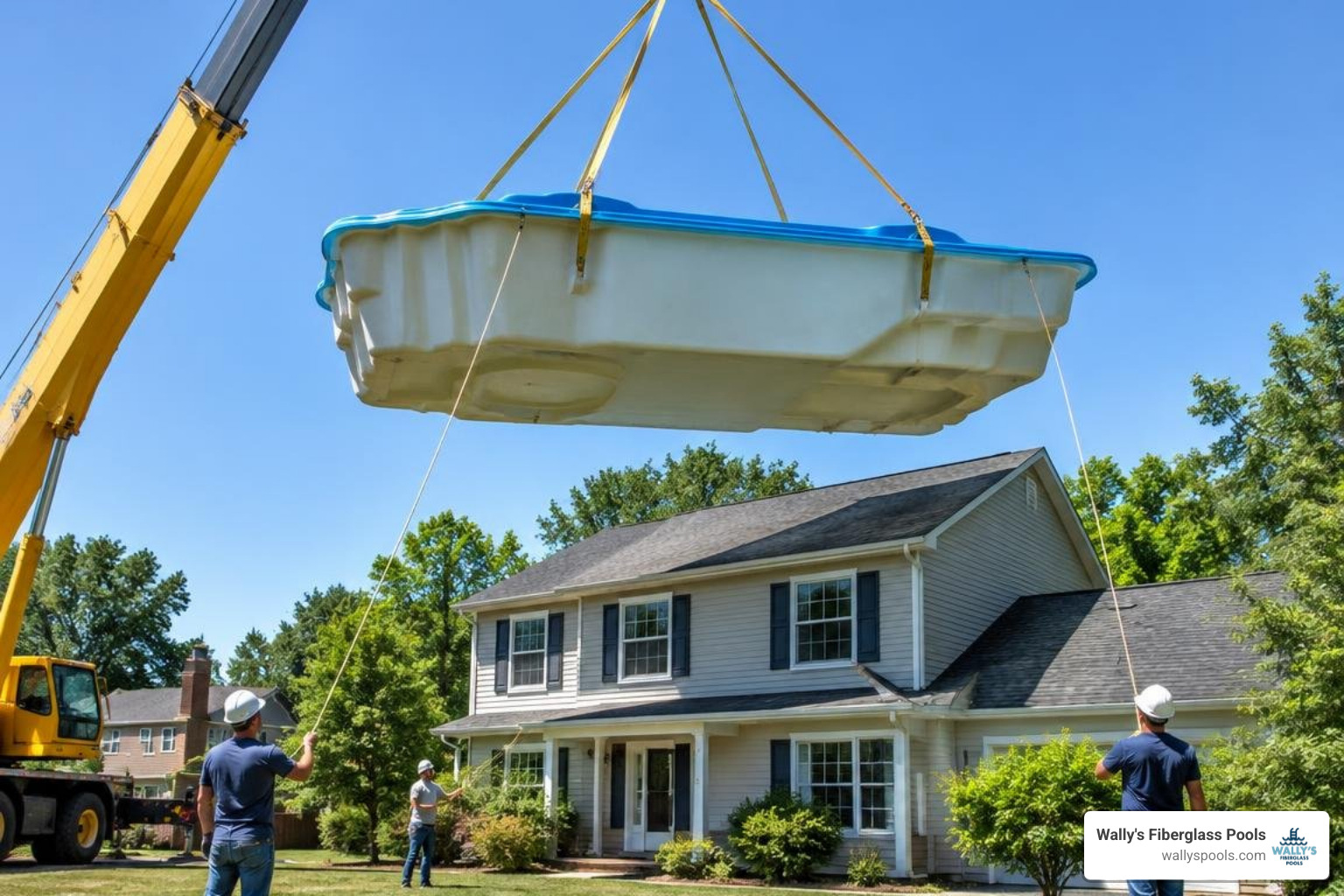
One fundamental physical constraint to keep in mind while browsing catalogs is the “16-foot width rule.” Because pre-formed composite fiberglass shells are manufactured in climate-controlled facilities and transported entirely in one piece over public highways, state transportation regulations strictly limit wide-load freight. Shells wider than 16 feet require specialized escort vehicles, restricted routing, and steep logistics fees, which makes 16 feet the practical maximum width for standard residential installations.
Step 1: Evaluating Turnkey Packages vs Shell-Only Quotes
One of the most frequent surprises homeowners encounter is the stark difference between an uninstalled shell quote and a comprehensive installation package. Some advertisements feature enticing pool prices under $25,000, but these offers frequently cover only the bare fiberglass shell dropped off on your street curb.
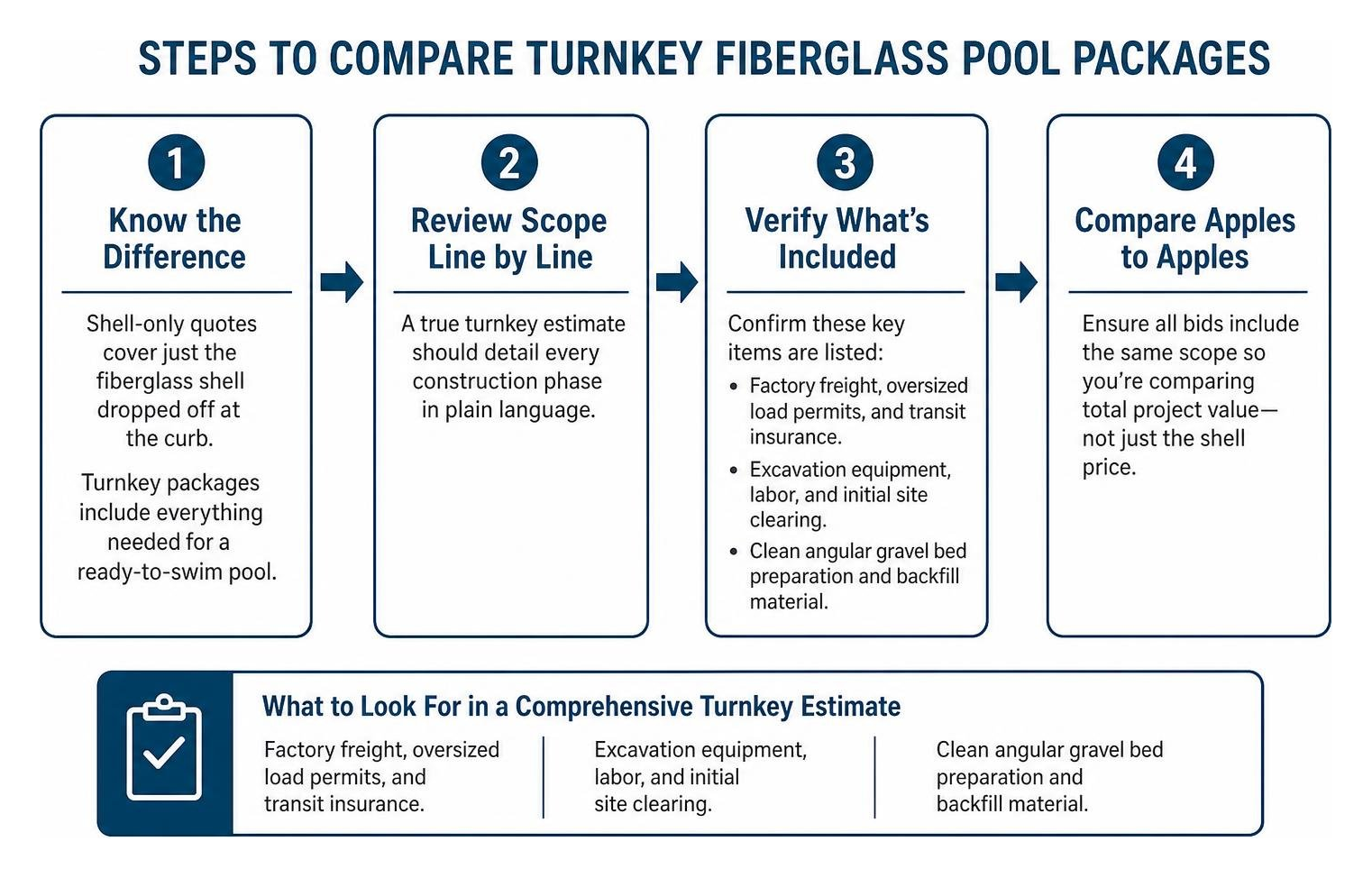
A truly comprehensive estimate for a professional fiberglass pool installation should detail every construction phase in plain language. When comparing bids, verify that the line items explicitly include:
- Factory freight, oversized load permits, and transit insurance.
- Excavation equipment, labor, and initial site clearing.
- Clean angular gravel bed preparation and backfill material.
- Precision crane rigging and placement.
- Complete plumbing loops, schedule 40 PVC piping, and structural fittings.
- Equipment pad construction with a variable-speed pump and high-capacity filter.
- Grounding and NEC-compliant electrical bonding.
- Initial water fill and startup balancing chemicals.
If a contractor hands you a vague one-page estimate that omits crane setup, dirt hauling, or electrical bonding, expect those items to reappear later as expensive change orders. Homeowners can explore external market breakdowns on fiberglass pool pricing to see how regional supply chains influence baseline proposals across different markets.
Key Factors That Impact Inground Installation Pricing
Beyond the pool model itself, the physical characteristics of your property dictate a substantial portion of your final investment. In Southeast Wisconsin—from the rolling terrain of Waukesha County and Lake Country to established neighborhoods across the Milwaukee metropolitan area and Lake Geneva—subsurface ground conditions vary significantly.
Step 2: Factoring in Site Preparation and Access Conditions
Excavation represents one of the largest variables in site preparation. Standard excavation typically ranges from $1,500 to $5,000 on level ground with loose, loam soil. However, encountering dense clay, hardpan, or glacial till full of buried boulders requires heavy-duty excavators and hydraulic breakers, which can increase digging costs by $550 to $1,500 or more. Reviewing a detailed guide on comparing pool excavation expenses will help you anticipate how varying soil structures shape contractor estimates.
Property access and topography also directly affect logistical costs:
- Backyard Slope and Grading: Significant elevation changes require cut-and-fill grading or structural retaining walls ($3,000 to $12,000+) to keep surface runoff away from the pool edge.
- Limited Backyard Access: If tight property lines, fences, or mature trees prevent excavators from reaching the dig site, contractors may need compact skid-steers or temporary track mats, adding $1,500 to $3,000 in access fees.
- Crane Outriggers and Long Reaches: If your yard cannot accommodate direct transport, a commercial crane must hoist the pool over the house. Standard crane sets range from $1,000 to $3,500, while extreme reaches requiring heavy-tonnage cranes can add $5,000 to $7,000.
- Backfill Materials: Quality builders never backfill with excavated native clay, which expands and contracts during seasonal shifts. Using washed, angular stone prevents settling and protects pool walls during harsh Wisconsin freeze-thaw cycles.
Step 3: Comparing Equipment Packages and Essential Add-Ons
The mechanical hardware you select running behind the scenes impacts both your upfront invoice and long-term energy bills. Choosing higher-tier operating components during initial construction avoids costly retrofit labor down the road.
- Variable-Speed Pumps: While standard single-speed pumps carry lower upfront price tags, modern variable-speed units save between $200 and $1,200 annually in electricity, recouping their cost difference in roughly three seasons.
- Heating Systems: In Wisconsin’s climate, a pool heater extends the swimming season from May through late September. High-efficiency gas heaters or inverter heat pumps generally add $3,500 to $6,500 installed.
- Sanitation Systems: Upgrading to a saltwater chlorinator ($1,200 to $2,500) eliminates the need to store and handle harsh liquid chlorine, keeping the pool water silky and gentle on eyes and swimwear.
- Automatic Safety Covers: A popular addition in Lake Country backyards, an automatic safety cover ($12,000 to $24,000) seals out leaves, prevents evaporation, traps heat overnight, and provides an impenetrable safety barrier for children and pets.
- Decking and Surrounds: A standard pool package usually includes a narrow 3-foot concrete walkway. Expanding to a decorative brushed concrete patio, stamped finish, or natural stone pavers commonly adds $5,000 to $18,500 depending on total square footage.
Long-Term Fiberglass Pool Ownership Costs
When calculating the real investment of a swimming pool, the upfront installation invoice tells only half the story. The total cost of ownership over 10 to 20 years reveals the economic advantages of composite fiberglass shells.
Step 4: Calculating 10-Year Fiberglass Pool Ownership Costs
Fiberglass pools boast the lowest lifetime maintenance expenses in the pool industry. The secret lies in their smooth, non-porous gelcoat finish. Algae struggles to latch onto a composite gelcoat, which drastically reduces the volume of balancing chemicals, sanitizers, and algaecides needed throughout the year.
The table below illustrates a realistic 10-year operating expense projection for a standard mid-sized installation:
| Expense Category (10-Year Outlook) | Fiberglass Inground Pool |
|---|---|
| Typical Initial Turnkey Installation | $65,000 – $85,000 |
| Annual Chemicals & Water Care | $800 – $1,200 ($8,000–$12,000 total) |
| Surface Restorations | $0 (Gelcoat lasts 25–40+ years) |
| Seasonal Professional Maintenance | Routine inspections & winterizing |
| Estimated 10-Year Total Ownership Cost | $74,000 – $98,000 |
Because fiberglass shells flex slightly without cracking during severe freeze-thaw cycles, they avoid frequent surface repairs. Routine preventative care through scheduled fiberglass pool maintenance keeps the gelcoat pristine for decades. If minor physical blemishes ever occur from shifting heavy landscape rocks or extreme impacts, homeowners can review typical pool crack repair costs to understand how surface touch-ups are performed without full shell resurfacing.
For additional insight into long-term budgeting and maintenance overhead, research guides such as this 2026 fiberglass pool pricing breakdown and comprehensive cost planning resources highlight ownership economics across different regions.
Step 5: Vetting Contractors and Warranty Coverage
A pool is only as reliable as the crew that sets it in the ground. When evaluating proposals from local builders, check their specific credentials with composite shells rather than treating all swimming pool builders the same.
- Verify Shell Manufacturer Certifications: Confirm that your contractor installs shells compliant with ICC-ES structural standards and verified Barcol hardness testing.
- Review Structural vs. Surface Warranties: Quality manufacturers offer a lifetime (or 25- to 35-year) structural warranty against shell failure, paired with a distinct 10- to 20-year gelcoat finish guarantee. Ensure both warranties are clearly outlined in writing.
- Examine Bedding and Backfill Protocols: Ask contractors specifically what they use under and around the shell. Reputable installers use clean gravel or chip stone rather than sand, which washes out and shifts when groundwater levels rise during spring thaws.
- Choose Dedicated Installers: Hiring established, licensed fiberglass pool contractors ensures your installation team has the dedicated rigging, laser-leveling, and hydraulic plumbing tools required for exact composite shell placement.
- Consider Off-Season Scheduling: In Wisconsin, signing contracts in late fall or early winter allows builders to pull local permits before the spring rush, often securing manufacturer discounts and ensuring you swim by Memorial Day.
Frequently Asked Questions About Fiberglass Pool Pricing
How much does an average 16×32 fiberglass pool cost installed in Wisconsin?
A 16×32 fiberglass pool in Southeast Wisconsin typically ranges between $68,000 and $88,000 for a turnkey installation. This baseline includes the shell, highway transport, excavation, gravel backfill, basic filtration equipment, plumbing runs, and standard safety fencing. Projects with sloped yards, heavy clay soils, custom patio surrounds, or gas heater additions generally settle between $75,000 and $95,000.
What hidden expenses should I look out for in contractor quotes?
The most common hidden expenses omitted from low bids include:
- Local Municipal Permits: Building, electrical, and zoning permits ($500 to $2,500).
- Safety Fencing: Wisconsin building codes mandate minimum 48-inch safety barriers with self-closing, self-latching gates ($3,500 to $9,000+).
- Yard Restoration: Repairing tire ruts, delivering topsoil, and reseeding turf damaged by heavy machinery ($1,200 to $3,500).
- Electrical Connections: Running heavy subpanels from the main home breaker to the pool equipment pad ($2,000 to $4,500).
- Dirt Hauling: Trucking away excess soil rather than grading it on site ($800 to $2,500).
Always insist on written, line-item bids so you know exactly which responsibilities belong to the contractor and which fall on you.
What annual maintenance costs should Wisconsin fiberglass pool owners budget for?
Wisconsin pool owners should budget approximately $800 to $1,500 per year for chemicals, electricity, and seasonal maintenance supplies. Opening and winterizing services from an experienced fiberglass pool service company protect your plumbing lines and equipment from freeze damage, keeping your seasonal upkeep smooth and hassle-free. If mechanical equipment needs updating after years of heavy use or if you experience gelcoat scratches, specialized fiberglass pool repair keeps your investment operating at peak performance without major surface resurfacing.
Step Forward with Your Backyard Project
Navigating the various line items of an inground swimming pool project does not have to feel overwhelming. By focusing on comprehensive turnkey proposals, preparing for specific property and soil conditions, and factoring in the substantial 10-year savings that composite gelcoats deliver, you can make your investment with total confidence.
At Wally’s Fiberglass Pools, we are dedicated Sussex, Wisconsin-based fiberglass pool specialists focused entirely on precision composite installations. We understand the unique challenges of Southeast Wisconsin properties—from managing the heavy clay soils of Waukesha County to engineering dependable, freeze-thaw-resistant plumbing systems across Lake Country, the Milwaukee metro area, and Walworth County. When you are ready to compare realistic project estimates and design a low-maintenance retreat tailored to your yard, reach out to our team to start planning your build.