What You Need to Know About Pool Crack Repair Costs
Pool Crack Repair Cost: What Southeast Wisconsin Homeowners Can Expect
A typical pool crack repair cost ranges from $1,500 to $8,000 for a professional shell repair. Small cosmetic cracks may cost as little as $100 to $350 to patch, while concrete structural cracks can run $250 to $350 per linear foot. Fiberglass gelcoat repairs often start around $300 to $400, but deeper shell damage costs more because it needs inspection, reinforcement, and refinishing.
For a fast budget estimate:
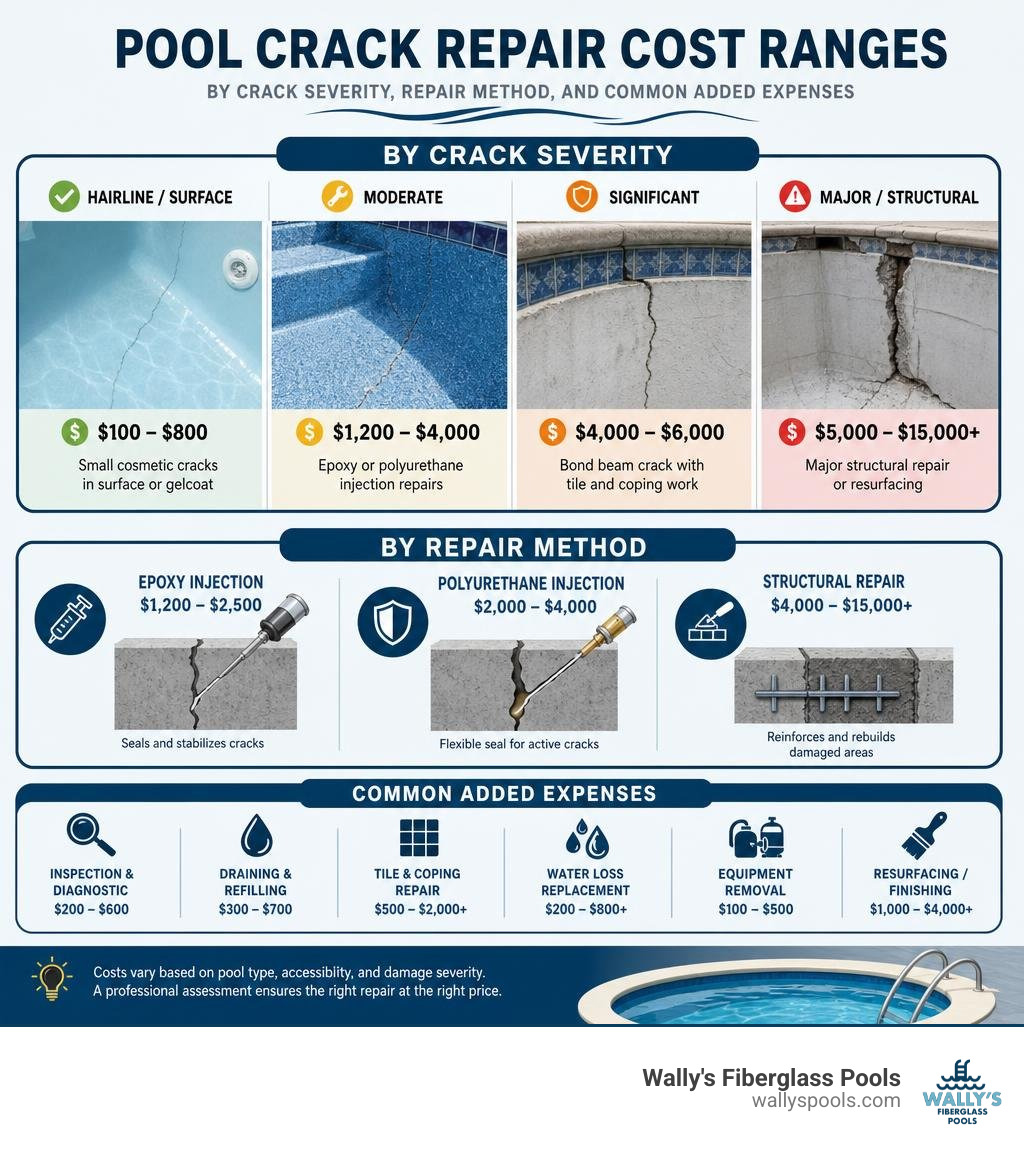
- Hairline or surface crack: $100 to $800
- Professional epoxy or polyurethane injection: $1,200 to $4,000
- Bond beam crack with tile and coping work: $4,000 to $6,000
- Major structural repair or resurfacing: $5,000 to $15,000+
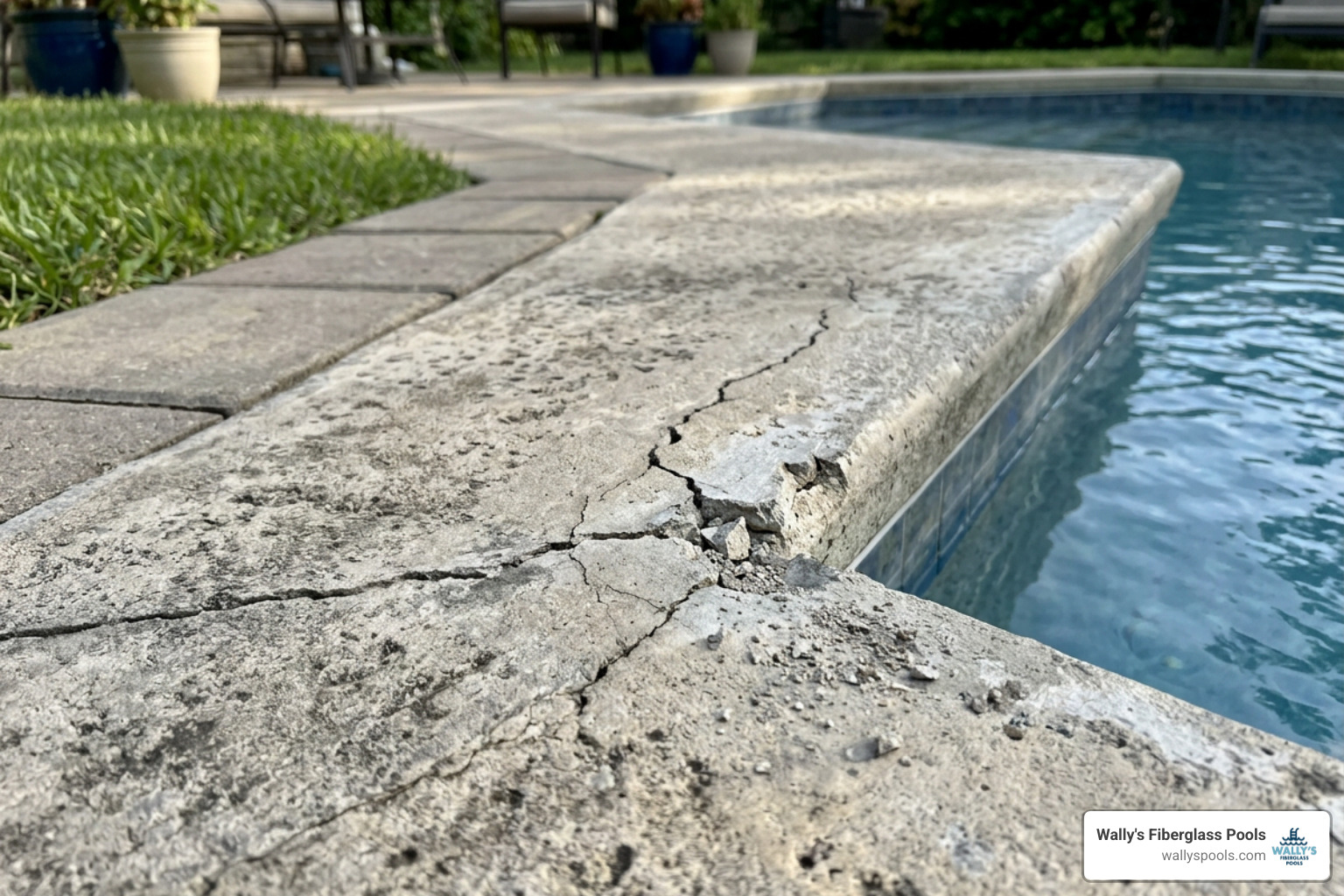
In Southeast Wisconsin and Lake Country, freeze-thaw cycles, soil movement, and water loss can turn a small crack into a larger repair. Finding out whether a crack is cosmetic or structural is the first step before choosing a fix.
I’m Wally Haines from Wally’s Pools, a Sussex, Wisconsin-based fiberglass pool specialist, and this guide will help you plan for the repair costs that matter most.
Pool crack repair cost terms you need:
Average Pool Crack Repair Cost: Price Ranges and Pricing Metrics
When calculating your overall budget, the total investment depends heavily on the surface square footage and the depth of the fracture. Nationally, average pool repairs sit around $725 to $750 for routine fixes, but crack remediation spans a wider spectrum depending on the complexity of the shell. As noted in the 2026 Pool Repair Costs: A Complete Price Guide, overall pool restoration expenses vary based on whether you are sealing a minor surface blemish or addressing deep-seated ground movement.
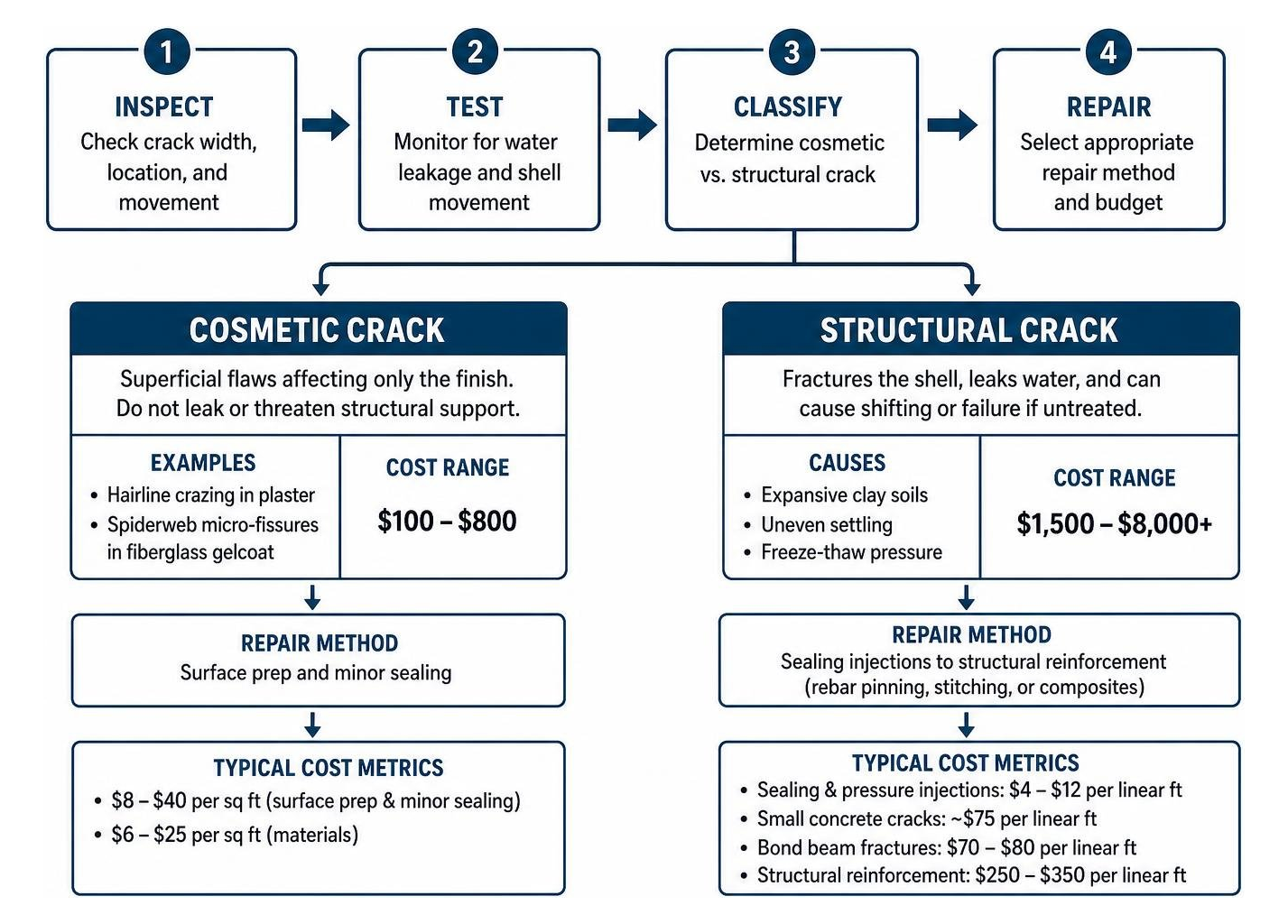
Surface prep and minor sealing typically range between $8 and $40 per square foot, while materials alone make up $6 to $25 per square foot. For complete structural overhauls or extensive shell restoration projects across larger residential pools, pricing frequently runs between $5,000 and $15,000.
Average Pool Crack Repair Cost per Linear Foot
Per-foot pricing provides a more granular way to evaluate contractor bids:
- Sealing & Pressure Injections: Simple low-pressure epoxy or polyurethane injection work costs between $4 and $12 per linear foot for sealing seams and minor breaks.
- Small Concrete Cracks: Standard surface crack routing and hydraulic patching averages roughly $75 per linear foot.
- Bond Beam Fractures: Repairing the upper structural perimeter runs between $70 and $80 per linear foot, excluding specialized coping stone reset fees.
- Structural Reinforcement: Deep fractures requiring rebar pinning, carbon fiber grid staples, or composite stitching cost $250 to $350 per linear foot.
Structural vs. Cosmetic Pool Crack Repair Cost
Understanding the nature of the fracture is critical for setting realistic financial expectations.
- Cosmetic Cracks ($100 – $800): Superficial flaws, such as hairline crazing in pool plaster or spiderweb micro-fissures in fiberglass gelcoat, affect only the aesthetic finish. They do not leak water into the surrounding soil or threaten the pool’s structural support.
- Structural Cracks ($1,500 – $8,000+): These fractures split the underlying concrete shell, gunite core, or composite fiberglass layers. Often caused by expansive clay soils, uneven settling, or intense freeze-thaw ground pressure in Wisconsin, these cracks leak treated water. Untreated leaks erode the supporting backfill, which can cause the pool shell to shift or fail entirely.
Pool Crack Repair Cost by Shell Damage Type and Severity
The table below outlines common damage types, typical price ranges, and standard repair methods:
| Damage Category | Visual Appearance | Typical Repair Method | Estimated Cost Range |
|---|---|---|---|
| Plaster / Gelcoat Crazing | Fine spiderweb pattern | Surface buffing, color-matched gelcoat/plaster coat | $100 – $400 |
| Non-Structural Hairline | Single fine crack (<1/8 in) | Waterproof surface sealant or direct patch | $150 – $800 |
| Bond Beam Shear Crack | Horizontal split below coping | Concrete pinning, tile/coping reset, elastomeric seal | $4,000 – $6,000 |
| Fiberglass Structural Split | Layered composite rupture | Multi-layer structural fiberglass lamination | $1,200 – $4,500 |
| Major Concrete Floor Split | Wide separation (>1/4 in) | Carbon fiber staples, structural epoxy, replaster | $5,000 – $15,000+ |
Superficial Gelcoat Crazing and Spider Cracks
Gelcoat crazing appears as a cluster of hairline fractures resembling a spiderweb. This occurs when the pool surface experiences minor thermal expansion or localized flex during seasonal transitions. Because crazing is confined to the non-structural cosmetic gelcoat, repairs are straightforward.
Specialists clean out the micro-fissures, apply a marine-grade color-matched gelcoat paste, cure the resin, and buff the surface flush. Routine localized gelcoat touch-ups generally cost between $300 and $400, with paint blending adding another $800 if extensive areas require uniform color finishing.
Inground Fiberglass Gelcoat and Structural Repairs
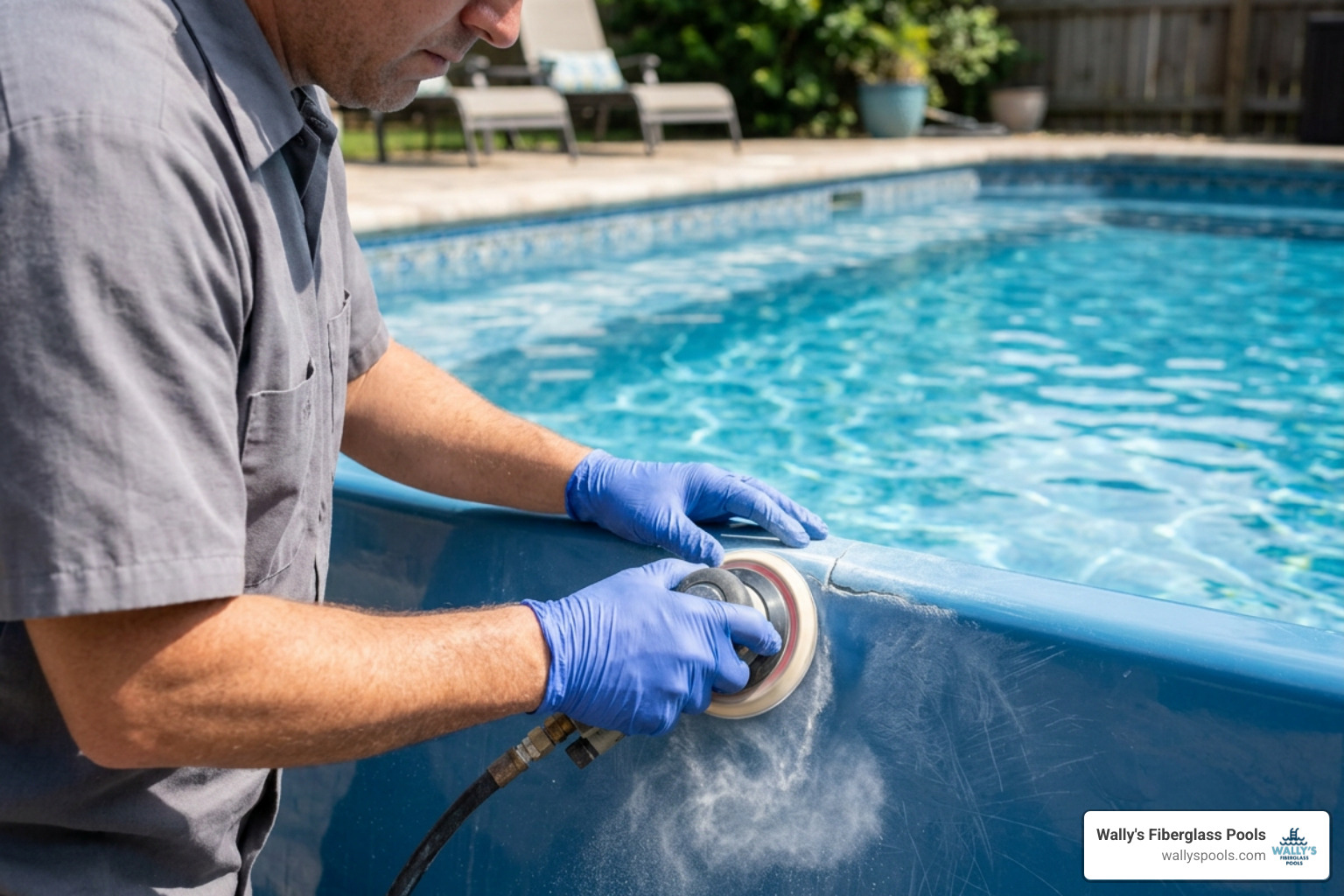
Because fiberglass pools are engineered as a flexible composite shell, they absorb ground shifts and freeze-thaw cycles far better than rigid concrete. However, if unmanaged hydrostatic pressure or heavy soil settlement places excessive stress on the walls, cracks can develop.
When you need fiberglass pool repair, our team grinds back the damaged area, inspects the underlying glass laminate, and laminates fresh structural glass matting saturated with vinyl ester resin. Minor gelcoat repairs run $300 to $400, while deeper composite patching typically ranges from $1,200 to $4,500.
Deep Structural Fractures and Wall Stress Cracks
When shifting soil or poor drainage causes deep wall fractures in concrete or gunite, the pool shell loses its structural integrity. Addressing these failures requires heavy structural anchoring, continuous rebar reinforcement, and pressurized epoxy bonding to restore load-bearing capacity. Major plaster repairs and shell reconstruction jobs typically cost between $2,500 and $5,000, with large-scale shell overhauls reaching up to $10,000 to $20,000.
Primary Repair Methods and What They Cost
The selected repair method directly dictates your material and equipment expenses.
Epoxy and Polyurethane Pressure Injections
Pressure injection is a leading method for sealing non-moving and moderately active cracks in pool walls. Technicians drill ports along the crack path, seal the exterior surface face, and inject high-strength structural epoxy or hydrophobic polyurethane under pressure.
- Polyurethane Injections: Polyurethane reacts with water to expand into a dense, flexible foam gasket, ideal for stopping active water leaks.
- Epoxy Injections: Epoxy hardens into a rigid weld that is stronger than concrete.
- Cost: Professional injection projects generally range from $1,200 to $4,000, depending on crack accessibility and linear footage.
Carbon Fiber Reinforcement and Structural Stitching
When structural cracks run across high-load areas, such as the floor-to-wall transition, filling the crack is only half the battle; the shell must also be stabilized to prevent further movement. Contractors install high-tensile carbon fiber grid straps or heavy steel torque-lock staples across the crack every 12 to 18 inches. This process transfers load across the break, locking the concrete in place. Structural crack stitching generally costs between $250 and $350 per linear foot.
Pool Bond Beam and Coping Crack Restoration
The bond beam is the thick concrete collar running along the top perimeter of the pool that supports the coping stones and tile line. In cold regions, frozen water behind the tile line or an unsealed deck joint can crack this beam.
Fixing a bond beam crack requires chipping away loosened perimeter tiles, cutting out fractured concrete, securing reinforcement bars, repouring the beam section, and reinstalling coping and tile. A full bond beam restoration along a pool wall commonly costs between $4,000 and $6,000, averaging $70 to $80 per linear foot.
Hidden Expenses and Additional Project Variables to Anticipate
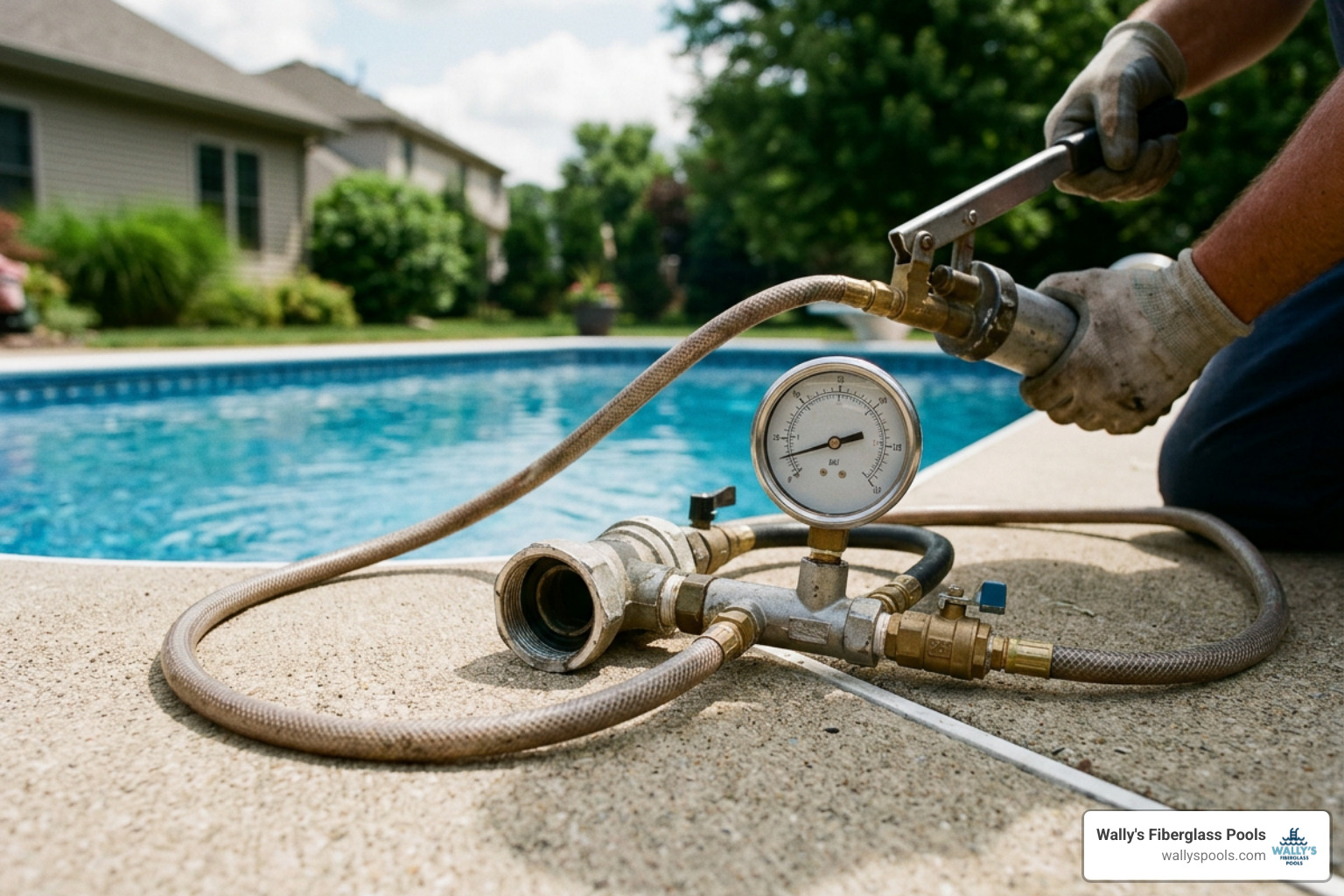
Budgeting for a crack repair requires looking beyond the patching invoice itself. Secondary project requirements frequently impact your final costs.
Professional Leak Detection and Diagnostic Fees
Before repairing a crack, technicians must confirm whether water is escaping through the shell, the light niche, or underground plumbing lines.
- Dye Testing: Basic scuba-assisted dye tests run between $100 and $300.
- Electronic & Sonar Leak Detection: Specialized acoustic and pressure testing across all structural zones typically costs $200 to $500, though complex setups can reach $1,000.
Draining, Water Hauling, and Permit Costs
Many structural repairs require draining the pool:
- Pumping & Monitoring: Professional draining services run roughly $180 to $230. In high-water-table areas, technicians must manage hydrostatic relief valves to prevent empty shells from lifting out of the ground.
- Water Refill: Municipal water bills generally add roughly $55 per 5,000 gallons. For properties on well systems, municipal water hauling may be necessary. Reviewing local mineral balances and Southeast Wisconsin service locations helps ensure your replacement water chemistry remains properly balanced.
- Permits and Inspections: Minor cosmetic patching does not require permits, but major structural alterations or beam replacements often involve municipal building permits ranging from $50 to $300, plus local inspection fees of $75 to $200.
Extensive Shell Damage and Major Repair Scope
If multiple structural fractures indicate widespread shell deterioration, isolated patching may only serve as a temporary band-aid. Replastering an entire concrete pool following extensive structural stitching costs $7,000 to $10,000, with high-end aggregate or pebble finishes reaching $10,000 to $20,000. By contrast, a complete structural inner shell retrofit can run $15,000 to $25,000.
Professional Labor Rates, Regional Impact, and DIY Considerations
Labor constitutes roughly 50% to 70% of a crack repair bill. Understanding labor rates and regional climate factors helps you evaluate contractor quotes accurately.
Southeast Wisconsin Labor Rates and Winter Freeze-Thaw Impact
Across the Midwest and Southeast Wisconsin—including Waukesha County, Lake Geneva, Walworth County, and the Milwaukee metropolitan area—licensed pool repair labor typically averages $60 to $120 per hour, with specialized structural composite technicians charging up to $180 per hour.
Our local clay soils expand when saturated and contract during summer dry spells. Combined with harsh winter freeze-thaw cycles, this soil movement exerts immense hydrostatic and lateral pressure on pool shells. Practicing proactive fiberglass pool maintenance and properly winterizing your pool prevents trapped water from expanding in hairline cracks and causing severe structural failure.
DIY Patching Kits vs. Professional Contractor Work
For minor, non-structural pool issues, DIY kits offer an accessible short-term solution:
- Vinyl & Surface Patch Kits: Available for $10 to $50, underwater epoxy putty and vinyl adhesive kits can temporarily seal small cosmetic abrasions.
- The Risks of DIY on Structural Damage: Attempting to DIY a structural concrete fracture or composite fiberglass break can lead to disaster. Surface sealants do not address structural loads or soil settlement. If water continues to seep behind the pool wall, it washes away supporting aggregate, leading to settled decking and repair bills exceeding $10,000. You can explore our pool maintenance category for safe, owner-friendly maintenance best practices.
Homeowners Insurance and Warranty Coverage Guidelines
Homeowners insurance policies generally exclude damage caused by normal wear and tear, ground settlement, hydrostatic pressure, and improper winterization. However, if a structural crack results from a sudden, covered peril—such as a falling tree or a catastrophic storm event—your policy may offset repair costs.
Manufacturer structural warranties on quality fiberglass pools often cover composite shell integrity for 25 years to a lifetime. However, cosmetic surface gelcoats typically carry separate warranties spanning 3 to 5 years. Always verify your warranty terms before scheduling repairs.
Frequently Asked Questions About Pool Crack Repairs
How do I know if a pool crack is structural or cosmetic?
Cosmetic cracks are thin (hairline or spiderweb-like) and stay confined to the surface finish without causing water loss. A crack is likely structural if it exceeds 1/8 inch in width, extends through the tile line and coping, shows signs of rust staining from corroding rebar, has uneven edges where one side sits higher than the other, or causes noticeable water loss beyond normal evaporation.
Can you repair a cracked pool while it is still full of water?
Minor cosmetic blemishes, small vinyl punctures, and small plaster hairline gaps can be patched underwater using specialized underwater curing epoxies and hydraulic cements. However, true structural repairs—such as pressure injection, carbon fiber stapling, composite fiberglass re-lamination, and bond beam reconstruction—require draining the pool so technicians can prep, dry, grind, inject, and cure the materials properly.
How long does a typical pool crack repair take to complete?
A standard structural crack repair project requires 2 to 5 working days, depending on scope:
- Day 1: Water draining, pressure testing, diagnostic dye verification, and surface preparation.
- Day 2: Structural stitching, carbon fiber installation, or composite structural lamination.
- Day 3: Application of waterproof sealants, color-matched gelcoat, or plaster topcoats.
- Days 4–5: Material curing, slow pool refilling, and chemical water balancing.
Conclusion
Understanding your pool crack repair cost comes down to diagnosing whether you are dealing with a minor surface blemish or an active structural fracture. While simple cosmetic patches cost between $100 and $800, stabilizing structural cracks requires professional injection, stitching, or composite reinforcement ranging from $1,500 to $8,000.
For homeowners across Southeast Wisconsin, Lake Country, Waukesha County, Milwaukee, and Walworth County, addressing cracks early prevents ground shifting and freeze-thaw cycles from turning minor issues into major renovations. When you need expert help with your inground pool, work with a dedicated local specialist. Contact Wally’s Fiberglass Pools to protect your backyard investment and keep your pool swimming-ready for years to come.