Strip Away Years of Scale with Acid Wash Cleaning
The Chemistry and Science Behind Acid Wash Cleaning
To understand why acid washing is such a powerhouse restoration method, we have to look at the underlying water chemistry. When mineral scale builds up on hard surfaces—whether it is pool coping, plaster walls, or patio pavers—it typically consists of insoluble calcium carbonate, calcium silicate, or metal oxides like iron rust. Standard soaps and alkaline cleaners simply slide over these compounds without breaking the bonds that lock them to your pool structure.
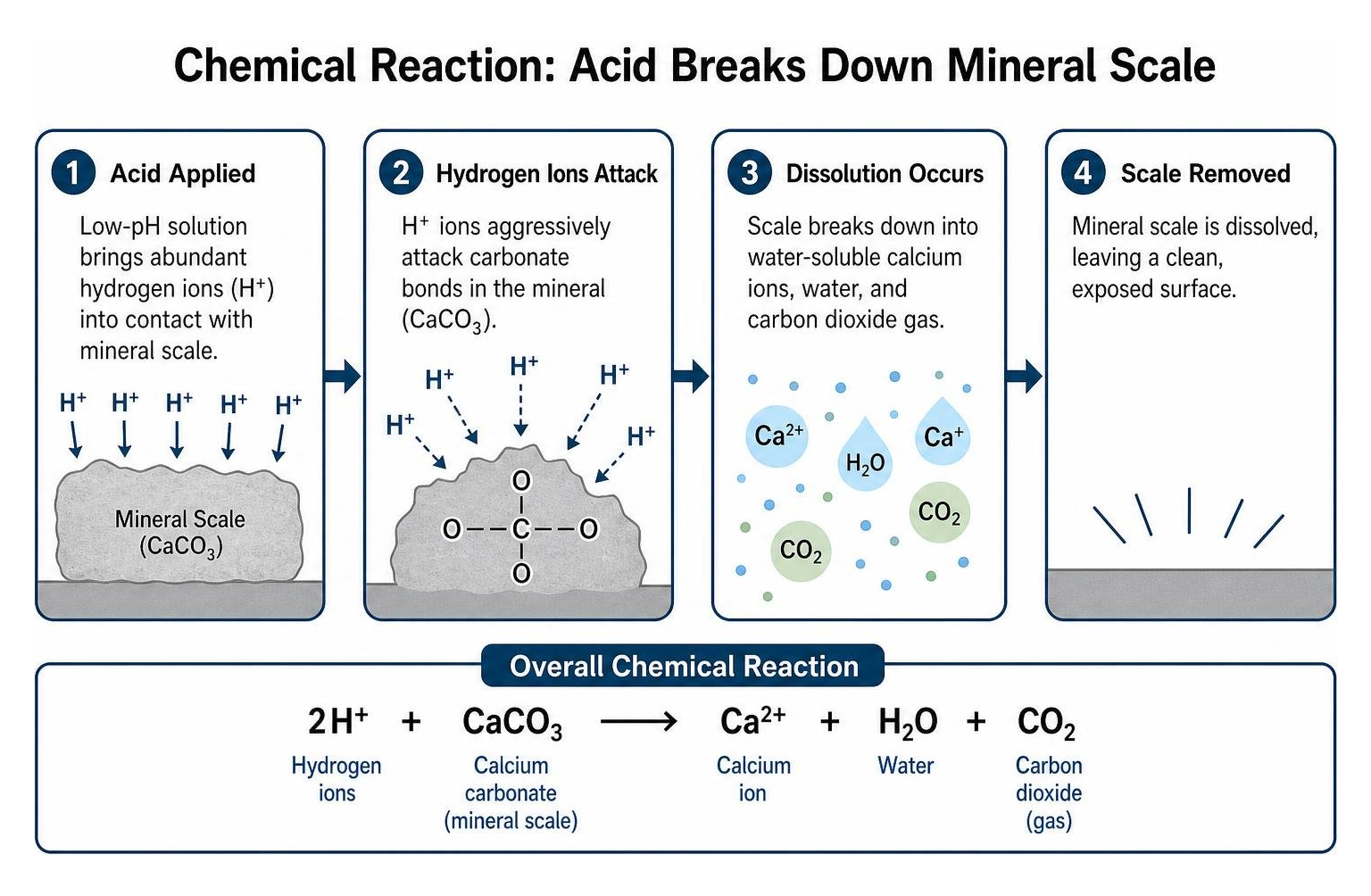
Acid washing works through a chemical process called dissolution. Low-pH solutions have an abundance of free hydrogen ions ($H^+$). When an acid cleaner comes into contact with alkaline calcium deposits, these hydrogen ions aggressively attack the carbonate bonds:
$$2H^+ + CaCO3 \rightarrow Ca^{2+} + H2O + CO_2$$
This reaction rapidly converts solid, crusty scale into water-soluble calcium ions, liquid water, and carbon dioxide gas (which causes the characteristic fizzing you see during application). Concentrated formulations like an acid rust scale and lime remover operate at very low pH levels—often between 0.5 and 1.5. This intense acidity quickly strips away mineral bonds, dissolving rust and calcium in minutes. Specialized solutions like ACID WASH 201 also include corrosion inhibitors and wetting agents to ensure even coverage without causing localized metal pitting.
Surface Compatibility: What Works with Acid Wash Cleaning
Because acid washing physically dissolves mineral layers, it is inherently an aggressive, corrective treatment rather than a weekly chore. Different materials react in drastically different ways when exposed to low-pH chemicals.
Plaster and gunite swimming pools handle controlled acid washing well because removing a microscopic layer of plaster exposes fresh, bright material underneath. However, natural stones containing calcite (such as limestone, travertine, and marble) will rapidly dissolve and suffer irreversible etching if touched by acid.
Similarly, fiberglass pools require specialized care. You should never dump raw muriatic acid onto a composite pool shell. Instead, you must protect your gelcoat and remove tough buildup fast by using mild, non-abrasive cleaners or chelating sequestering agents designed specifically for gelcoat integrity.
| Surface Material | Acid Washing Compatibility | Reaction / Risk Level | Recommended Cleaning Agent |
|---|---|---|---|
| White Plaster / Gunite | High (Corrective use only) | Controlled surface etching; removes stained top micro-layer | Diluted Muriatic Acid (1:3 or 1:4 with water) |
| Glazed Ceramic & Porcelain Tile | High | Safe on glaze; attacks cementitious grout if dwell time is excessive | ACID CLEAN or Sulfamic Acid |
| Poured Concrete & Pavers | Moderate | Opens pores, etches smooth trowel finishes | Acid Wash 80 (Diluted 1:10) |
| Fiberglass Pool Shells | Unsafe for raw strong acids | Blistering, dulling, and chemical burning of gelcoat layer | Low-pH specialized descaler or enzyme cleaner |
| Travertine, Marble, Limestone | Incompatible (Never use) | Severe chemical burning, deep pitting, permanent structural destruction | Neutral pH stone cleaners |
| Stainless Steel Rails & Hardware | Low to Moderate | Surface pitting if exposed to uninhibited hydrochloric acid | Inhibited acid cleaners or detergent-based descalers |
Multi-Industry Applications and Use Cases
The science of acid washing extends across dozens of commercial and residential trades. In the global tile cleaner and professional grout restoration markets—which together account for over $5.3 billion in annual commercial activity—acid-based detergents are standard for removing post-construction grout haze and efflorescence salts from new builds.
In heavy industry and food processing, acid washes serve as vital descalers for clean-in-place (CIP) boiler systems and commercial dishwashers to dissolve lime without manual scraping. Meanwhile, the automotive detailing industry relies on specialized low-pH formulas, such as Brug’s low pH pre-wash foam, to unclog ceramic coatings, dissolve iron brake dust, and eliminate hard water spots from vehicle clear coats.
Safety Protocols, Dilution Ratios, and Surface Preparation
Handling concentrated acids requires strict safety discipline. When working in low-lying pool basins or indoor equipment rooms across Waukesha County and Lake Country, heavy chemical fumes can displace breathable oxygen rapidly.
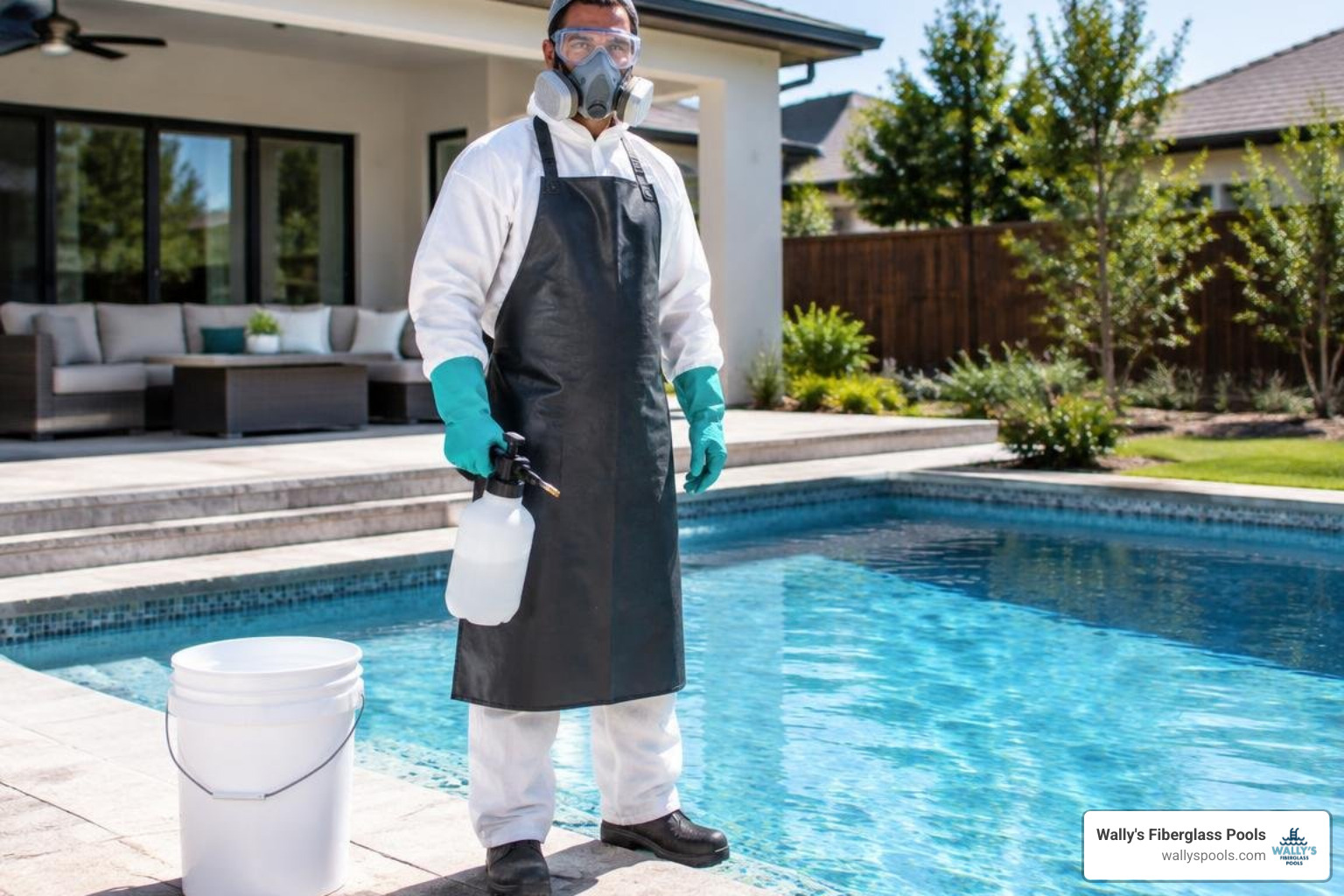
Before cracking open a chemical container, assemble your Personal Protective Equipment (PPE) checklist:
- Chemical Vapor Respirator: Fitted with NIOSH-approved acid gas cartridges. A standard dust mask offers zero protection against chemical vapors.
- Full-Coverage Safety Goggles & Face Shield: Splash-proof, indirect-ventilation eye protection to guard against unexpected droplets.
- Heavy-Duty Acid-Resistant Gloves: Thick nitrile, neoprene, or butyl rubber gloves extending up the forearm.
- Rubber Boots and Chemical Apron: Slip-resistant rubber boots (acid will quickly eat through leather work boots and standard canvas sneakers) paired with long pants and sleeves.
- On-Site Neutralizer Supply: Keep an open 50-pound bag of garden lime, soda ash, or baking soda right next to your mixing station for immediate spill control.
Mixing and Dilution Protocols
The golden rule of acid preparation is simple and absolute: Always add acid to water—never add water to acid.
Adding water to concentrated acid triggers a violent exothermic reaction. The initial droplets of water can flash-boil instantly, causing the acid to erupt outward onto your skin and face. By pouring acid slowly into a larger volume of cold water, the water absorbs and safely dissipates the heat of solution.
For standard swimming pool and masonry cleaning, safe dilution guidelines generally fall into these brackets:
- Light Mineral Staining & Grout Haze: 1 part acid to 10 parts water (1:10).
- Moderate Hard Water Scale & Efflorescence: 1 part acid to 4 parts water (1:4).
- Severe Plaster Etching & Deep Mineral Crust: 1 part acid to 2 or 3 parts water, or low-fume commercial alternatives detailed in pool and concrete acid wash guidelines.
Always mix solutions in clean plastic buckets (such as high-density polyethylene). Never use metal containers, as the acid will react with the metal and degrade the solution.
Pre-Cleaning Surface Preparation
Acid cannot penetrate mineral scale if a barrier of body oil, suntan lotion, grease, or algae is coating the surface. Putting acid directly over an oily patch results in blotchy, uneven cleaning and severe streaking.
- Pressure Rinse the Surface: Blast away loose mud, leaves, and surface debris using a clean water rinse.
- Degrease with TSP: Wash the area using a solution of Trisodium Phosphate (TSP) or an alkaline pool degreaser to strip away oily films and organic residue.
- Pre-Wet Thoroughly: Never apply acid solutions to dry plaster, concrete, or tile. If dry masonry absorbs raw acid, it pulls the chemical deep into the pores, causing structural pitting. Keeping the surface consistently wet ensures the acid remains on top to target surface scale.
- Inspect Water Chemistry Equipment: If you are prepping pool features, ensure you have proper pool chemical balance supplies on hand for the eventual post-wash water balancing.
Step-by-Step Guide to Restoring Scaled Surfaces
Restoring a scaled surface requires methodical, controlled execution. Moving too fast leads to skipped spots, while moving too slowly risks over-etching the substrate.
Step-by-Step Acid Wash Cleaning Process
Follow this sequential workflow to ensure uniform, streak-free restoration:
- Work in Small, Manageable Sections: Divide the project area into 5-foot by 5-foot grids. In drained pool basins, always work from the shallow end toward the deep end drain.
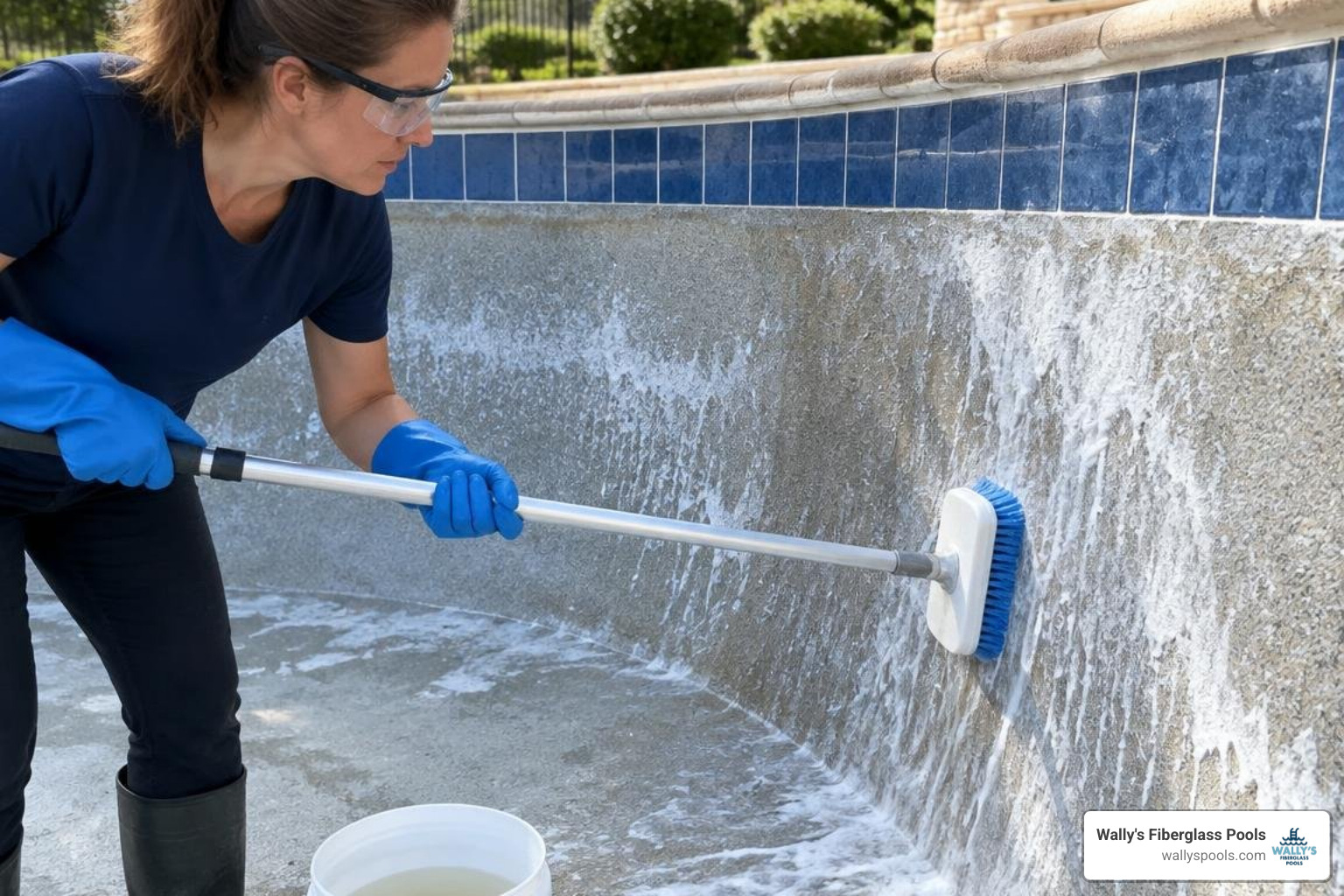
- Apply the Solution from Top to Bottom: Using an acid-resistant plastic watering can or low-pressure chemical sprayer, apply your diluted acid mixture evenly across the pre-wetted wall. Pouring from top to bottom prevents the acid from cutting deep vertical run-off channels into the plaster.
- Monitor Dwell Time and Reaction: Allow the solution to dwell on the surface for 2 to 4 minutes. You will immediately see white foaming and bubbling as the acid breaks down calcium carbonate. Do not let the acid dry on the surface under any circumstances.
- Agitate with a Non-Metallic Brush: While the foaming is active, scrub the area using a stiff-bristle acid brush made of nylon or polypropylene. Never use wire or stainless steel brushes on plaster or tile, as broken metal bristles cause stubborn rust stains later.
- Rinse Immediately with Clean Water: Flush the entire 5×5 section thoroughly with a high-flow garden hose before moving to the adjacent grid.
If you are caring for composite swimming pools or routine maintenance, our team provides dedicated fiberglass pool maintenance services to prevent severe mineral scaling without exposing your pool shell to harsh chemical baths.
Neutralization, Rinsing, and Safe Disposal
Acid wash runoff must never be pumped untreated into municipal storm sewers, local waterways, or your backyard landscaping. In Wisconsin, environmental guidelines require that acidic wastewater be neutralized to a safe pH range (between 6.5 and 8.5) before disposal.
To neutralize pooled wastewater in a pool basin or containment area:
- Broadcast soda ash (sodium carbonate) or baking soda (sodium bicarbonate) directly into the standing puddle at the low point of the structure. A general rule of thumb is 2 pounds of soda ash for every gallon of concentrated acid used.
- Agitate the standing water with a brush until bubbling stops completely.
- Test the runoff liquid with a calibrated digital pH pen or pool test kit. Once the liquid shows a neutral reading between 7.0 and 7.8, it is safe to pump out using a submersible trash pump.
- Give the entire work surface a final rinse using a mild alkaline detergent wash to lock in a completely neutral surface pH.
Post-Treatment Care and Long-Term Prevention
Once the acid wash process is finished, the treated surface is clean, open, and porous. Taking the right aftercare steps ensures your hard work lasts for years rather than months.
For masonry, concrete patios, and tile grout, let the surface dry completely for 48 hours. Then, apply a breathable, penetrating silane-siloxane sealer or dedicated grout sealant. Acid washing naturally strips away existing sealers, so applying a fresh protective coat prevents water from soaking into grout lines and bringing efflorescence back to the surface during Wisconsin’s brutal winter freeze-thaw cycles.
For swimming pools, refill the basin with fresh water immediately after your final inspection. Do not let a drained plaster or concrete pool bake in the direct sun, as hydrostatic pressure or thermal shock can cause structural cracking. Once the pool is full, it is crucial to follow the guidelines on how to maintain pool water chemistry by monitoring your Calcium Hardness (aim for 200–400 ppm) and keeping your saturation index balanced so aggressive water does not draw calcium right back out of the surface.
Frequently Asked Questions About Acid Washing
How often should residential surfaces undergo an acid wash?
Acid washing should be performed strictly on an as-needed basis—never as routine seasonal maintenance. Because each treatment strips a fine micro-layer of plaster or cement binder, plaster pools should undergo an acid wash no more than once every 5 to 7 years. Over-washing will thin the plaster shell, expose rough aggregate, and accelerate the need for an expensive replastering project.
What causes the bubbling reaction during an acid wash?
The bubbling and fizzing is the visual release of carbon dioxide ($CO_2$) gas. As the free hydrogen ions in the acid react with alkaline calcium carbonate compounds, the solid scale is converted into dissolved calcium salts, water, and carbon dioxide. When the foaming subsides, it indicates that the acid has either completely dissolved the available mineral deposits or its chemical strength has spent itself.
Can you perform an acid wash on fiberglass or delicate stone?
No. Standard acid washing with muriatic or hydrochloric acid should never be done on fiberglass gelcoats, nor on natural calcite stones like marble, limestone, or travertine. Acid will chemically burn the gelcoat, causing irreversible dulling, porosity, and structural blistering. If your composite pool has sustained severe staining, contact our team for specialized fiberglass pool repair and restoration to restore the finish using safe polishing compounds.
Conclusion
Acid wash cleaning is one of the most effective ways to strip away years of stubborn scale, hard water crust, and deep mineral stains. However, because it relies on aggressive low-pH chemistry, success depends entirely on proper surface identification, careful dilution, strict safety protocols, and thorough post-wash neutralization.
When dealing with high-end composite shells, delicate water features, or complex pool finishes across Sussex, Lake Country, Waukesha County, and the broader Milwaukee metro area, you don’t have to tackle stubborn scaling alone.
At Wally’s Fiberglass Pools, we specialize in helping Wisconsin homeowners maintain pristine, trouble-free swimming environments engineered specifically for our local climate and soil conditions. Whether you need expert water troubleshooting, equipment upgrades, or expert swimming pool installation and support, reach out to our team today to keep your backyard oasis sparkling all season long.