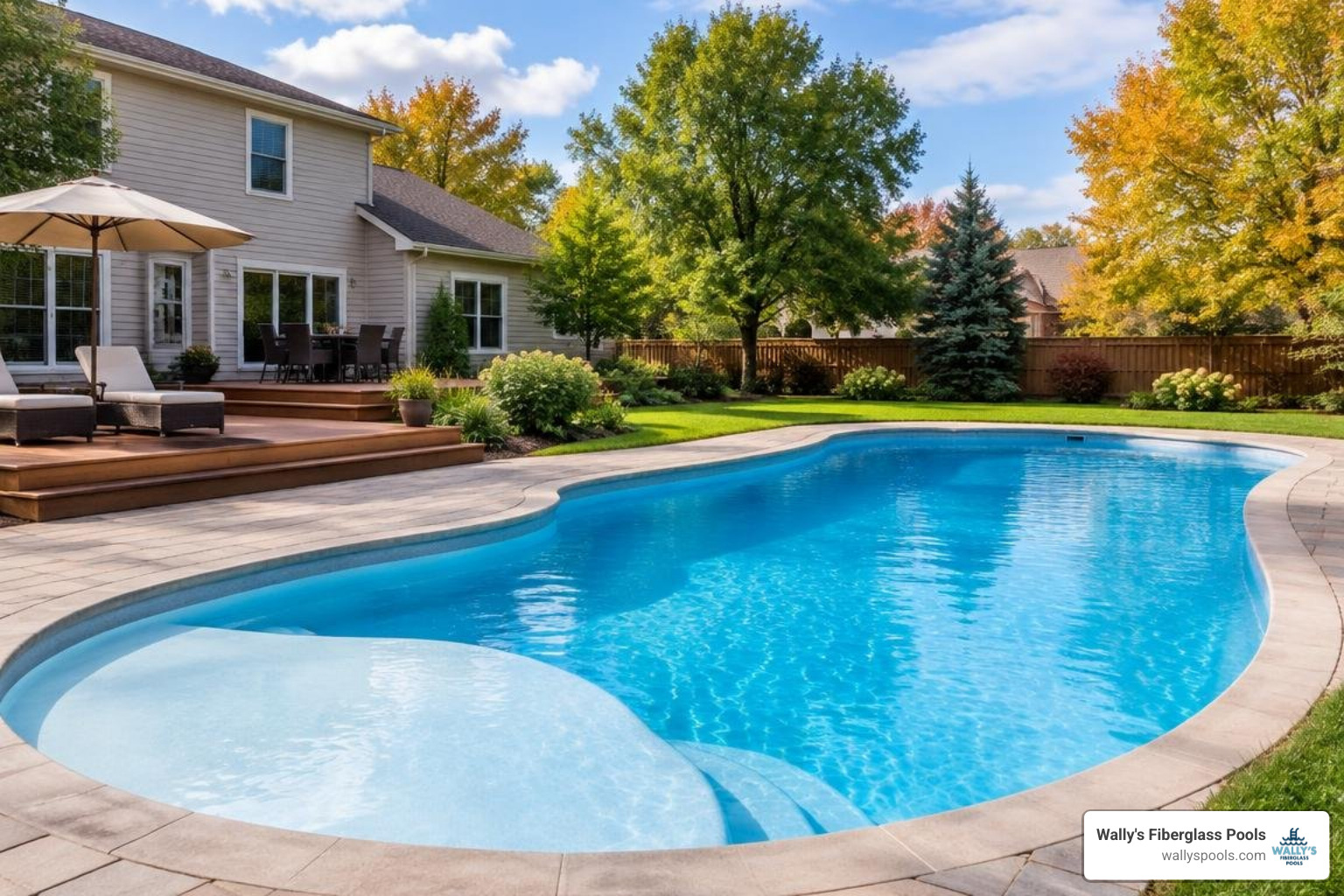
How to Choose a Fiberglass Pool Dealer in Southeast Wisconsin
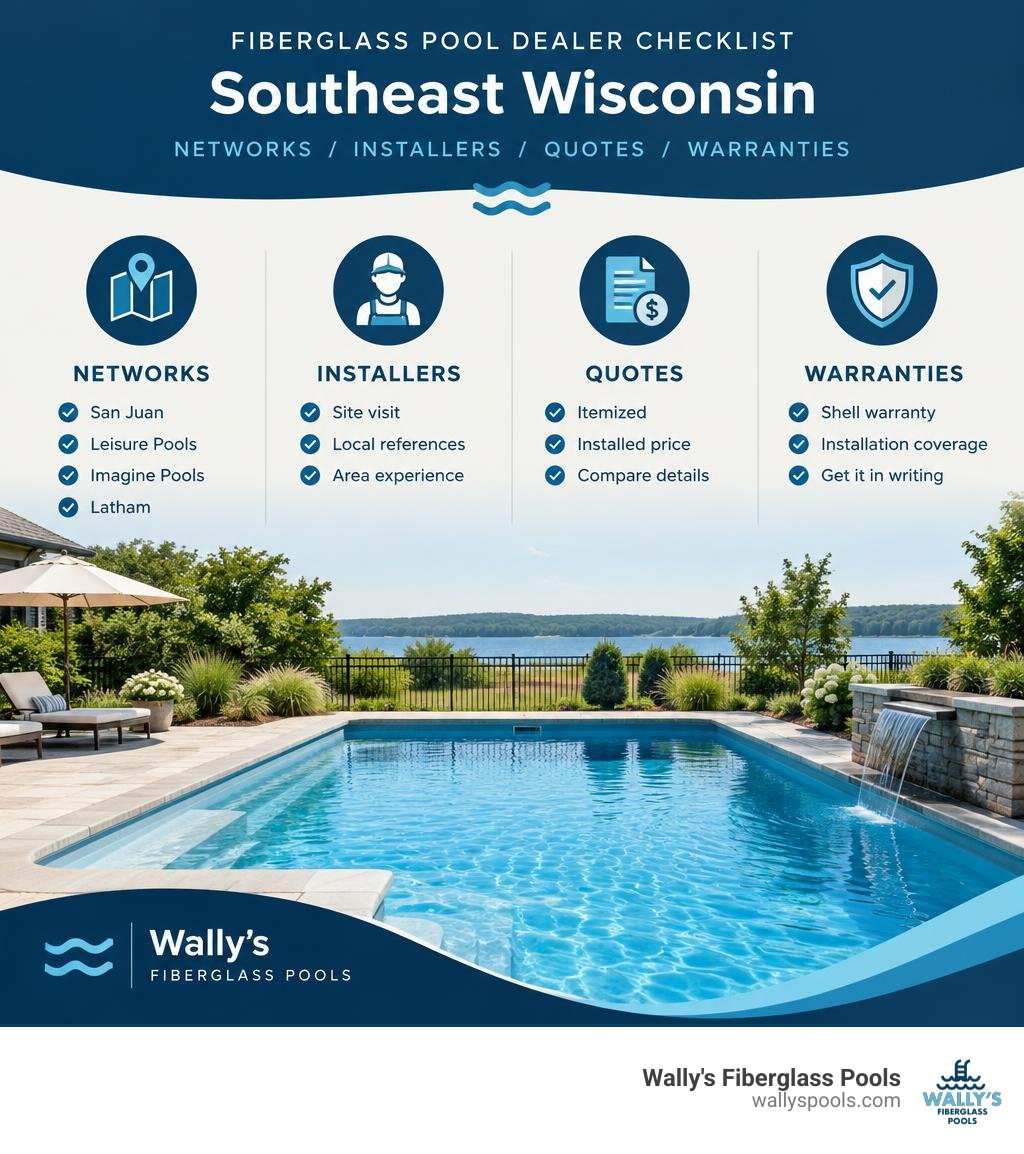
Start with the dealer networks for major fiberglass pool manufacturers. Then compare the installers who serve your area. Ask each one for a site visit, an itemized installed quote, recent local references, and written details on both the shell warranty and installation coverage. A well-known pool brand matters, but the crew preparing your yard matters just as much.
In Lake Country and across Southeast Wisconsin, access, drainage, and winter conditions can change the plan and the price. This guide will help you compare dealers without losing sight of those local details. I’m Wally Haines from Wally’s Pools, a fiberglass pool specialist based in Sussex, Wisconsin.
When you meet with a prospective dealer, walk the property together before discussing shell models. A reputable installer will check fence lines, overhead utility clearance, side-yard width, and the slope between your house and the proposed pool site. These observations shape the excavation plan, crane placement, and final quote. If a dealer skips the site visit and sends a price over the phone, treat that number as a rough starting point rather than a firm commitment.
Ask how the dealer handles groundwater, surface runoff, and spring thaw. In Waukesha County and the Milwaukee metro area, many yards sit on clay-heavy soils that hold water against the pool walls. The right backfill and drainage plan prevents long-term settling and keeps the shell stable through repeated freeze-thaw cycles. A local specialist should explain this in plain language and include it in the written scope of work.
Finally, compare the ownership experience after installation. The best fiberglass pool dealers offer ongoing support for water chemistry, equipment service, and seasonal opening and closing. Choosing a company that will still answer your calls in July and October is just as important as choosing the right shell.
How Top Tier Fiberglass Pool Dealers Operate Across North America
When you begin researching swimming pools, you quickly discover that pool manufacturers do not sell directly to the general public. Instead, they operate through networks of authorized fiberglass pool contractors and regional installers. These dealer networks form the backbone of the industry, bridging factory engineering with on-site excavation, plumbing, and finishing.
Leading manufacturers distribute their shells through hundreds—and in some cases thousands—of independent businesses. Some networks include more than 600 independent dealers, while others operate across 23 countries with over 500 dealers and distributors. Still others connect with homeowners through more than 1,000 dealers distributed via major pool supply chains. North America’s largest fabricated pool manufacturers maintain multi-tiered networks across three continents.
Working with authorized fiberglass pool dealers ensures you receive authentic composite shells manufactured under strict factory conditions. In addition, authorized dealers often have protected geographic territories and direct access to dedicated freight logistics.
Evaluating Manufacturer Dealer Tiers and Direct Pricing Access
Not every dealer holds the same standing with their manufacturing partner. Pool manufacturers frequently classify their partners into volume- and experience-based tiers, such as standard authorized resellers, preferred partners, and premier or master dealers.
Top-tier dealers typically receive factory training, priority manufacturing slots, and direct access to current-year catalog lineups at preferred pricing tiers. When you use our step-by-step guide to compare fiberglass pool costs, understanding these dealer classifications helps explain differences in initial quotes. A high-volume dealer with direct factory alignment can often secure favorable freight scheduling, whereas a general contractor buying an occasional shell may face higher logistics surcharges and longer delivery windows.
Comparing National Manufacturer Networks vs Local Independent Fiberglass Pool Dealers
Choosing between a national franchise dealer and an independent regional specialist comes down to balancing corporate brand backing with local ground experience:
| Comparison Metric | National Network Dealer | Local Independent Specialist |
|---|---|---|
| Manufacturer Alignment | Exclusively tied to one brand | May offer multiple shell lines or curated models |
| Warranty Processing | Direct factory claim routing | Direct local advocacy and hands-on resolution |
| Soil & Climate Expertise | Standardized corporate guidelines | Deep understanding of local freeze-thaw and clay soils |
| Supply Chain Priority | High factory volume allocation | Flexible sourcing and local inventory management |
| Workmanship Accountability | Often utilizes regional subcontractors | In-house crews handle excavation, plumbing, and setting |
While national networks provide robust brand recognition, local specialists understand the precise site conditions in Waukesha County, Lake Geneva, and the Milwaukee metro area.
Core Shell Construction: What Authorized Dealers Won’t Always Tell You
A glossy brochure will show sparkling water and glowing LED lights, but the structural longevity of your pool depends entirely on composite manufacturing practices. When comparing shells against established industry manufacturing standards, knowing how the structural core is layered separates a pool that lasts 50 years from one that develops spider cracks within five.
Hand-Laid vs Sprayed Chop Gun Fiberglass Construction
The method used to apply fiberglass reinforcement significantly influences tensile strength:
- Hand-Laid Fiberglass: High-tensile woven roving is cut to size and applied by hand, saturated with resin, and rolled to eliminate air pockets. This process produces uniform wall thickness and superior flexural strength, allowing the shell to withstand ground movement without requiring artificial structural ledges inside the pool.
- Chopped Glass (Sprayed): Short, discontinuous glass fibers are sprayed onto the mold using a chop gun along with resin. While faster and cheaper to manufacture, sprayed glass offers lower structural strength per mil of thickness and can leave uneven weak spots if not rolled properly.
Hand-laid manufacturing results in a shell that flexes safely under shifting freeze-thaw pressures rather than cracking.
Resin Quality, Vinyl Ester Barriers, and Gel Coat Thickness
Water chemistry and moisture can degrade low-grade polyester resins over time through osmotic blistering. Premium manufacturers apply a comprehensive vinyl ester barrier coat behind an exterior gel coat layer (often up to 32 mils thick) to prevent moisture penetration.
Understanding these construction details helps prevent future shell damage, saving you from complex issues outlined in our real-world cost breakdown for inground fiberglass pool repair.
The Installation Timeline and Site Realities for Wisconsin Backyards
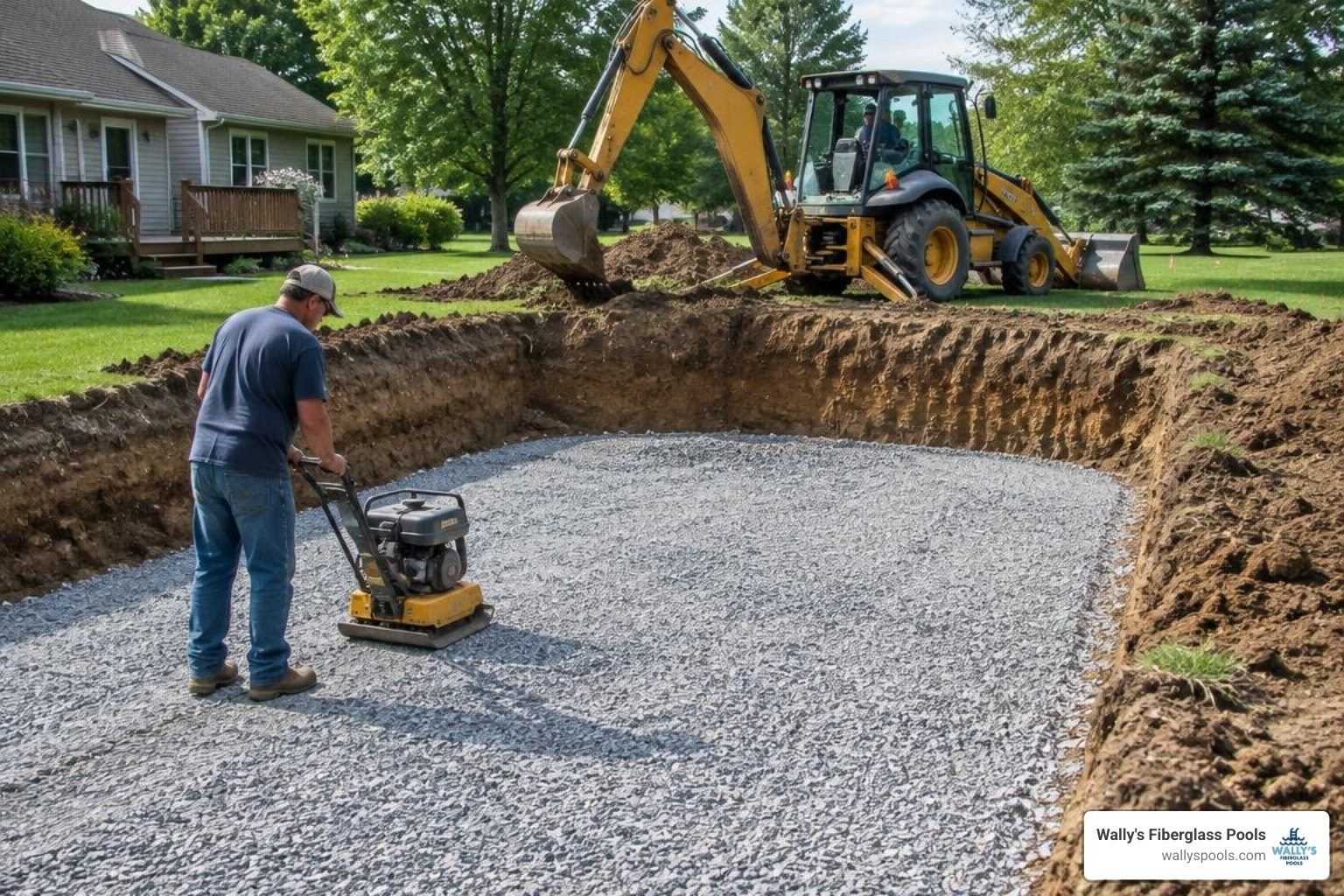
One major advantage of choosing fiberglass is speed. Our professional fiberglass pool installation services typically complete the structural build within two to four weeks.
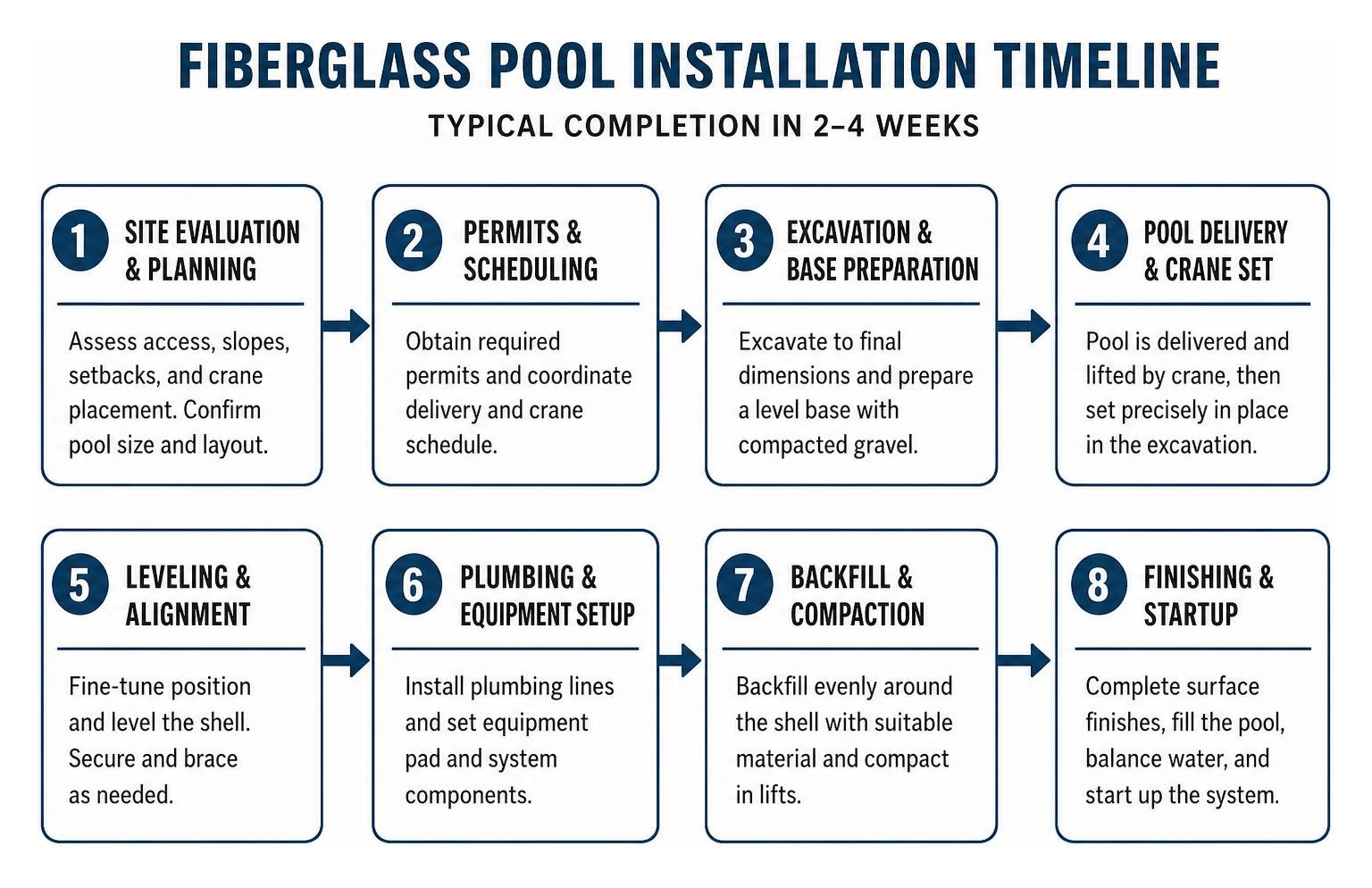
Managing Difficult Access, Slopes, and Crane Placement
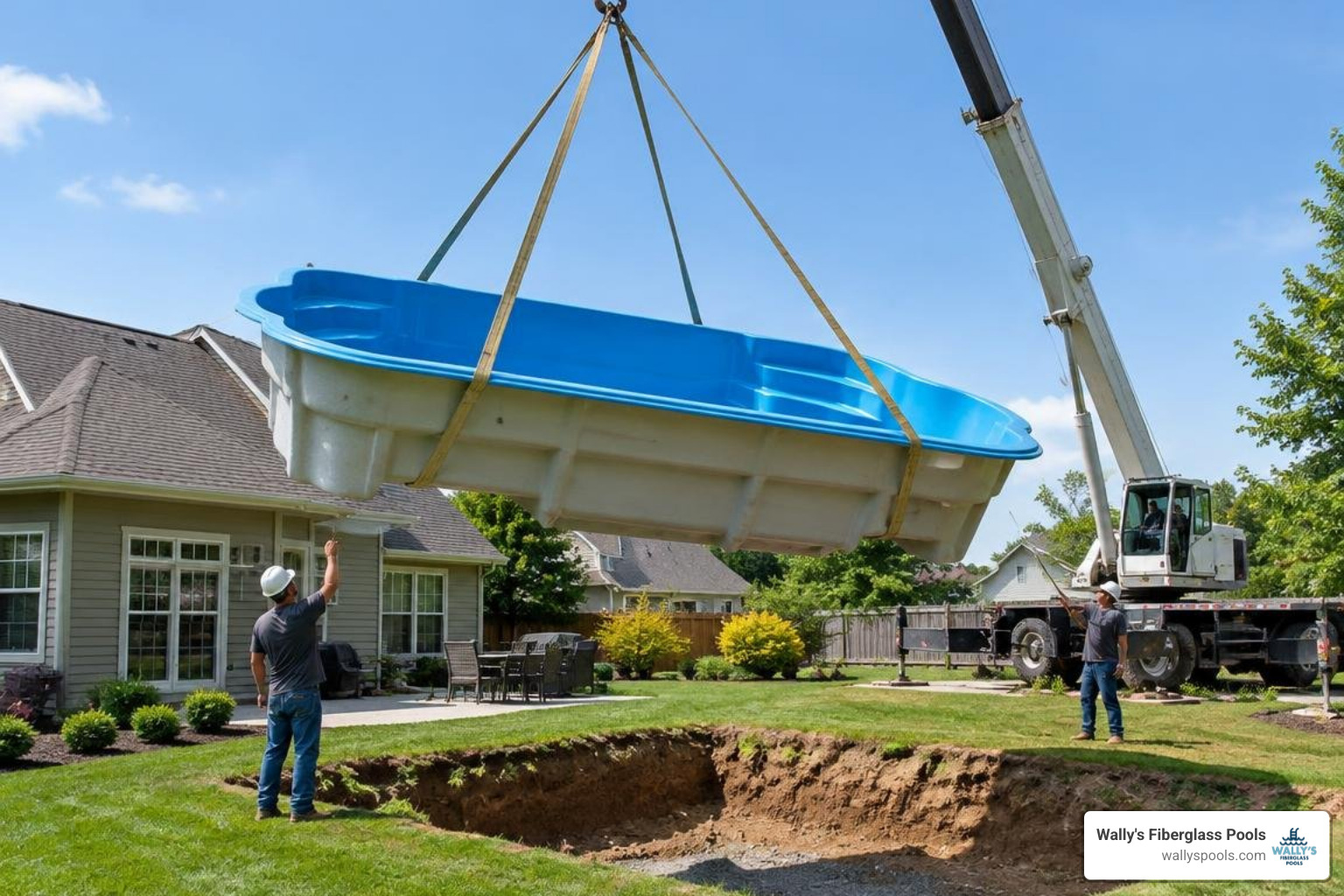
Not every backyard in Lake Country features a flat, wide-open lawn. When dealing with steep slopes, narrow side yards, or tight setbacks, modern compact designs and self-supporting plunge pools provide practical solutions. These self-supporting composite units can be placed on engineered concrete pads with minimal excavation, saving on crane and site prep costs. Specialized crane picks allow us to lift full-sized pools smoothly over houses, mature trees, and outbuildings.
Before excavation begins, your installer should mark the crane path, the spoil pile location, and the exact spot where the shell will rest. In neighborhoods around Delafield, Oconomowoc, and Pewaukee, mature trees and established landscaping often limit access. A dealer who plans the crane pick in advance can avoid broken branches, damaged driveways, and last-minute change orders. Ask whether the quote includes a site-specific lift plan or whether crane coordination is handled as a separate line item.
Freeze-Thaw Ground Movement and Backfill Stability
Wisconsin winters present challenging freeze-thaw cycles that can heave improperly installed outdoor structures. To protect the pool, we use clean, non-cohesive crushed stone rather than native dirt or sand for backfill. Crushed stone locks securely into place, allows water to drain freely away from the walls, and prevents settling.
Proper drainage matters just as much as the backfill material. A well-installed pool includes a dewatering system that relieves hydrostatic pressure when groundwater rises during spring thaw. Without it, water can push against the shell and cause movement. This is a common concern for homeowners in low-lying areas near Okauchee Lake, Lac La Belle, and other Lake Country communities where the water table sits close to the surface.
Pairing stable backfill with proper seasonal care and dedicated fiberglass pool maintenance services ensures your pool structure remains stable year after year. A local installer who understands Wisconsin soil conditions will also recommend a winterization schedule that protects plumbing, equipment, and the shell through the coldest months.
Vetting Warranties, True Costs, and Long-Term Ownership Support
Before signing a contract, look closely at our fiberglass pool total cost breakdown for Wisconsin homeowners to ensure all site-specific variables are accounted for up front. Reliable long-term support through comprehensive fiberglass pool service makes all the difference once the pool is in the ground.
Questions to Ask Certified Fiberglass Pool Dealers Before Signing
- What specific items are included in your turnkey quote? (Verify excavation, crane fees, initial water delivery, electrical runs, bonding, permits, and basic restoration).
- Are your installers in-house employees or third-party subcontractors?
- What specific gravel or stone will be used for the base and backfill?
- Do you provide specialized fiberglass pool cleaning equipment and startup water chemistry balancing?
Structural Shell Guarantees vs Workmanship Coverage
Always separate the manufacturer’s shell warranty from the dealer’s installation warranty. Premium manufacturers typically offer a 25-year to lifetime limited structural warranty alongside a 10-to-20-year gel coat blister warranty.
However, settlement, underground plumbing, backfill compaction, and equipment setup are covered exclusively by your installer. Ensure your dealer also installs high-efficiency pumps, filters, and heaters backed by dedicated pool replacement equipment services.
Frequently Asked Questions About Fiberglass Pool Purchases
How long does a typical fiberglass pool installation take from dig to swim?
From initial excavation to setting the shell, backfilling, and filling with water, the structural process takes about two to four weeks. Additional time may be required for surrounding concrete decking, custom hardscaping, and local building inspections. Weather delays, crane scheduling, and unexpected soil conditions can extend the timeline, so plan for some flexibility around the final swim date.
What factors affect the cost of a fiberglass pool installation and ownership?
Total project costs depend on shell size, access constraints, crane requirements, electrical upgrades, coping, and heating systems. Long-term ownership costs tend to stay lower over time because the non-porous gel coat resists algae, reducing chemical use and avoiding resurfacing needs. In Southeast Wisconsin, you should also budget for a safety cover, winterization supplies, and seasonal opening and closing service if you prefer not to handle those tasks yourself.
Can a fiberglass pool shell pop out of the ground during Wisconsin winter freeze-thaw cycles?
No, as long as the pool remains full of water and groundwater is properly managed. Installers use a dedicated sump crock or dewatering tube alongside non-cohesive gravel backfill to balance hydrostatic pressure safely through winter freeze-thaw shifts. Keeping the pool full over winter provides internal pressure that counteracts external ground forces, which is why draining a fiberglass pool before winter is never recommended.
How do I compare quotes from different fiberglass pool dealers?
Request an itemized quote from each dealer that separates the shell, delivery, crane, excavation, backfill, plumbing, electrical, permits, and site restoration. This makes it easier to spot missing items and compare true project costs. Also ask about the installer’s experience with local soil conditions, their warranty process, and whether they use in-house crews or subcontractors for the structural work.
Conclusion
Selecting the right fiberglass pool involves more than picking a shell shape from a catalog; it requires partnering with an experienced installation specialist who understands local soils, freeze-thaw conditions, and backyard site constraints. At Wally’s Fiberglass Pools, we handle every stage of ownership—from excavation and crane sets to seasonal maintenance and equipment upgrades across Sussex, Lake Country, Waukesha County, and Southeast Wisconsin. Ready to bring your backyard vision to life? You can start planning your backyard pool project with our local team today.