
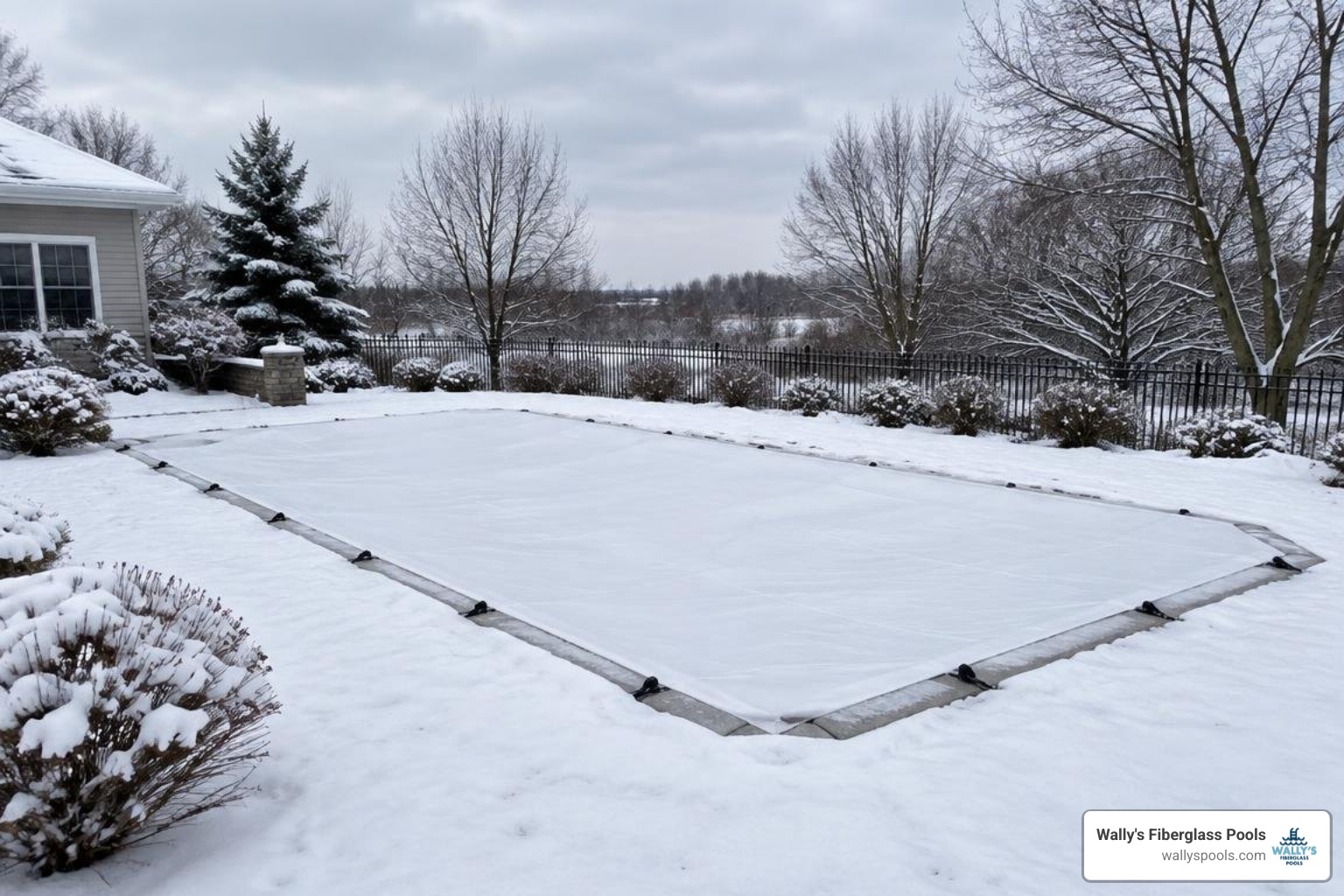
How to Protect Your Wisconsin Winter Pool
To protect your Wisconsin winter pool, clean it, balance the water, clear and drain the plumbing and equipment, then secure a winter cover before freezing weather arrives. Set the water level for your pool and cover as directed by your installer. For an inground fiberglass pool, do not drain it completely: the water helps support the shell.
In Lake Country and across Southeast Wisconsin, check the cover after heavy snow and during thaws. Remove standing water when it is safe to do so, and watch for loose anchors or a changing pool water level.
I’m Wally Haines from Wally’s Pools, and I’ll walk you through the steps that help protect your pool until spring.
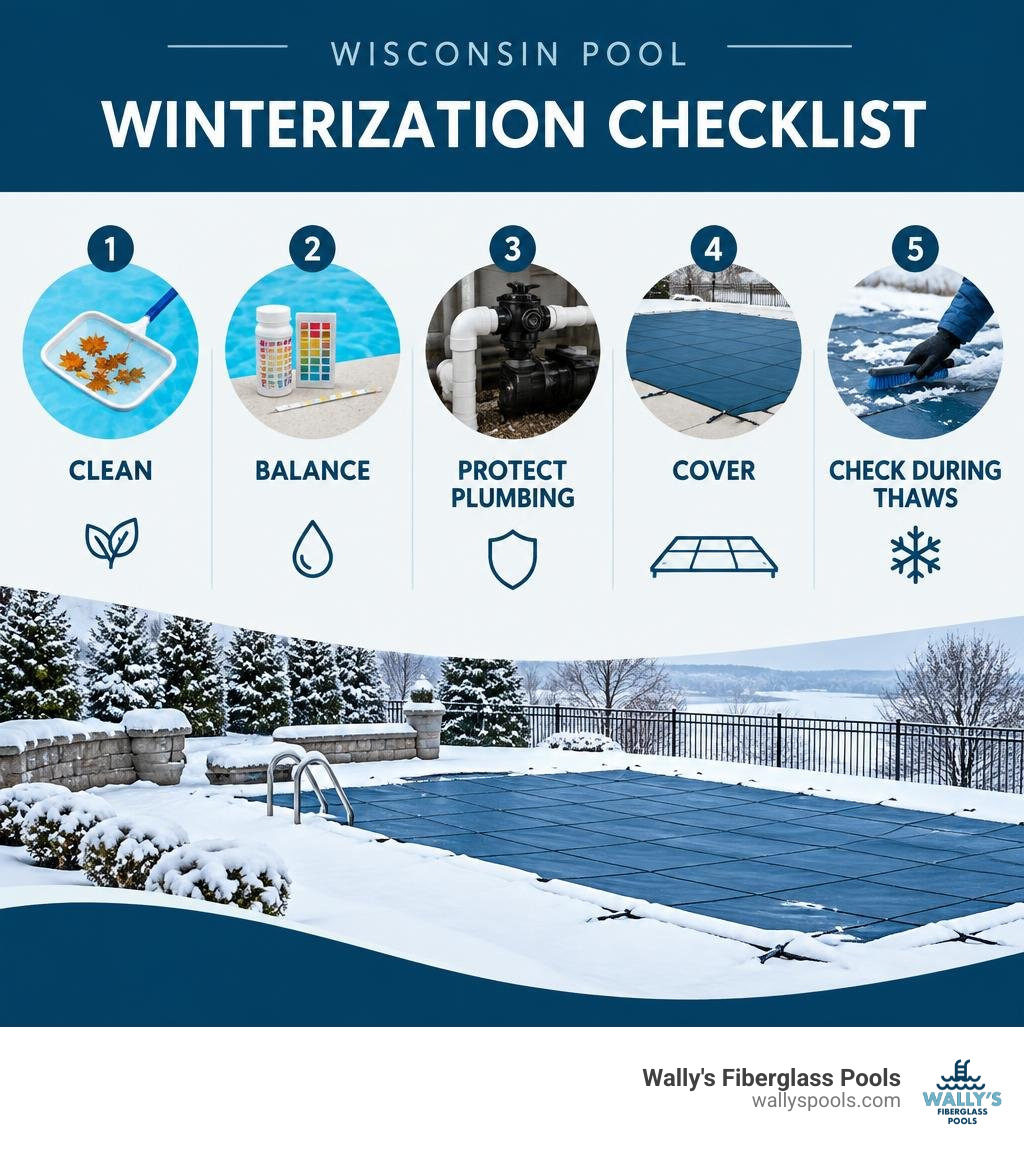
Essential Steps to Winterize Your Wisconsin Winter Pool
Preparing a backyard swimming pool for a sub-zero Upper Midwest winter requires a methodical approach. The freezing temperatures we experience across Waukesha County, Milwaukee, and Lake Geneva leave no room for shortcuts. When water freezes, it expands by roughly nine percent, creating immense outward force that can crack rigid PVC pipes, rupture pump housings, and damage pool coping.
The first phase of winterization begins with physical cleaning. Remove all organic debris, such as leaves, twigs, and pollen, using a skimmer net and pool brush. Vacuum the pool floor thoroughly to pull out fine silt and sediment. Organic matter left behind over winter degrades under the cover, consuming sanitizer reserves and causing stubborn staining on your pool surfaces.
After cleaning, adjust your water level based on your specific pool structure and cover type. For inground fiberglass pools, lower the water just below the skimmer mouth and return jets to allow for proper line clearing, but never drain the shell completely. Maintaining water inside an inground fiberglass pool provides essential inward ballast against surrounding saturated winter soils. If you are brushing up on routine upkeep fundamentals ahead of closing day, review a quick start guide to pool maintenance basics.
Water Balancing and Chemical Kits for Cold Weather
Balanced water chemistry prevents corrosion of metal fittings, stops scale formation, and prevents algae growth during unexpected autumn warm spells or early spring thaws. Before introducing winterizing chemicals, test your pool water and adjust parameters to these target ranges:
- pH: 7.4 to 7.6
- Total Alkalinity: 80 to 120 ppm
- Calcium Hardness: 200 to 400 ppm
- Free Available Chlorine: 2.0 to 4.0 ppm
Once baseline chemistry is balanced, add a dedicated winter chemical kit. Broadcast a slow-dissolving, long-life winter algaecide across the surface to inhibit micro-algae growth beneath the dark cover. Follow this with a non-chlorine shock oxidizer (potassium peroxymonosulfate) to eliminate residual contaminants without bleaching gelcoat finishes or degrading vinyl materials. For step-by-step chemical advice tailored to new installations, consult the easy pool chemical maintenance playbook for new owners.
Plumbing Line Blowout and Freeze Damage Protection
Complete evacuation of underground plumbing lines is the most critical mechanical step in protecting your system from freeze ruptures. Residual water trapped inside underground PVC runs will freeze solid, splitting the pipes beneath your deck or lawn.
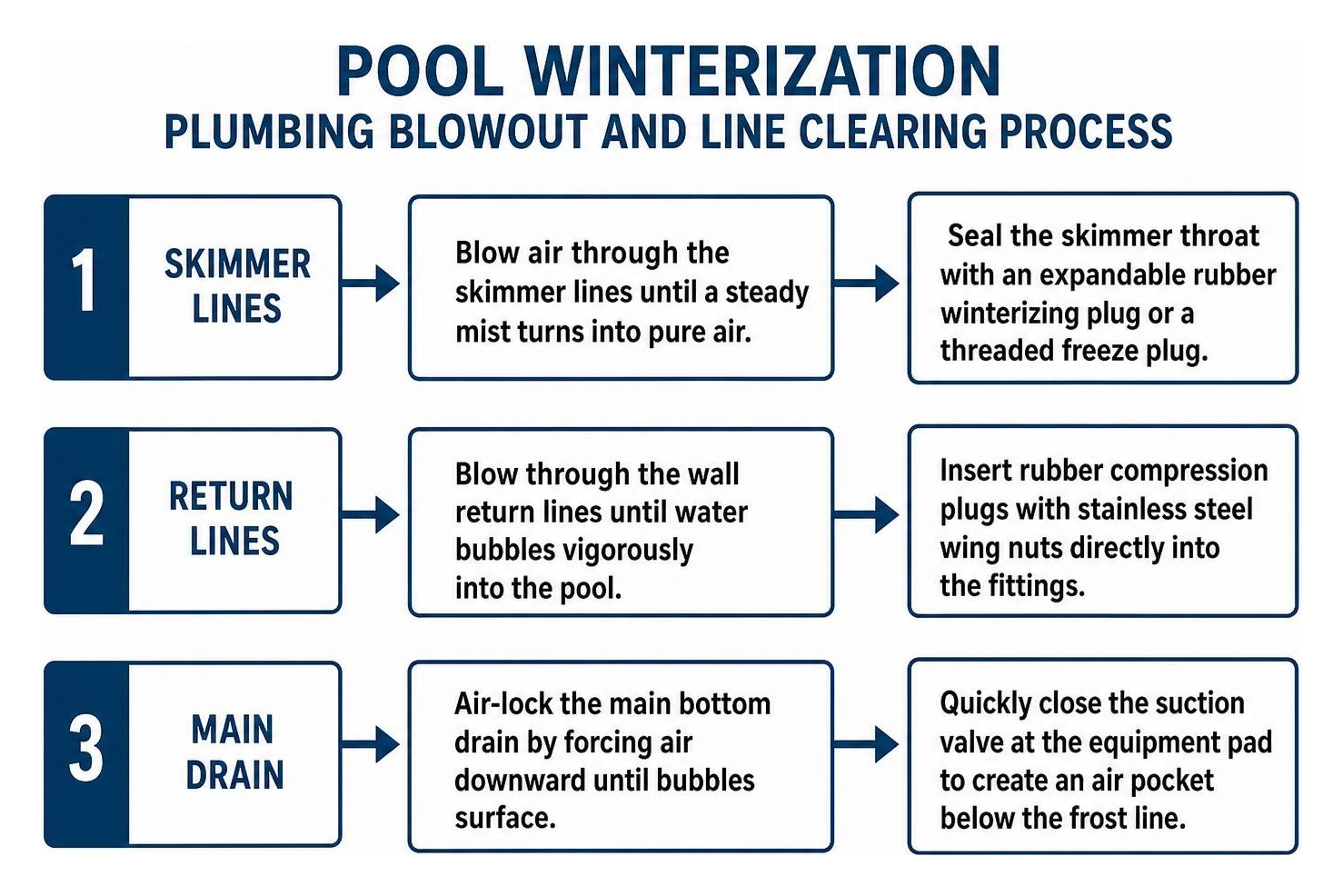
Use a commercial-grade cyclone blower or high-volume air compressor connected to your equipment pad plumbing to force all water out through the skimmers, main drains, and return lines:
- Blow air through the skimmer lines until a steady mist turns into pure air, then seal the skimmer throat with an expandable rubber winterizing plug or a threaded freeze plug.
- Blow through the wall return lines until water bubbles vigorously into the pool, then insert rubber compression plugs with stainless steel wing nuts directly into the fittings.
- Air-lock the main bottom drain by forcing air downward until bubbles surface, then quickly close the suction valve at the equipment pad to create an air pocket that keeps water below the frost line.
- Add non-toxic, propylene-glycol-based swimming pool antifreeze to skimmer lines as an added safety margin against condensation freeze-ups.
- Install a skimmer protection bottle (often called a Gizzmo) into the skimmer housing. These hollow plastic tubes absorb the inward crushing force of expanding ice inside the skimmer well.
When managing seasonal drainage and backwash runoff on your property, ensure your discharge practices align with local environmental regulations outlined in the Wisconsin Municode Library.
How to Protect and Service Pumps, Filters, and Equipment
Your pad equipment—pumps, filters, heaters, chlorinators, and automated valves—represents a significant portion of your pool investment. Leaving water inside these units over winter will crack plastic volutes, split brass impellers, and rupture filter tanks.
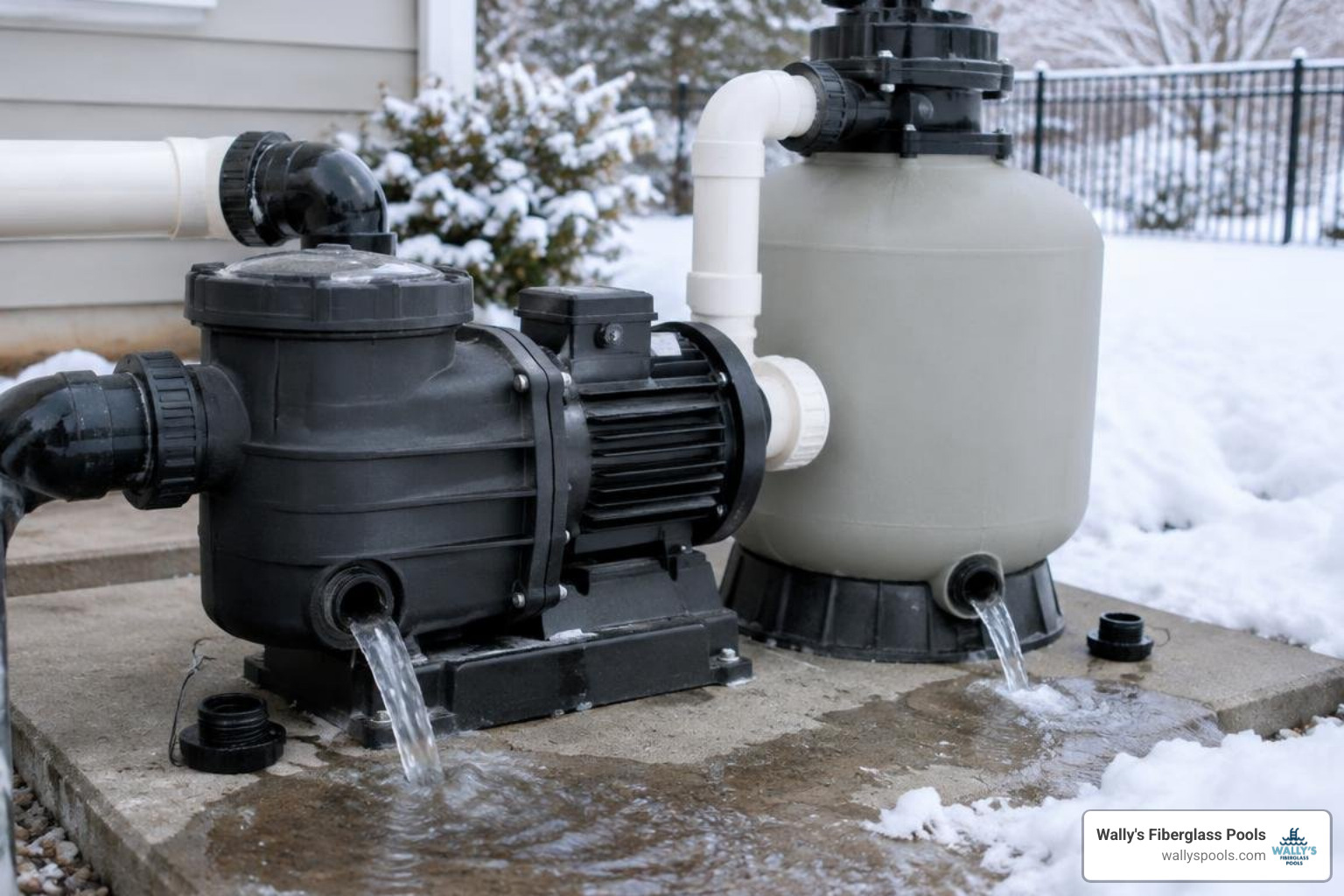
Begin by shutting off all dedicated electrical breakers at the subpanel. Remove the drain plugs from the pump strainer housing and wet-end volute. Take off the lid, pull out the strainer basket, and store the drain plugs inside the basket so they are not misplaced over the winter.
Next, service the filtration system:
- Cartridge Filters: Open the air relief valve, remove the drain cap, unlock the locking ring, and extract the internal filter elements. Spray the pleats clean with a high-pressure hose, soak them in a degreasing filter cleaner if oils are present, let them dry completely, and store them indoors.
- Sand Filters: Turn the multi-port valve to the “Winterize” position (or midway between standard settings). Remove the lower drain plug to let water trickle out from the bottom of the sand bed over several days.
- Multi-Port Valves: Lubricate rubber spider gaskets and O-rings with a silicone-based pool lubricant to prevent brittleness and cracking caused by freezing air.
For comprehensive maintenance schedules and professional equipment servicing details across Southeast Wisconsin, visit the complete guide to fiberglass pool service.
Warning Signs Your Pool Pump or Filter Needs Pre-Winter Repair
Do not defer equipment repairs until spring. Autumn closing is the ideal time to evaluate mechanical components and address wear-and-tear before freezing weather sets in:
- Motor Grinding or Screeching: High-pitched whining or grinding indicates worn motor bearings. Moisture inside worn bearings will rust and seize the motor entirely during months of winter dormancy.
- Dripping Mechanical Shaft Seals: Water leaking between the pump wet end and motor housing signals a failing shaft seal, which can allow moisture to penetrate the motor winding compartment.
- Hairline Filter Tank Fractures: Inspect the composite or fiberglass filter housing seams. Under the stress of cold contractions, fine hairline cracks can widen into catastrophic structural splits.
- Cloudy or Sticking Pressure Gauges: If your air pressure gauge fails to return to zero when the pump turns off, moisture has entered the bourdon tube. It will freeze, rupture the internal mechanism, and give false readings next season.
Eco-Friendly Maintenance and Reduced Chemical Usage
Wisconsin pool owners can maintain pristine water quality while minimizing harsh chemical loads through natural water conditioners. Broad-spectrum enzyme treatments added right before closing digest non-living organic waste, bather oils, and atmospheric dust that slip past winter covers.
Enzymes prevent waterlines from developing scum rings during dormancy, which drastically reduces the need for heavy chlorine shocking when you reopen in May. Mineral purification systems and natural phosphate removers also strip algae of essential food sources, keeping water clean throughout winter without harsh biocides.
Choosing and Maintaining Safety Covers in Severe Climates
A secure winter cover protects your pool from heavy Lake Country snowdrifts, falling autumn leaves, and intense winter winds. Selecting the right cover design depends on your yard’s tree cover, sunlight exposure, and drainage profile.
| Feature / Metric | Solid Safety Covers | Dense Mesh Safety Covers | Standard Tarp & Water Bag Covers |
|---|---|---|---|
| Snow Load Capacity | High (supports heavy snow pack) | Highest (allows snowmelt to pass through) | Low (can tear or collapse inward) |
| Sunlight Blockage | 100% (stops spring algae) | 95% to 99% (UV-resistant weave) | High (until displaced by wind) |
| Water Weight Management | Requires automatic cover pump | Self-draining (no pump required) | Requires manual siphon pump |
| Expected Lifespan | 10 to 15 years | 12 to 15+ years | 1 to 3 years |
| Anchor System | Recessed brass deck anchors | Recessed brass deck anchors | Water bags / perimeter weights |
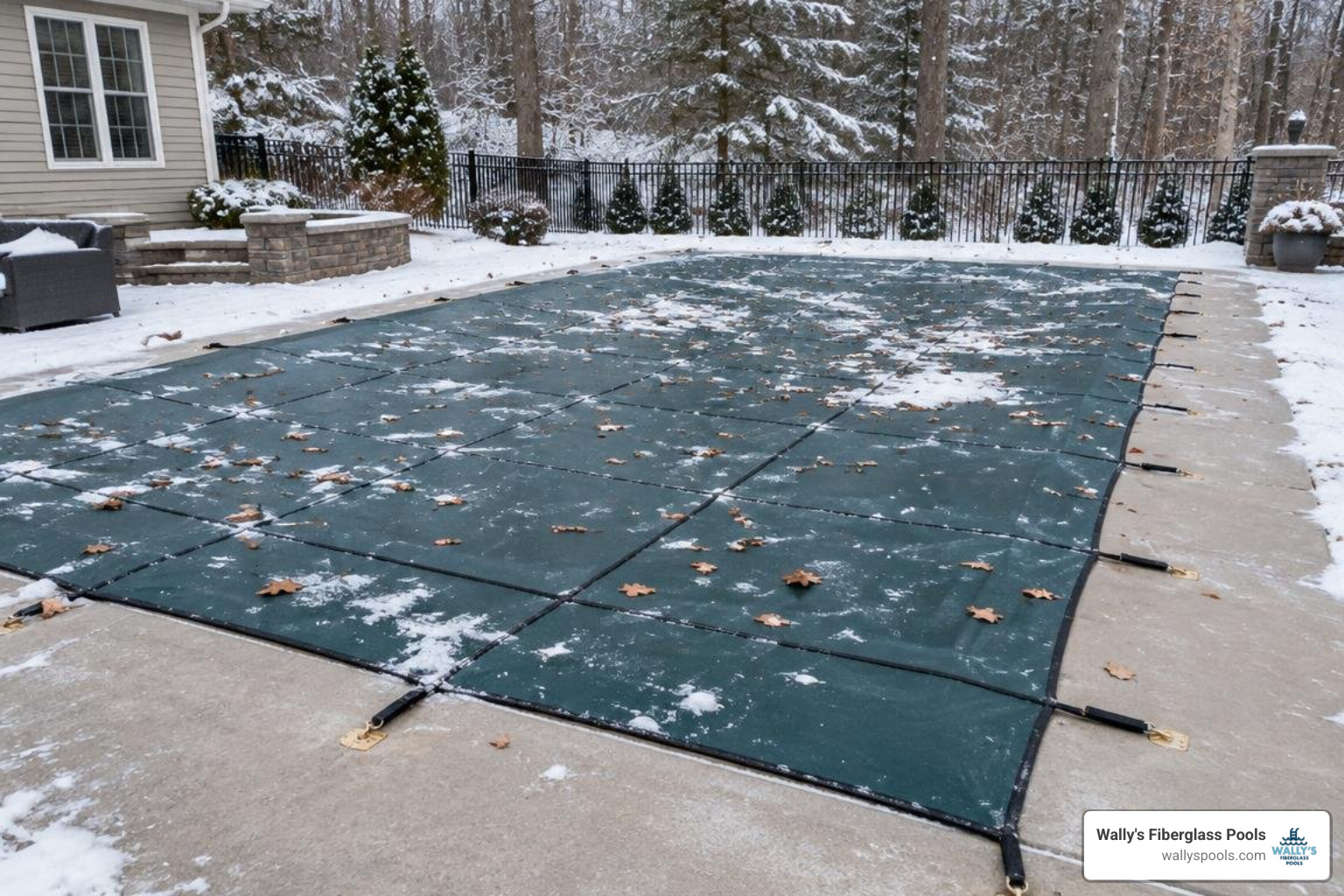
Selecting the Right Cover for a Wisconsin Winter Pool
Solid safety covers prevent all fine dirt, tannins, and sunlight from reaching the pool water. Because sunlight fuels algae growth, solid covers yield exceptionally clean water at spring opening. However, solid covers require an automatic cover pump placed on top of the vinyl to remove melting snow and rain.
Dense mesh safety covers use tightly woven polypropylene fabric that allows snowmelt and rain to drain naturally into the pool while filtering out fine organic debris. This eliminates the need for an automatic top-side cover pump, making mesh an excellent choice for homeowners who travel during the winter. Both solid and mesh safety covers lock into recessed brass deck anchors drilled directly into concrete, paver, or stone pool decking, preventing accidental entry by children or pets.
Mid-Winter Checks to Prevent Cover and Liner Damage
Fluctuating winter temperatures in Southeastern Wisconsin bring repeated freeze-thaw cycles. Managing your pool cover during these shifts prevents structural stress:
- Manage Standing Meltwater: As snowbanks melt during mid-winter warm spells, ensure your automatic cover pump is upright, plugged in, and free of frozen ice dams so it can remove pooled water.
- Avoid Chipping Hard Ice: Never strike sharp shovels, scrapers, or ice picks against a frozen pool cover. Chipping frozen slush can slice through heavy-duty vinyl or mesh fabrics instantly.
- Check Deck Spring Tension: Inspect your stainless steel anchor springs periodically. High wind loads and heavy drifts can slacken straps, causing covers to sag inward against coping edges.
Navigating Freeze-Thaw Cycles Across Southeastern Wisconsin Backyards
Backyards across Waukesha, Washington, Ozaukee, and Walworth counties feature dense clay-rich soils and dynamic groundwater tables. Saturated clay expands significantly when frozen, exerting severe lateral and upward pressure known as ground heave.
According to regional land planning documentation from Cities, Villages, and Towns in Southeastern Wisconsin, our region experiences wide seasonal temperature swings that subject residential structures to repeated ground freezing down to depths of 40 inches or more. Proper backyard grading, perimeter gravel backfill, and dedicated hydrostatic relief systems are critical to channel subsurface runoff away from pool foundations. For a clear breakdown of installation engineering and site preparation, explore our fiberglass pool total cost breakdown for Wisconsin homeowners.
Managing a Fiberglass Inground Pool Through a Wisconsin Winter
Inground fiberglass swimming pools handle Wisconsin winters exceptionally well thanks to the high tensile strength and natural flexibility of composite fiberglass shells. Unlike rigid concrete pools, a fiberglass pool flexes slightly under freeze-thaw earth movement without cracking.
To protect an inground fiberglass pool shell throughout winter:
- Never Drain the Pool: Fiberglass pools rely on internal water pressure to balance outward earth pressure and upward hydrostatic ground forces. Draining the shell leaves it vulnerable to shifting or wall bulging from saturated winter soil.
- Maintain Sump Tube Monitoring: Check your pool’s groundwater inspection pipe (sump daylight tube) in late fall. If groundwater is high, pump it down to keep the sub-base dry before ground freezing begins.
- Lower Water Just Below Skimmers: Drop the water level roughly two to four inches below the skimmer opening, ensuring the plumbing lines can be cleared while keeping the vast majority of water inside the pool shell for ballast.
Frequently Asked Questions About Winter Pool Care in Wisconsin
When should I close my pool for the season in Wisconsin?
The ideal time to close an outdoor pool in Southeast Wisconsin is between late September and mid-October. Wait until consistent daily water temperatures drop below 60 degrees Fahrenheit. Closing while the water is still warm allows residual algae to consume winter chemicals quickly, leading to green water by spring. Closing before heavy autumn leaf fall also keeps leaves and organic tannins from overwhelming your skimmers and filtration system.
What should I do if water pools heavily on my winter cover during a January thaw?
During a mid-winter thaw, place a submersible, freeze-protected automatic cover pump on the lowest point of your solid safety cover. Clear slush and floating leaves away from the pump intake screen to maintain continuous flow. Remove excess water until the cover material rests smoothly on its tensioned straps. Avoid walking across the cover when removing water if ice sheets remain frozen beneath the surface layer.
Where can I swim during cold winter months while my outdoor pool is closed?
While your residential backyard pool is winterized, you can maintain your swimming routine at local indoor aquatic centers. Many municipal recreation departments, YMCA facilities, and community centers throughout Southeast Wisconsin provide heated lap pools, warm-water therapy pools, and water aerobics programs. For broader winter day trip and indoor recreation ideas across the state, browse regional destination guides on Travel Wisconsin.
Conclusion
Winterizing your swimming pool in Wisconsin is all about protecting your structural and mechanical investment from severe freeze-thaw cycles. By balancing water chemistry, clearing and plugging underground plumbing lines, winterizing pad equipment, and securing a fitted safety cover, you protect your backyard retreat through months of sub-zero temperatures.
Proper preparation ensures a smooth, clear spring opening with minimal chemical costs and zero freeze damage. If you need professional pool winterization, equipment replacements, or are planning a durable inground fiberglass pool installation for your Lake Country or Milwaukee-area backyard, reach out to the local specialists at Wally’s Fiberglass Pools for reliable, season-long support.