A Quick Start Guide to Pool Maintenance Basics
Pool Maintenance Basics for Clear, Safe Water
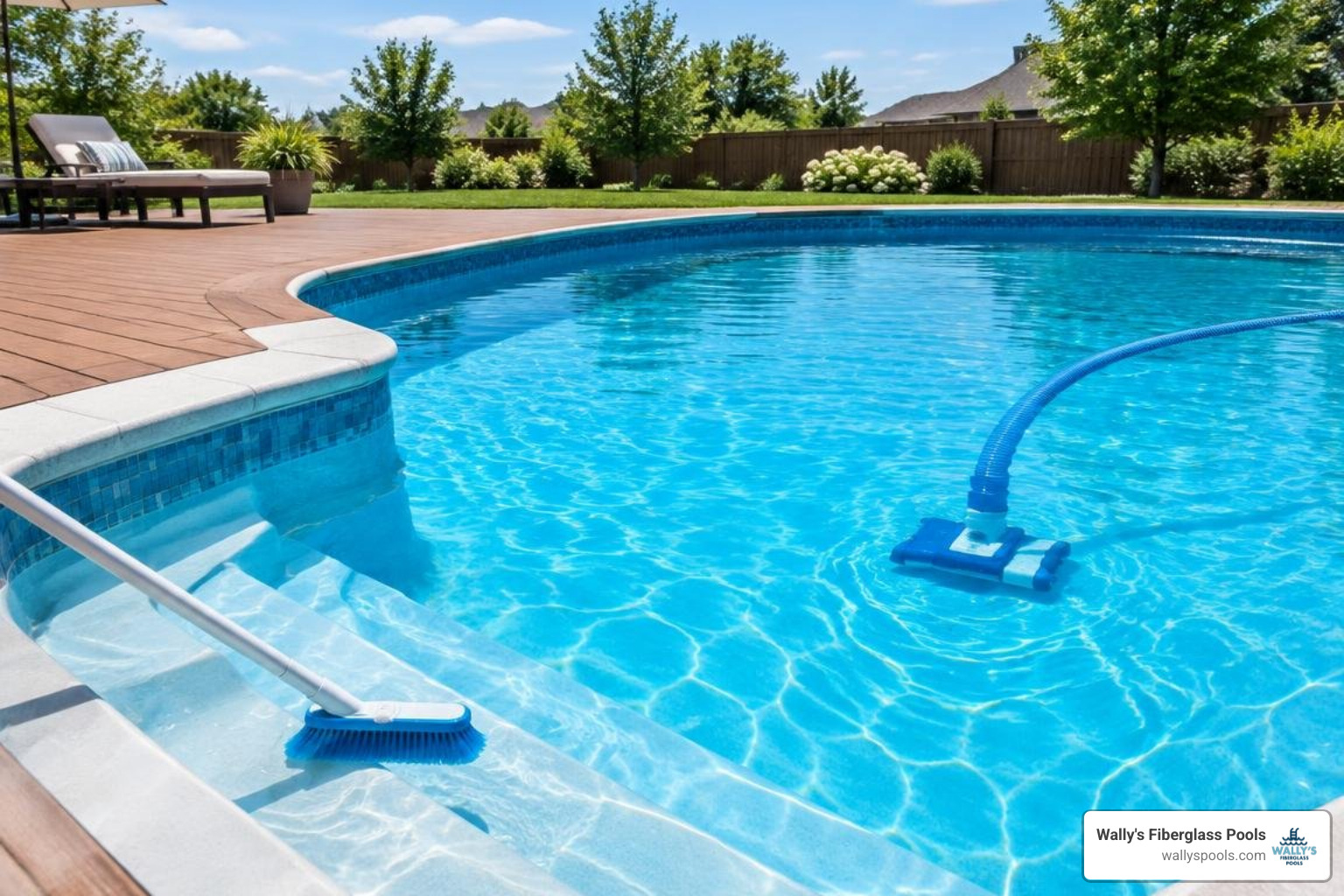
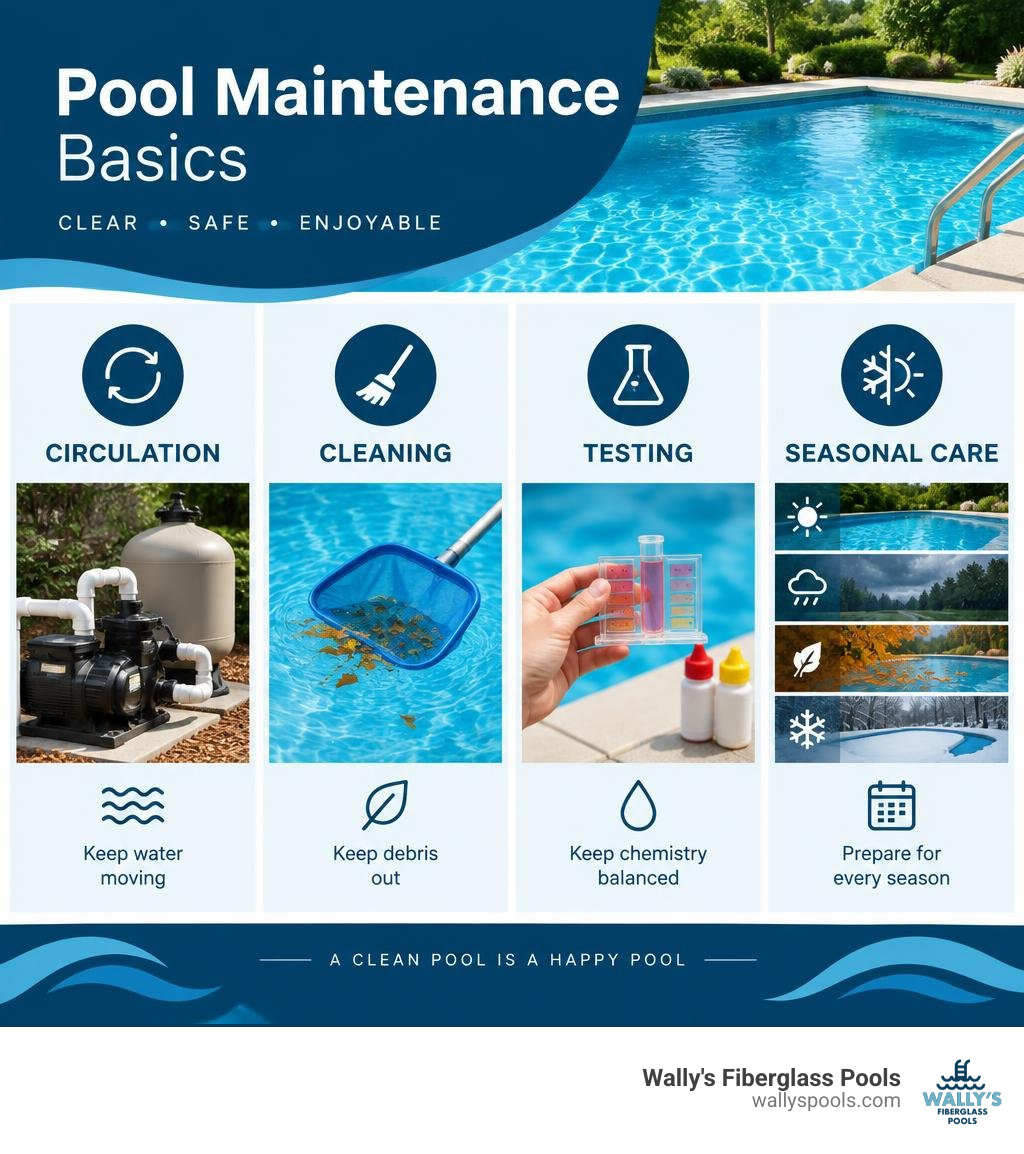
Good pool maintenance comes down to three jobs: keep water moving, keep debris out, and keep chemistry balanced. Each week, test the water, empty baskets, brush the walls and steps with a soft nylon brush, vacuum or run a cleaner, and check filter pressure. Run the pump long enough for proper circulation, usually about 8 to 12 hours daily for many residential pools.
For Southeast Wisconsin and Lake Country homeowners, seasonal care matters just as much. Summer heat, storms, leaves, and Wisconsin freeze-thaw weather can all change what your pool needs. A simple routine protects clear water, your fiberglass finish, and expensive equipment.
I am Wally Haines from Wally’s Pools, a Sussex, Wisconsin fiberglass pool specialist, and this guide will help you build a practical routine for confident pool ownership.
Handy pool maintenance terms:
Essential Components of a Swimming Pool and How They Work
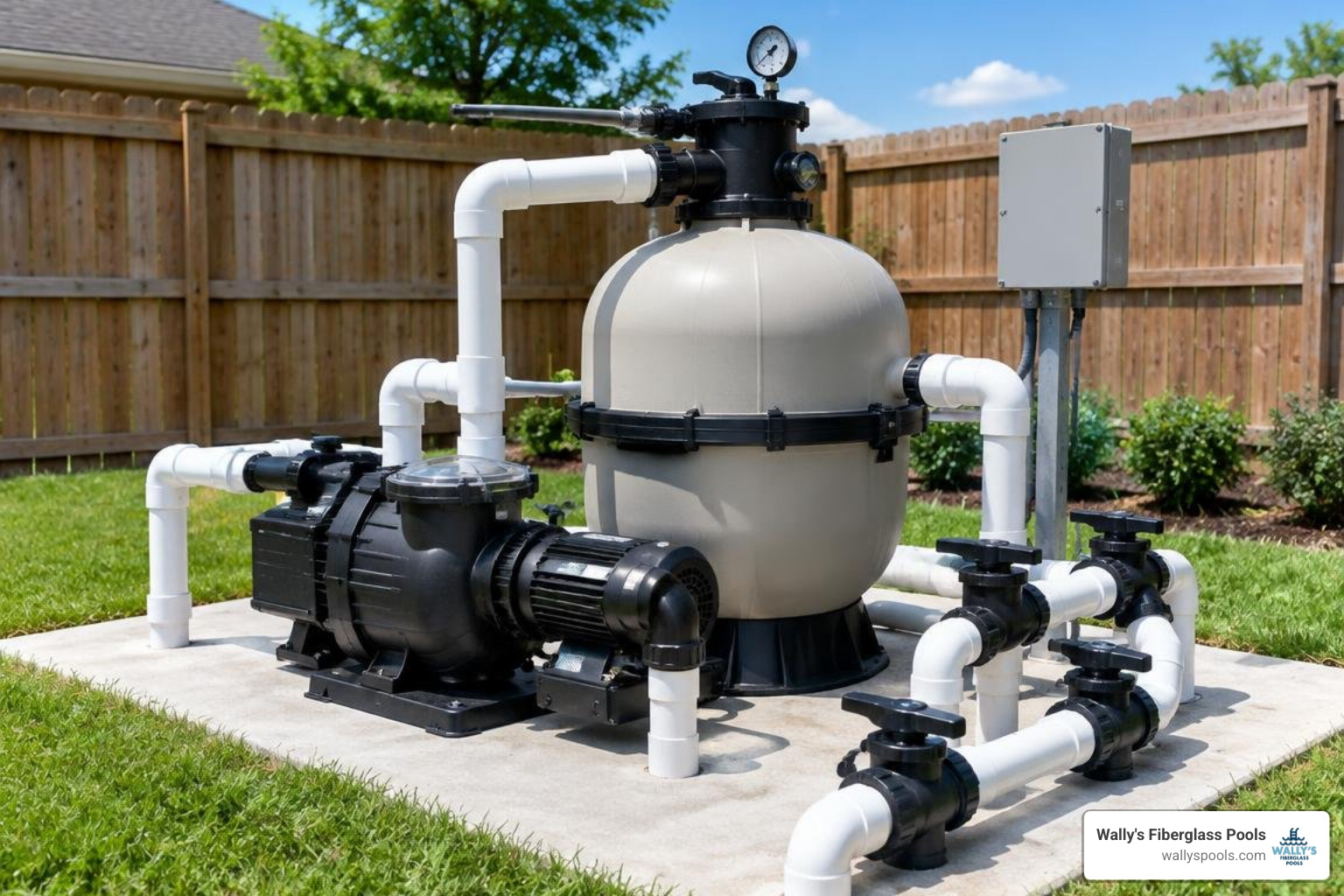
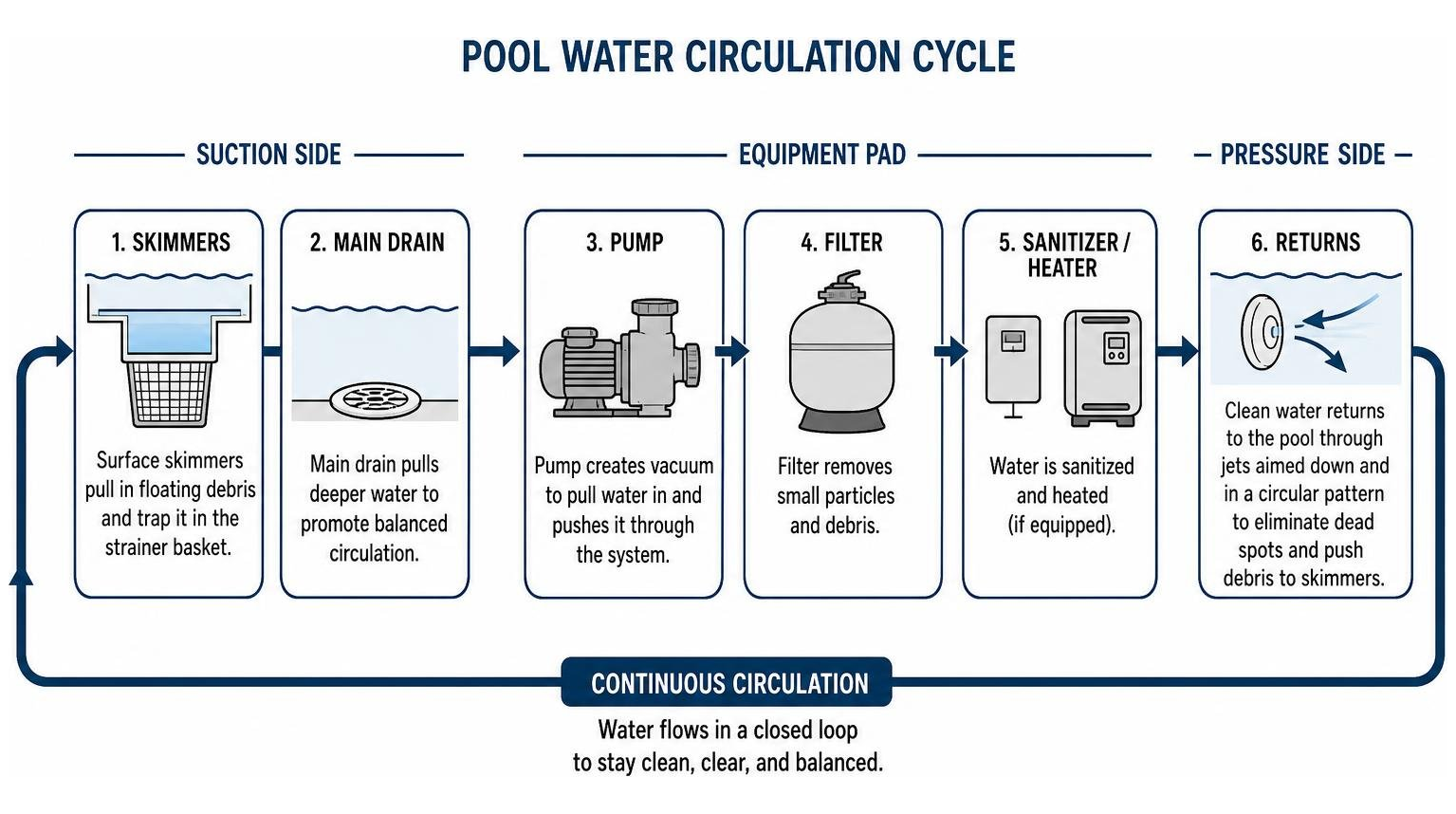
A swimming pool operates as a closed-loop hydraulic and sanitization system. Water circulates continuously from the pool vessel, passes through filtration and sanitation equipment, and returns clear and sanitized. Understanding how these mechanical parts interact helps you diagnose issues early and prevent avoidable wear on your equipment pad.
The system divides into two distinct operational sides:
- The Suction Side: Water is pulled from the pool basin through dedicated surface skimmers and bottom main drains. Surface skimmers feature a floating weir door that regulates surface tension, pulling floating debris like leaves, pollen, and insects directly into a removable strainer basket before they sink. Bottom main drains draw deeper water to prevent thermal layering and ensure balanced circulation throughout the entire water column.
- The Equipment Pad: Water travels through underground PVC lines directly into the pool pump. The pump creates vacuum suction and forces water under pressure through the filtration system, secondary sanitizers (like salt cells or ozonators), and water heaters.
- The Pressure Side: After passing through the filter and sanitation components, clean water travels back through dedicated return lines and re-enters the pool via directional return jets. These jets should be aimed downward and in a circular pattern to eliminate dead spots and drive surface debris smoothly toward the skimmers.
The Circulation System: Pumps, Timers, and Turnover Rates
Your pool pump functions as the heart of the entire circulation system. Its primary role is moving sufficient water volume through the filter media each day to achieve a complete “turnover rate”—the time required to filter every gallon of water in your pool.
For standard single-speed pumps, running the system for 8 to 12 hours daily during the active summer season satisfies this turnover requirement. However, variable-speed pumps (VSPs) provide significantly better operational control and energy efficiency. Governed by the Affinity Law of pump hydraulics, reducing a pump’s motor speed by half drops its electrical power consumption to roughly one-eighth of full capacity. Running a variable-speed pump 24/7 at low RPM provides continuous filtration, smooth surface skimming, and superior chemical dispersion while reducing electrical costs compared to intermittent high-speed cycling.
Filtration Fundamentals: Sand, Cartridge, and D.E. Systems
The pool filter removes suspended particulate matter, microscopic debris, and dead organic material that normal sanitizers oxidize. Homeowners typically utilize one of three core filtration media:
- Sand Filters: Water passes downward through a tank filled with specialized pool-grade silica sand, filtering particles down to 20–40 microns. As dirt accumulates, internal resistance rises. When the filter’s pressure gauge reads 8 to 10 PSI over its clean baseline, backwashing is required. This reverses the internal water flow for 2 to 3 minutes to flush trapped dirt down the waste line, followed by a 30-to-60-second rinse cycle. For optimal performance, review our proven sand filter maintenance practices to keep media running cleanly year after year.
- Cartridge Filters: Water passes through spun polyester fabric pleats that trap particles down to 10–20 microns. Cartridges require no backwashing; instead, the owner disassembles the tank and rinses the pleats with a garden hose when pressure increases by 8–10 PSI.
- Diatomaceous Earth (D.E.) Filters: The most granular mechanical filtration system, trapping particles down to 2–5 microns. D.E. grids are coated with powdered fossilized diatoms, requiring backwashing and periodic powder replenishment.
Essential Water Chemistry and the Weekly Pool Maintenance Routine
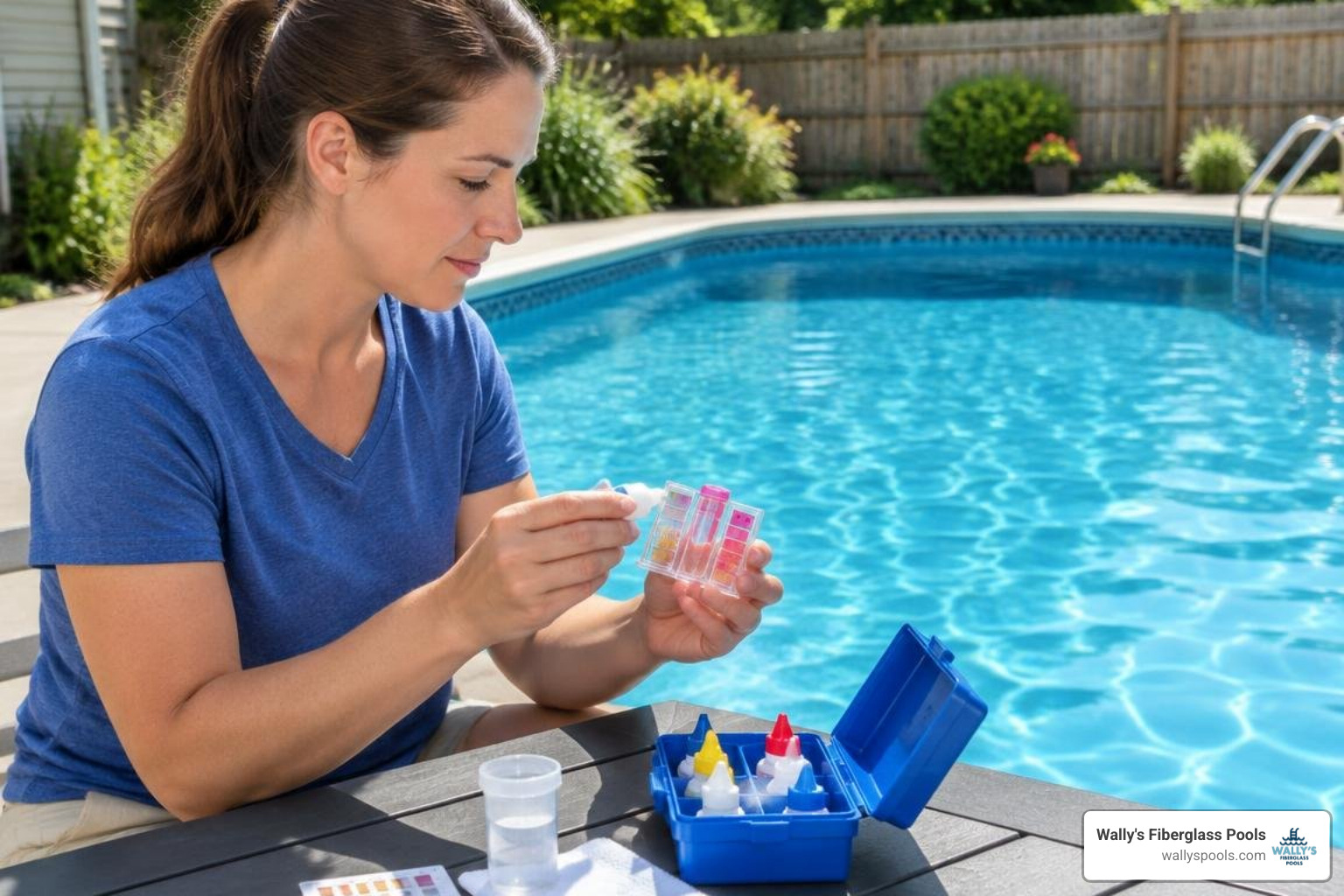
Balancing water chemistry protects bather comfort, prevents pathogen transmission, and shields your pool surface and equipment from premature deterioration. Testing your water parameters regularly prevents chemical spikes and ensures sanitizers work efficiently.
| Chemical Parameter | Ideal Operating Range | Testing Frequency | Purpose | Method of Correction |
|---|---|---|---|---|
| Free Available Chlorine (FAC) | 2.0 – 4.0 ppm | 2–3 times weekly | Destroys bacteria, viruses, and organic pathogens | Add liquid chlorine or adjust salt chlorinator output |
| Combined Chlorine (CC) | < 0.2 ppm (Max 0.5 ppm) | Weekly | Indicates spent chloramines causing odor and eye burn | Shock pool to achieve breakpoint chlorination |
| pH Level | 7.4 – 7.6 | 2–3 times weekly | Protects equipment, bather comfort, chlorine efficacy | Add sodium bisulfate/muriatic acid to lower; soda ash to raise |
| Total Alkalinity (TA) | 80 – 120 ppm | Weekly | Buffers water against sudden, erratic pH swings | Add sodium bicarbonate to raise; muriatic acid to lower |
| Calcium Hardness (CH) | 200 – 400 ppm | Monthly | Prevents water aggressiveness or scaling | Add calcium chloride to raise; partially drain/refill to lower |
| Cyanuric Acid (CYA) | 30 – 50 ppm | Monthly | Stabilizes chlorine against solar ultraviolet degradation | Add granular stabilizer to raise; drain and refill to lower |
| Total Dissolved Solids (TDS) | < 2,000 ppm (non-salt) | Monthly / Quarterly | Measures accumulated dissolved minerals and compounds | Drain and replace water with fresh source water |
Maintaining pH between 7.4 and 7.6 is critical for chlorine sanitation. At a high pH of 8.0, chlorine is roughly 50% less effective than at pH 7.5, allowing algae spores to gain a foothold even with residual sanitizer present. Furthermore, sunlight quickly depletes unstabilized pool water: direct UV light destroys 75 to 90 percent of unstabilized chlorine within just 2 hours of full sun exposure. Maintaining cyanuric acid within the 30 to 50 ppm bracket forms a protective shield around chlorine molecules without causing cyanuric acid lock.
Step-by-Step Weekly Pool Maintenance Schedule
A comprehensive DIY weekly pool routine requires roughly 1.5 to 2.5 hours when performed methodically on a designated service day. Following the structured steps in The Complete Pool Maintenance Schedule: What to Do and When keeps tasks organized:
- Test the Water First (5 minutes): Collect a water sample 18 inches below the surface away from return jets using a liquid reagent test kit or digital photometer. Always test and balance following the strict A-P-C Hierarchy: balance Total Alkalinity first to set your buffer, adjust pH second, and dial in Free Chlorine third.
- Clear All Debris Baskets (5 minutes): Turn off the pump motor. Empty the skimmer baskets and clear the pump’s transparent strainer pot basket of trapped twigs and pine needles.
- Skim the Water Surface (10 minutes): Use a high-grade leaf net attached to a sturdy telescopic pole to remove floating organic materials before they become waterlogged and sink.
- Brush Walls, Benches, and Steps (15 minutes): Thoroughly brush all pool surfaces to dislodge invisible microscopic algae biofilms. Use a soft nylon brush suited for gelcoat and vinyl liners.
- Vacuum the Pool Floor (20–30 minutes): Manually vacuum or deploy your automatic robotic cleaner to pull settled silt and debris off the floor.
- Inspect Equipment and Pressure (5 minutes): Check the filter pressure gauge against your clean baseline reading and verify that the pump lid O-ring is free of air leaks.
- Adjust Balancing Chemicals (10 minutes): Dose balancing chemicals individually around the pool perimeter with the pump running, following our step-by-step chemical maintenance playbook.
Proper Water Balancing and Shocking Procedures
Shocking (superchlorinating) oxidizes organic bather waste, destroys unfilterable micro-contaminants, and eliminates combined chloramines (the compound responsible for harsh chemical odors and eye irritation).
Always add pool shock at dusk or sundown. Introducing concentrated chlorine during the day allows solar UV radiation to break down the active sanitizer before it completely oxidizes organic matter. Follow established protocols from expert pool care guidelines and allow the pump to run overnight for complete chemical dispersal. Never swim immediately after superchlorination; wait until Free Available Chlorine levels safely return below 5.0 ppm. If you ever need guidance on specialty additives, consult our guide to balancing pool chemicals for local water profiles.
Pool Surface Care and Equipment Variations
Different pool interior surfaces interact uniquely with water chemistry and cleaning tools. Fiberglass pools feature a smooth, non-porous gelcoat finish that naturally resists algae attachment and prevents mineral scale embedding. Unlike traditional plaster finishes, fiberglass does not leach calcium into the water, resulting in much more stable pH and alkalinity levels over time.
When managing surface care, use only soft nylon-bristled brushes. Never use stainless steel wire brushes on fiberglass or vinyl liners, as metal bristles can scratch the smooth gelcoat finish or puncture vinyl membranes. To prevent mineral line deposits at the water’s surface, read our advice on protecting gelcoat surfaces from mineral buildup and adhere closely to our fiberglass pool water chemistry guidelines.
Saltwater Systems vs. Traditional Chlorine Pools
A saltwater pool is still a chlorine-sanitized pool. Instead of manually adding liquid hypochlorite or solid trichlor pucks, you add pure pool-grade salt directly to the pool water. As this mildly saline water (typically 3,000 to 3,500 ppm salinity) passes through an inline electrolytic salt chlorinator cell, low-voltage current transforms chloride ions into pure hypochlorous acid.
| Feature | Saltwater Chlorine Generators | Traditional Chlorine Systems |
|---|---|---|
| Primary Sanitizer Delivery | Automated continuous electrolytic generation | Manual liquid dosing, granular shock, or trichlor erosion tablets |
| Annual Chemical Operating Costs | $50 – $100 per year (salt bags & pH adjustments) | $300 – $800+ per year (chlorine tabs, liquid, & shock) |
| Water Feel & Comfort | Soft, silky feel; low eye irritation | Traditional water feel; higher risk of chloramine irritation |
| pH Dynamics | Tendency for pH to rise steadily due to electrolysis by-products | Variable; trichlor pucks depress pH, liquid chlorine slightly raises pH |
| Equipment Maintenance | Quarterly cell inspection and mild acid washing for scale | Manual feeder maintenance, chemical storage protocols |
While saltwater setups require less frequent chemical handling, electrolysis naturally increases water pH over time, requiring regular additions of muriatic acid to maintain balance. If you are comparing operating styles, evaluate our breakdown of chemical maintenance plans versus full-service care to pick the approach that fits your weekly routine.
Inground vs. Above-Ground Pool Care Differences
Inground pools utilize dedicated surface skimmers coupled with deep-well bottom main drains, recessed plumbing networks, and heavy-duty filtration tanks. Above-ground pools generally rely on a single surface skimmer and through-wall return jet, which makes strategic water circulation even more critical to prevent stagnant dead zones on the pool floor.
Above-ground vinyl liners are also thinner and more sensitive to sharp chemical drops and aggressive mechanical tools. Inground pools, while mechanically more complex with extensive subterranean plumbing, provide superior thermal insulation against ground temperature changes and accommodate automated safety covers easily.
Seasonal Maintenance for Cold Climates and Freeze-Thaw Cycles
In Southeast Wisconsin, Waukesha County, and Lake Country backyards, the seasonal freeze-thaw cycle requires a strict fall winterization routine. Water expands roughly 9% by volume upon freezing, producing enough hydraulic force to crack underground PVC pipes, split pump volutes, and destroy expensive heater manifolds.
Protecting your investment involves targeted seasonal steps:
- Spring Opening (April – May): Remove the safety cover, clean off winter residue, reinstall pump drain plugs, fill the water to operating level, and run equipment continuously while shocking the water to baseline sanitation.
- Summer Peak (June – August): Maximize pump runtime, test sanitizer 2 to 3 times weekly, and brush frequently to handle the heavier bather loads and higher water temperatures.
- Fall Pre-Closing (September – October): Clear fallen oak and maple leaves promptly to prevent tannin stains, lower water levels below skimmers, blow all underground lines with an industrial air blower, add non-toxic pool antifreeze, and seal return lines with rubber expansion plugs.
- Winter Care (November – March): Check cover springs and straps, ensure pool cover pumps keep heavy snowmelt from stressing the safety cover, and monitor winter water levels.
For long-term care guidelines tailored to local conditions, explore our dedicated resource on long-term fiberglass pool maintenance care.
Common Pool Problems and the High Cost of Skipping Upkeep
Neglecting regular pool upkeep quickly leads to equipment problems and costly water chemistry corrections. Using proper essential fiberglass pool cleaning equipment prevents small issues from escalating into major repairs:
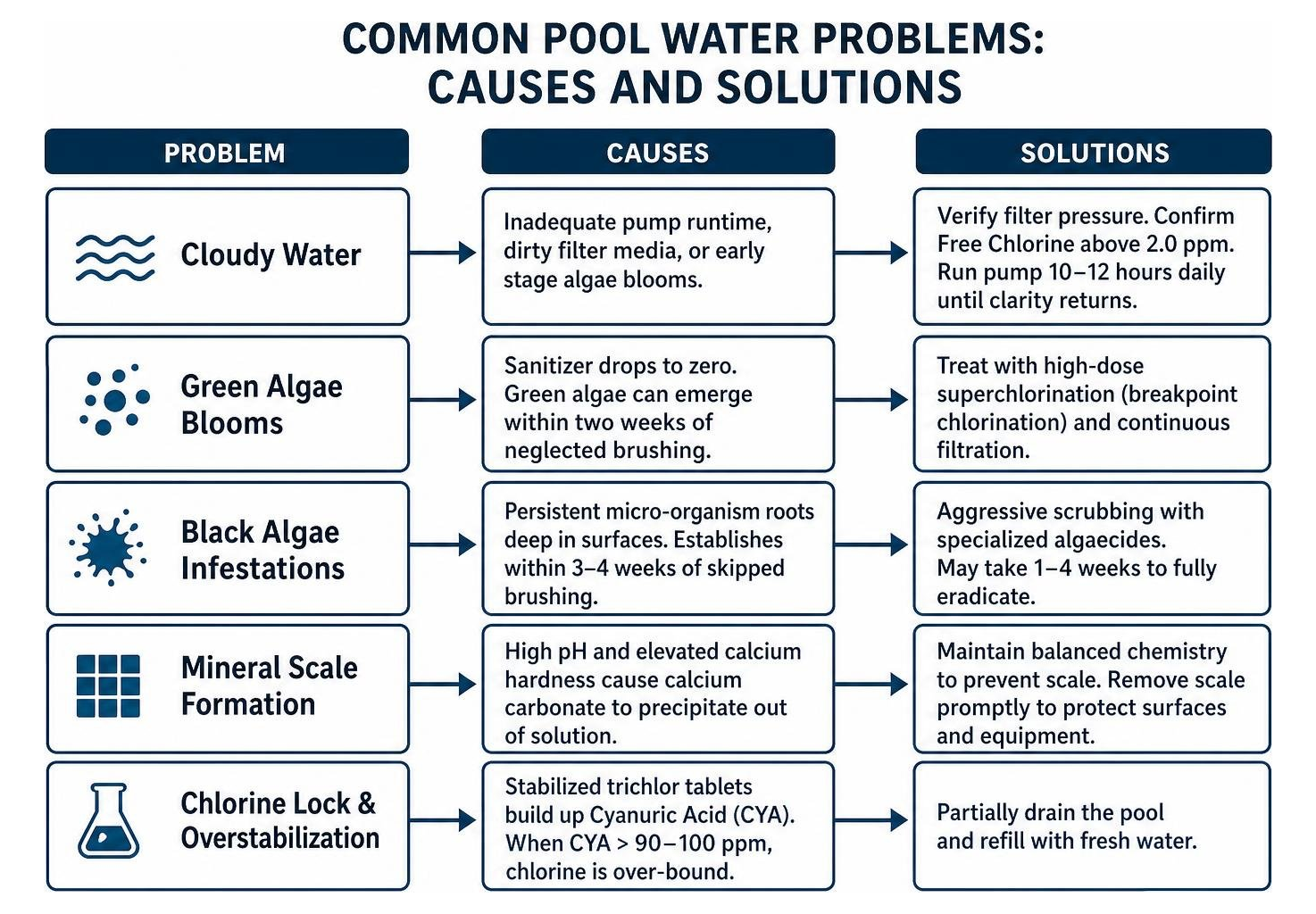
- Cloudy Water: Caused by inadequate daily pump runtime, dirty filter media, or early stage algae blooms. Verify filter pressure, confirm that Free Chlorine is above 2.0 ppm, and ensure the pump runs at least 10–12 hours daily until clarity returns.
- Green Algae Blooms: Free-floating green algae blooms when sanitizer drops to zero. Green algae can emerge within two weeks of neglected brushing. Treat with high-dose superchlorination (reaching breakpoint chlorination) along with continuous filtration.
- Black Algae Infestations: Black algae is a persistent micro-organism that roots deep into plaster pores and liner seams underneath a protective waxy biofilm. It often establishes within 3 to 4 weeks of skipped brushing and requires 1 to 4 weeks of aggressive scrubbing with specialized algaecides to fully eradicate.
- Mineral Scale Formation: High pH combined with elevated calcium hardness causes calcium carbonate to precipitate out of solution, depositing rough white scale across tiles, gelcoat walls, and heating elements. Scale left unchecked for 6 months clogs filter elements and can reduce heater efficiency by 15 to 25 percent.
- Chlorine Lock & Overstabilization: Using stabilized trichlor tablets continuously causes Cyanuric Acid (CYA) to accumulate. When CYA surpasses 90–100 ppm, it over-binds chlorine molecules—a condition known as chlorine lock. The only effective remedy is partially draining the pool and refilling it with fresh water.
Preventing Costly Equipment Failures with Routine Pool Maintenance
Skipping simple maintenance tasks can lead to significant out-of-pocket repair bills:
- Pump Motor Overheating ($700 to $4,000 replacement): A fully clogged pump basket chokes water flow, starving the impeller. Within 2 to 3 weeks of restricted flow, the pump begins cavitating, running hot, and burning out its bearings and motor windings.
- Filter Tank Overpressurization ($500 to $2,500 repair): Operating a filter for over 2 months without backwashing or rinsing causes internal pressure to spike dangerously, risking internal manifold failure and motor strain.
- Freeze-Damaged Plumbing ($1,200 to $5,000+ repair): Forgetting to blow out plumbing lines or failing to lubricate a dried-out, cracked rubber O-ring before winter can allow water to seep into equipment housings, leading to cracked pump volutes, split heater headers, and burst underground lines.
Following the structured tasks in the Weekly Pool Maintenance Routine – Pool User Guide along with our proven residential pool maintenance strategies protects both your pool surfaces and your equipment pad.
Frequently Asked Questions About Pool Maintenance
How long should I run my pool pump each day?
A residential pool pump should run long enough to turn over the entire water volume through the filter at least once daily. For a standard single-speed pump, this typically requires 8 to 12 hours of runtime per day during the summer. For modern variable-speed pumps, running 24 hours a day at an energy-efficient low RPM (such as 1,200 to 1,500 RPM) provides continuous filtration and surface skimming while saving on electrical costs.
How do I clear cloudy pool water when chemical levels are normal?
If your chemical parameters (pH, alkalinity, free chlorine) test within balanced ranges but the water remains hazy, the cause is typically mechanical filtration deficiency or fine suspended particulate matter. First, check your filter pressure gauge—if it is 8 to 10 PSI above clean baseline, thoroughly backwash or rinse your filter elements. Second, run the filtration pump continuously for 24 to 48 hours. If microscopic silt persists, add a water clarifier or organic enzyme to clump particles together so the filter media can trap them.
What basic equipment and supplies are required for routine pool care?
Every pool owner should have a durable telescopic pole, a soft-bristled nylon pool brush, a heavy-duty leaf skimmer net, a manual vacuum head with hose (or an automated robotic pool cleaner), and a comprehensive liquid drop reagent testing kit (such as a DPD-FAS kit). Refer to the New Pool Owner’s Complete Guide (2026) for an organized checklist of essential equipment pad accessories.
Conclusion
Consistent pool care is easy to manage once you establish a reliable weekly routine. By dedicating 30 to 45 minutes each week to testing chemistry, brushing surfaces, clearing strainer baskets, and monitoring filter pressure, you protect your pool equipment, extend your finish’s lifespan, and keep your water clean and inviting all summer long.
At Wally’s Fiberglass Pools, we serve as Sussex, Wisconsin’s local fiberglass pool specialists. We support homeowners throughout Lake Country, Waukesha County, the Milwaukee metropolitan area, Walworth County, and surrounding communities through every phase of pool ownership. Whether you need guidance on seasonal water care, equipment upgrades, or are planning a complete inground fiberglass pool installation and expert maintenance support, our team is here to help you enjoy a durable, low-maintenance swimming pool built to handle Wisconsin weather.