The Complete Guide to Fiberglass Pool Service
What Does Fiberglass Pool Service Include?
Fiberglass pool service means testing and balancing the water, gently cleaning the gelcoat, checking the pump and filter, and watching for stains or blisters. Each week, clear the baskets, test the water, brush with a nylon brush, and vacuum with equipment made for fiberglass. In Southeast Wisconsin, spring opening and fall winterization matter too. Do not drain the pool for winter without guidance from a fiberglass pool specialist.
Fiberglass is easier to clean than many other pool surfaces, but its finish still needs the right care. I’m Wally Haines from Wally’s Pools, and this guide will help you know what to check and when to call for help. For a broader look at seasonal upkeep, the Pool & Spa News fiberglass pool care guide covers industry best practices for gelcoat maintenance.
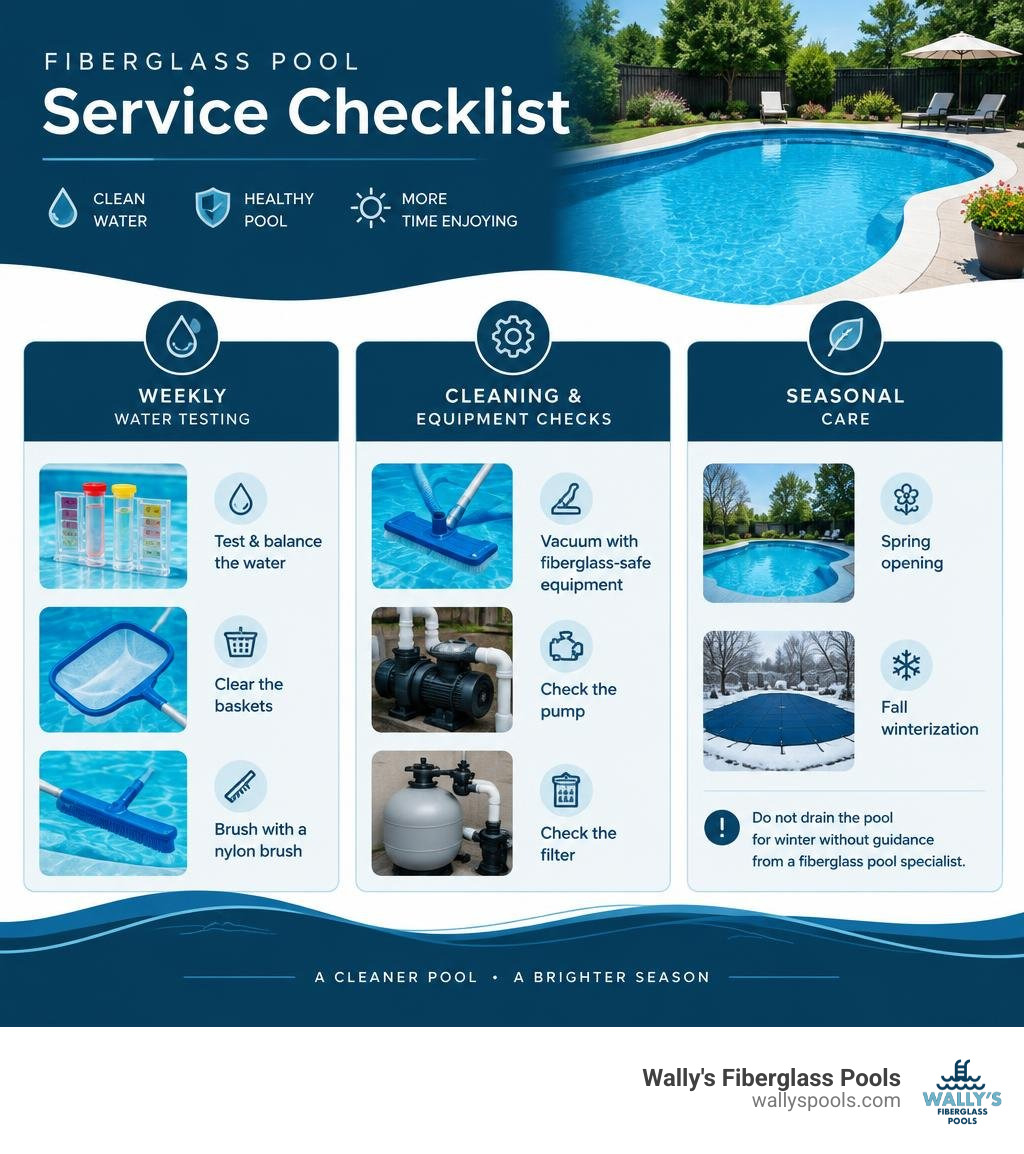
Simple fiberglass pool service word guide:
Water Chemistry Requirements for Fiberglass Pool Service
Fiberglass pools are the fastest-growing segment of the residential pool market, and it is easy to understand why. Their non-porous gelcoat finish feels silky smooth beneath your feet and naturally resists the aggressive algae blooms that plague rougher surfaces. However, caring for a fiberglass shell is fundamentally different from managing a concrete or vinyl pool.
The gelcoat functions as a semi-permeable membrane. If you treat it like traditional plaster, you risk clouding the finish, precipitating stubborn mineral scale, or creating osmotic blisters. Maintaining water balance with dedicated pool chemicals preserves that showroom shine for decades.
| Parameter | Fiberglass Pool Target | Concrete / Plaster Target | Why It Matters for Fiberglass |
|---|---|---|---|
| pH | 7.2 – 7.4 | 7.4 – 7.6 | Keeps the gelcoat smooth and prevents scaling |
| Calcium Hardness | 80 – 120 ppm | 200 – 400 ppm | Prevents calcium nodules and chalky surface haze |
| Free Chlorine | 1.0 – 3.0 ppm | 1.0 – 3.0 ppm | Sanitizes effectively without bleaching the gelcoat finish |
| Total Alkalinity | 80 – 120 ppm | 80 – 120 ppm | Buffers pH swings caused by rain and bathers |
| Cyanuric Acid | 30 – 50 ppm | 30 – 50 ppm | Protects chlorine from sunlight degradation |
| Langelier Index (LSI) | -0.2 to 0.0 | 0.0 to +0.3 | Balanced water prevents aggressive leaching and scaling |
Why Calcium Hardness and pH Levels Differ from Concrete Pools
The biggest surprise for many pool owners across Waukesha County and Lake Country is calcium hardness. Plaster pools require high calcium hardness (200 to 400 ppm) because water is naturally “hungry” for minerals. If concrete pool water lacks calcium, it leaches it straight out of the plaster walls, causing pitting and structural deterioration.
A fiberglass pool shell contains no plaster or cement. Its smooth gelcoat finish does not supply calcium to the water, nor does it require high saturation levels to stay protected. In fact, keeping calcium hardness between 80 and 120 ppm is ideal. If calcium creeps above 150 to 200 ppm in a fiberglass pool, the excess mineral has nowhere to go. It drops out of solution and binds to the gelcoat, leaving rough, white scaling that feels like coarse sandpaper.
We also maintain a tighter pH window of 7.2 to 7.4 for fiberglass pools, compared to the standard 7.4 to 7.6 used for concrete. Keeping pH in this slightly lower, controlled range optimizes chlorine efficacy and prevents the alkaline conditions that accelerate mineral plating. Using the Langelier Saturation Index (LSI) helps ensure your water remains neutral and non-scaling.
Sanitizer Selection: Liquid Chlorine, Salt Systems, and Cal-Hypo Risks
Sanitizer selection makes a massive difference in the longevity of your gelcoat:
- Liquid Chlorine (Sodium Hypochlorite): The cleanest and safest liquid sanitizer. It adds zero calcium to your pool and dissolves immediately without leaving granular residue on the pool floor.
- Salt Chlorine Generators: An outstanding match for fiberglass. Salt systems generate continuous, low-level free chlorine while keeping the water feeling soft. Because fiberglass is chemically inert and non-porous, salt water will not degrade the shell.
- Calcium Hypochlorite (Cal-Hypo) Warnings: We strongly advise against using granular cal-hypo shock in fiberglass pools. Cal-hypo introduces concentrated doses of calcium with every application, driving hardness levels above safe thresholds and leaving permanent scale. Undissolved granules that sink to the floor can also cause localized discoloration.
To protect your sanitizer from Wisconsin’s intense summer sun, maintain cyanuric acid (CYA) between 30 and 50 ppm. Pair this with a total alkalinity level of 80 to 120 ppm to keep your pH stable during heavy swim days and summer storms.
Osmotic Blisters, Staining, and Gelcoat Protection
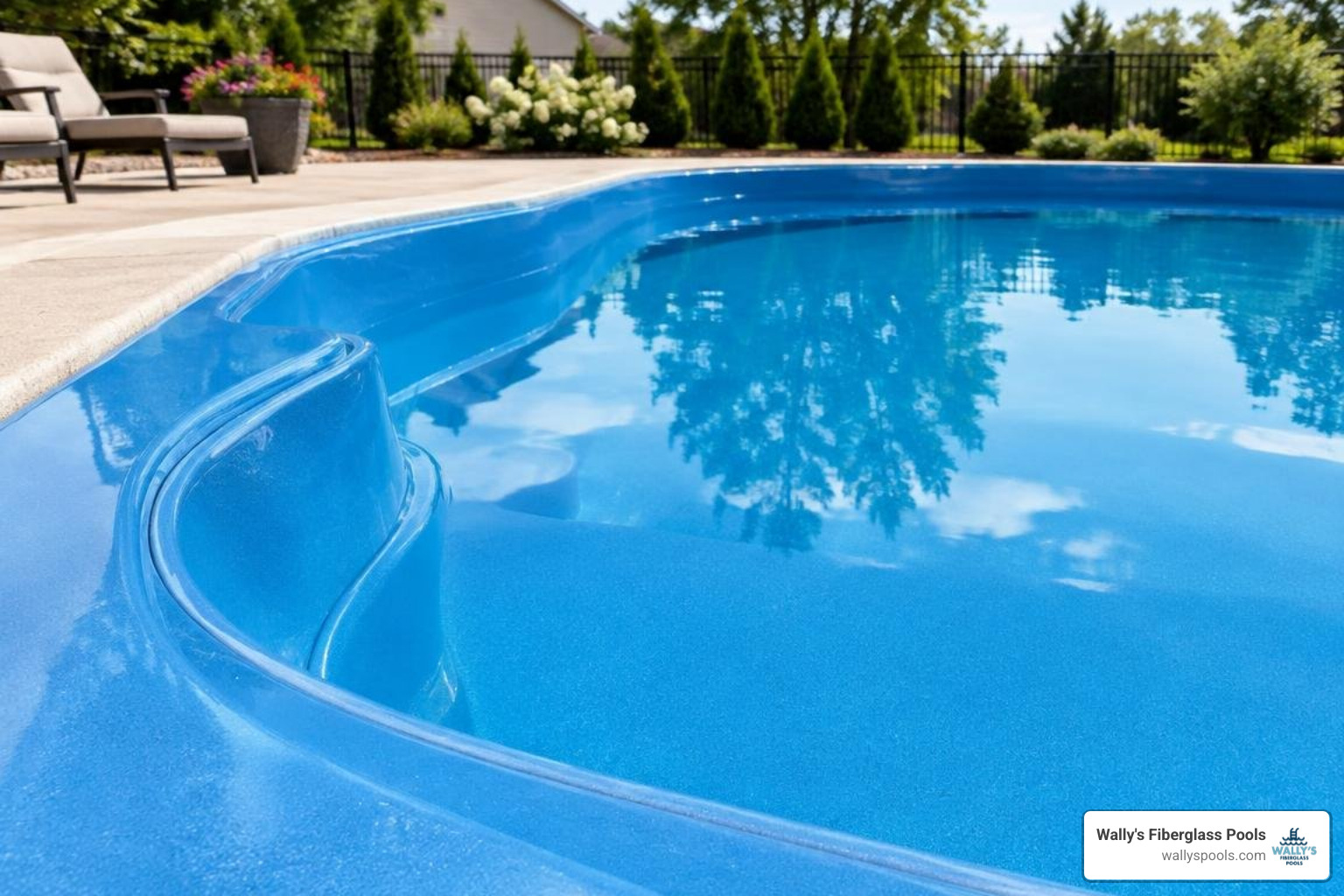
With proper chemistry management and routine care, a factory-applied fiberglass pool gelcoat lasts 15 to 25 years before needing professional refinishing. Protecting that investment means keeping a close eye on the physical surface and knowing how to handle blemishes early.
Preventing and Managing Osmotic Blisters in Fiberglass Pool Service
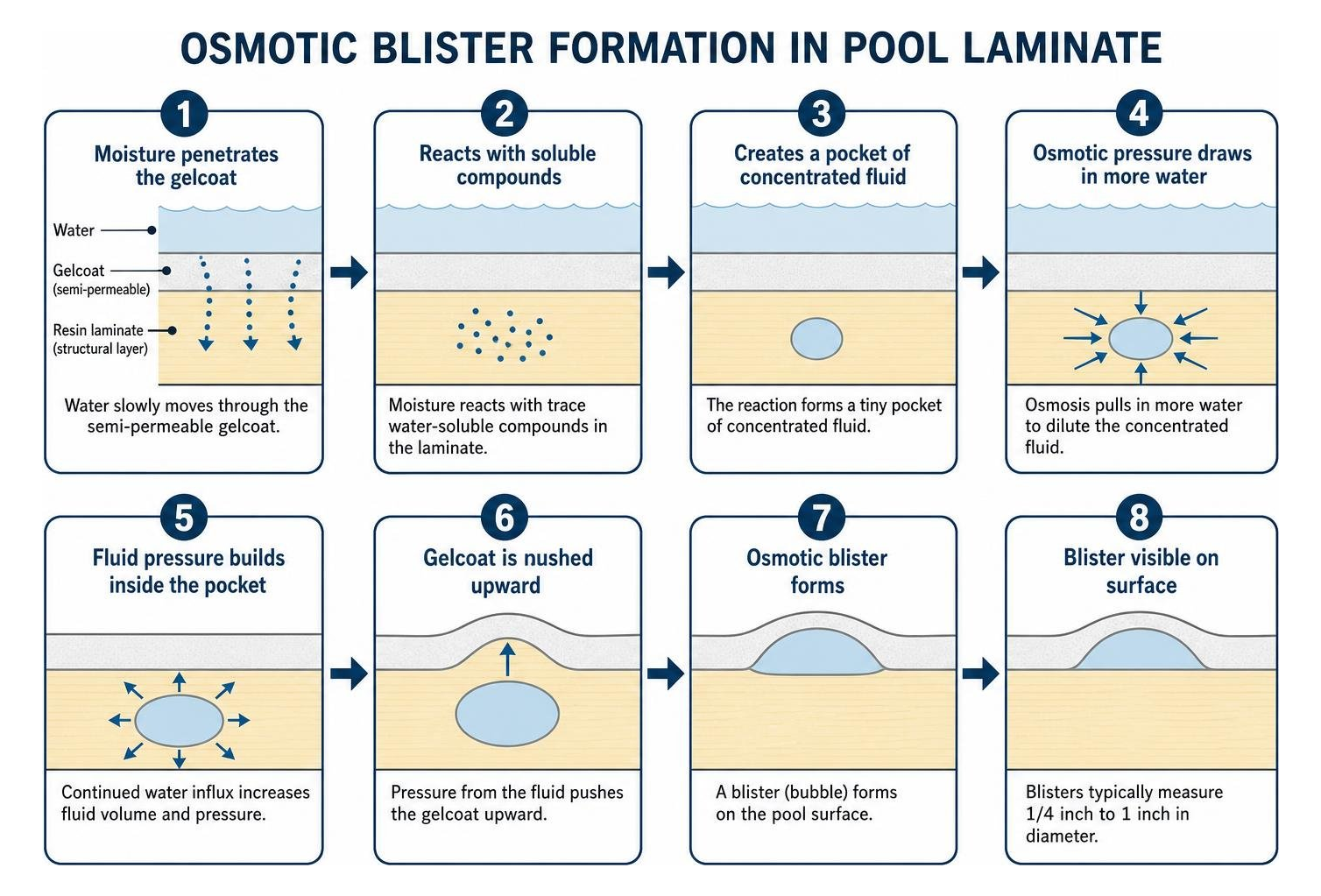
Osmotic blisters form when moisture slowly penetrates the semi-permeable gelcoat layer and reacts with trace water-soluble compounds inside the structural resin laminate. This chemical reaction creates a tiny pocket of concentrated fluid. As natural osmotic pressure pulls more water into the pocket to dilute it, the fluid builds pressure and pushes the gelcoat upward into a small bubble.
These blisters typically range from 1/4 inch to 1 inch in diameter and can appear anywhere along the walls or floor. When chemistry goes wrong, osmotic blisters are essentially the pool’s way of saying, “I need a spa day!”
How to handle osmotic blisters:
- Monitor, Don’t Puncture: Small blisters that remain intact are primarily a cosmetic concern. Never attempt to pop, scrape, or sand them yourself, as breaking the seal exposes the underlying laminate directly to pool water.
- Correct Water Chemistry: Bring your pH into the 7.2 to 7.4 range and verify that calcium hardness is below 120 ppm. Balanced water slows down moisture migration.
- Schedule an Assessment: If blisters multiply or crack open, contact our team for specialized fiberglass pool repair to inspect the structural laminate and apply matched vinyl-ester barrier patches.
Treating Metal Stains, Scaling, and Surface Discoloration
Fiberglass pools can occasionally collect surface discoloration from local source water:
- Iron Stains (Rusty brown/red): Common in Lake Geneva and rural Walworth County properties running on private well water. Treat with an ascorbic acid spot treatment and add a sequestrant to lock up dissolved metals.
- Copper Stains (Teal/blue-green): Often caused by low pH corroding heater cores or overuse of cheap copper algaecides. Chelating agents lift these stains without harming the gelcoat.
- Calcium Scale (Chalky white haze): Caused by elevated calcium hardness or high pH. Treat with specialized scale removers and balance your water to restore a glossy finish.
Gelcoat polishing typically takes four to eight hours and can be priced at $300 to $800 depending on pool size and severity. An annual gelcoat polish is one of the easiest ways to keep your pool looking brand-new.
Equipment Standards and Weekly Cleaning Protocols
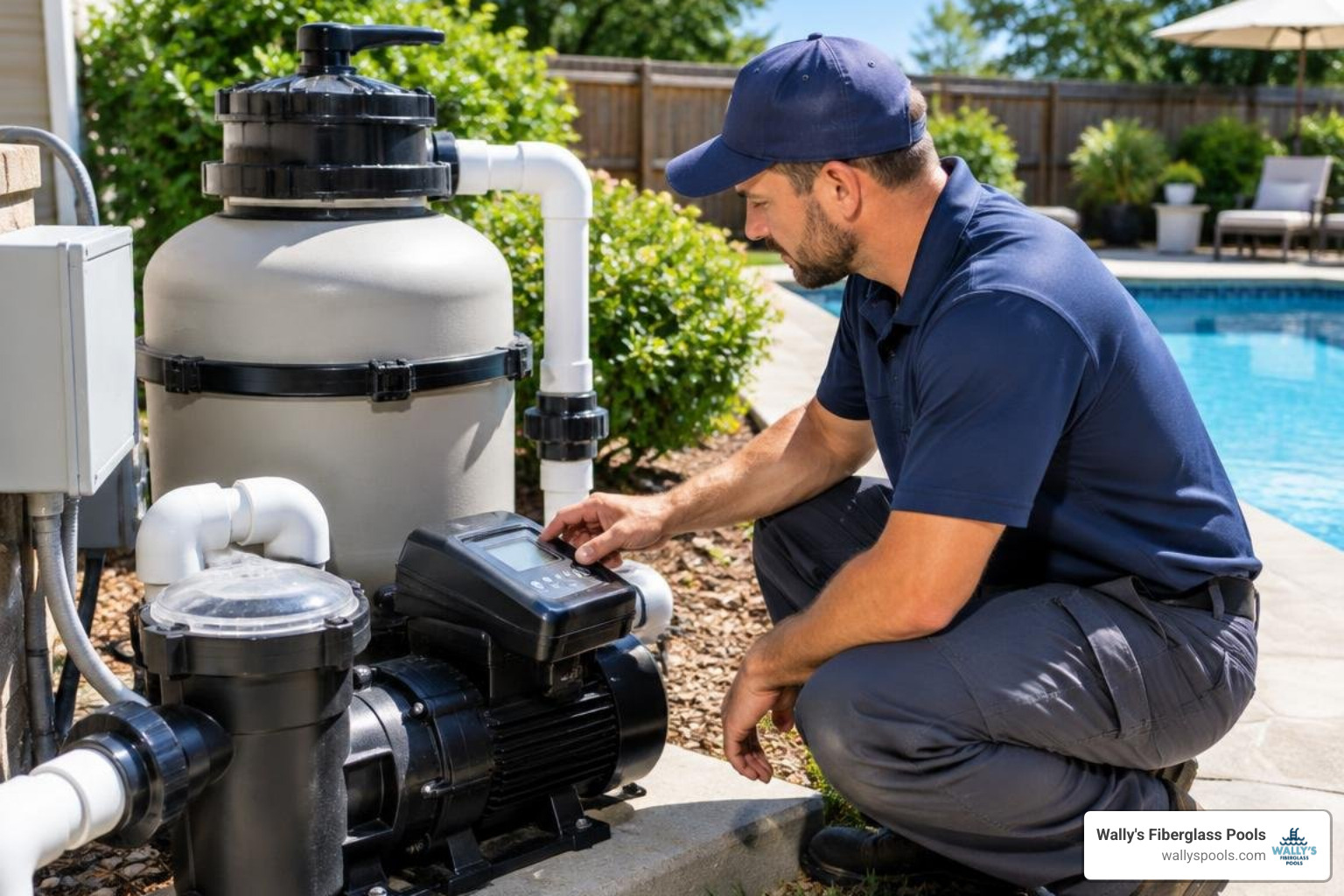
Your filtration system works hand-in-hand with your water chemistry. Maintaining high-efficiency pumps and filters ensures water stays crystal clear across our Wisconsin summers. If your pump begins to hum or loses prime, upgrading with high-performance replacement pool equipment keeps your circulation reliable.
Essential Tools and Safe Cleaning Equipment for Gelcoat Surfaces
Because gelcoat is smooth and glossy, you must use tools designed specifically for fiberglass:
- Nylon-Bristle Brushes: Always use soft nylon brushes. Stainless steel or wire-bristle brushes made for plaster pools will cut microscopic scratches into your gelcoat, ruining the finish and giving algae a foothold.
- Smooth-Wheel Vacuums: Standard concrete vacuum heads have sharp edges and stiff wheels that can mar fiberglass floors. Use vacuum heads with soft brushes or smooth rubber wheels.
- Robotic Cleaners: Modern automatic robotic cleaners with soft rubber tracks and non-abrasive scrubbing brushes work wonderfully on fiberglass slopes and steps.
- Non-Abrasive Cleaning Sponges: For waterline grime and sunscreen scum, use dedicated fiberglass pool cleaning equipment paired with non-abrasive gel cleaners. Never scour the waterline with abrasive pumice stones.
Routine Maintenance and Seasonal Service in Southeast Wisconsin
Wisconsin’s climate brings distinct seasonal shifts. From hot July afternoons in Sussex to freezing January sub-zero temperatures across Lake Country, your pool care schedule needs to adapt.
For ongoing care tips, check out our comprehensive seasonal pool maintenance guidelines. Many busy families throughout Waukesha County prefer the ease of weekly fiberglass pool maintenance packages so their backyards stay swim-ready all summer.
When fall arrives, winterization is critical. Southeast Wisconsin freeze-thaw cycles can wreak havoc on underground plumbing if lines are not blown out and sealed with expansion plugs. We lower the water slightly below the skimmer, add winterizing chemicals, drain the equipment pad, and secure a safety cover. Never completely drain a fiberglass pool for the winter. Without internal water weight, high groundwater tables can shift or pop the pool shell right out of the ground.
Professional Standards and Avoiding Common Service Mistakes
Working with certified fiberglass pool contractors ensures your pool receives care tailored to composite shells rather than concrete basins. Treating fiberglass pools like plaster pools leads to costly callbacks and frustrated homeowners.
Overcoming Common Mistakes in Fiberglass Pool Service
- Mistake 1: Draining the Pool Without Hydrostatic Relief Precautions. Hydrostatic ground pressure can buckle fiberglass floors or lift the shell. Draining should only be performed by a seasoned specialist using dedicated sump access pipes.
- Mistake 2: Performing Acid Washes. Plaster pools are frequently drained and scrubbed with muriatic acid. Doing this on fiberglass strips the gelcoat and destroys the finish. Gelcoat restoration requires gentle polishing compounds, not acid washes.
- Mistake 3: Dumping Undissolved Dry Chemicals Directly onto the Floor. Granular shock or dry acid dumped onto shallow ledges will bleach and pit the resin. Always pre-dissolve chemicals in a bucket of water or add liquid formulas near return jets.
- Mistake 4: Letting Calcium Hardness Run High. Over-saturating the water with calcium causes scale that requires extensive machine buffing to remove. Keep hardness between 80 and 120 ppm.
Frequently Asked Questions About Fiberglass Pool Service
Can you use calcium hypochlorite shock in a fiberglass pool?
No. Calcium hypochlorite (cal-hypo) adds unnecessary calcium to your pool water, quickly pushing hardness levels past the safe 120 ppm threshold. This leads to cloudiness, scaling, and white deposits along the waterline. Instead, shock your fiberglass pool with liquid chlorine (sodium hypochlorite) or potassium monopersulfate non-chlorine shock.
How long does a fiberglass pool gelcoat last before professional repair may be needed?
A high-grade fiberglass gelcoat typically lasts 15 to 25 years with balanced water chemistry and regular cleaning. Maintaining pH between 7.2 and 7.4, keeping calcium hardness low, and avoiding abrasive tools will maximize the lifespan of your pool’s surface.
What causes osmotic blisters on fiberglass pool walls?
Osmotic blisters occur when water molecules penetrate the semi-permeable gelcoat and react with chemicals inside the underlying resin laminate. This creates trapped pockets of fluid that swell under osmotic pressure, pushing up small blisters 1/4 to 1 inch wide. Keeping water balanced prevents this fluid migration.
Conclusion
A fiberglass pool offers an unmatched backyard experience—combining sleek beauty, gentle surfaces, and easy day-to-day upkeep. By understanding the unique chemistry requirements of composite shells, using soft cleaning tools, and protecting your equipment through Wisconsin winters, you will enjoy decades of trouble-free swimming.
Whether you need seasonal opening and closing, equipment repairs, or routine weekly water balancing across Sussex, Waukesha County, Milwaukee, or Lake Geneva, our local team is here to help. Contact the team at Wally’s Fiberglass Pools today to keep your backyard oasis running smoothly all season long.