Fiberglass Pool vs. Concrete Price: What You’ll Pay Now and Each Summer
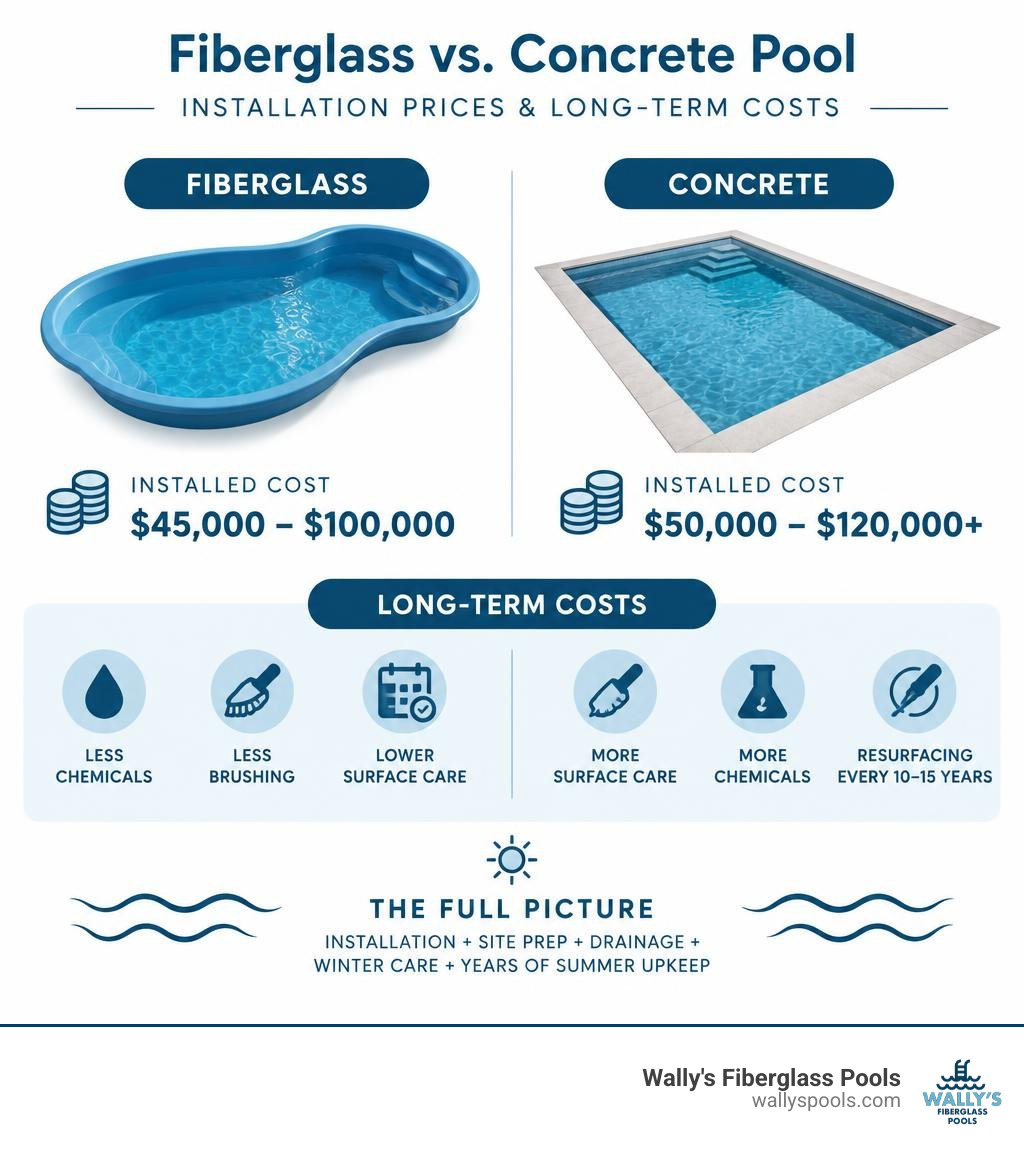
Fiberglass pools typically cost $45,000 to $100,000 installed; concrete pools typically cost $50,000 to $120,000 or more. The bigger price difference often comes after installation. Fiberglass usually needs less brushing and fewer chemicals, while concrete adds more surface care and typically needs resurfacing every 10 to 15 years.
For homeowners in Lake Country and Southeast Wisconsin, the best comparison includes site prep, drainage, winter care, and years of summer upkeep, not just the first quote. When you compare fiberglass pool vs. concrete pool prices over a full ownership cycle, the long-term savings of a low-maintenance shell become clear. I’m Wally Haines from Wally’s Pools, and I’ll walk you through those costs so you can choose with confidence.
Fiberglass Pool vs Concrete Price: Upfront Installation Breakdown
When you first begin gathering quotes, the initial numbers for both pool types might look surprisingly close. Across the country, the average inground pool project costs around $62,500. However, when evaluating the realistic fiberglass pool vs concrete price dynamic, the upfront investment reflects two completely different construction philosophies.
| Expense Category | Inground Fiberglass Pool | Inground Concrete (Gunite/Shotcrete) Pool |
|---|---|---|
| Average Base Turnkey Installation | $45,000 – $100,000 | $50,000 – $120,000+ |
| Excavation & Site Grading | $2,500 – $6,000 | $3,500 – $9,000 |
| Plumbing & Core Equipment | $8,000 – $12,000 | $12,000 – $18,000+ |
| Standard Installation Time | 2 – 4 Weeks | 3 – 6 Months |
| Initial Water & Chemical Balancing | $300 – $500 | $700 – $1,200 |
For homeowners in Waukesha County or Lake Geneva, understanding your comprehensive fiberglass pool total cost breakdown means looking closely at how site prep, excavation labor, and plumbing factor into the base proposal.
Shell Manufacturing and On-Site Pouring Costs
The core reason for the upfront price divergence lies in how the pool structure is manufactured. A fiberglass pool shell is engineered and precision-built inside an environmentally controlled factory. Premium layers of vinyl ester resin, structural fiberglass, and an ultra-smooth gelcoat cure under exact climate specifications. When the shell arrives at your home, it is a fully cured, structural unit ready to be set into place.
In contrast, a concrete pool—often referred to as gunite or shotcrete—is hand-built directly in your backyard. Crews must tie intricate webs of steel rebar, plumb hundreds of feet of pipe on-site, and pneumatically spray dense concrete mixtures. This process is labor-heavy. Once sprayed, the raw concrete shell requires weeks of manual damp-curing (spraying water daily) before plaster or pebble aggregates can even be applied. You are essentially paying for an entire construction crew to manufacture a custom industrial structure in your yard over several months.
Hidden Site Prep and Permitting Expenses
Every inground pool installation comes with secondary site expenses that belong in your project budget. Before breaking ground, consult a guide to compare fiberglass pool costs to avoid surprises:
- Municipal Permitting and Inspections: Local municipal building permits across Southeast Wisconsin generally range from $500 to $1,800 depending on your local building department, zoning reviews, and safety fence mandates.
- Excavation and Soil Removal: Digging out tons of earth requires haul-away fees. If your property contains dense clay or large glacial rocks, spoil removal can add $1,500 to $5,000.
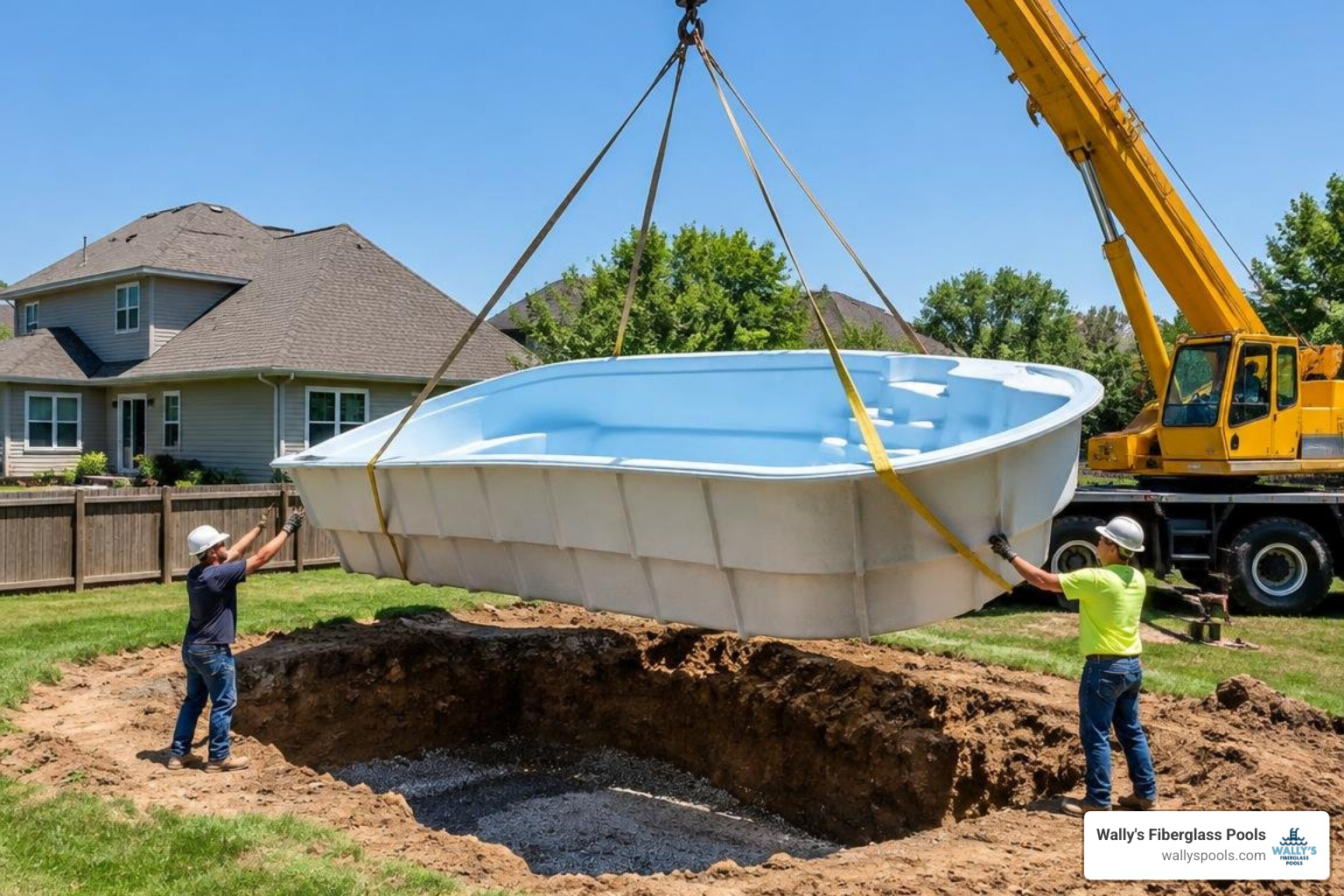
- Backyard Access and Crane Service: Because a fiberglass shell arrives in one piece, tight lot lines or steep slopes in Lake Country often require a crane to gently lift the shell over the house. Crane rentals typically add $1,200 to $2,800.
- Electrical Panel Upgrades: High-efficiency variable-speed pumps, automated sanitation, and pool heaters frequently require a dedicated 100-amp subpanel, costing between $1,200 and $3,000.
Why Concrete Pool Maintenance Skyrockets Every Summer
While the upfront cost difference might seem manageable, the real divergence starts on day one of operation. Operating a concrete pool each summer requires significantly more time, chemical volume, and electrical power than maintaining a fiberglass pool.

Investing in modern fiberglass inground pool packages helps you bypass the aggressive chemical regimens and heavy scrubbing that concrete pools demand.
Porous Plaster vs. Non-Porous Gelcoat Surfaces
Concrete is naturally porous, functioning much like an ultra-dense hard sponge. Because traditional pool plaster is alkaline and contains calcium hydroxide, it constantly reacts with swimming pool water. This chemical leaching continually drives up your water’s pH level, forcing you to add gallons of muriatic acid every week just to keep the water balanced.
Furthermore, microscopic pores in concrete plaster create the perfect hiding spots for aggressive black algae. Algae roots embed deep inside the plaster matrix, making surface brushing with stiff stainless-steel wire brushes a mandatory weekly chore.
A fiberglass pool, by comparison, features an impermeable, non-porous gelcoat finish. Algae cannot find a microscopic foothold on this surface, meaning you spend less time scrubbing and up to 70% less money on sanitizing chemicals and algaecides throughout our short, sweet Wisconsin summers.
Energy Demands and Heating Inefficiency
Concrete is a dense thermal mass with high thermal conductivity. It acts as a continuous heat sink, pulling warmth from the water and transferring it out into the surrounding cool earth.
Fiberglass serves as a natural thermal insulator. When paired with proper plumbing and a high-efficiency heater or heat pump, a fiberglass pool warms up much faster and retains water heat overnight far more efficiently. To maintain a comfortable 84-degree swimming temperature during cool Lake Country June mornings and September evenings, a concrete pool requires extended heater run-times, quickly adding $150 to $300 more per month in natural gas or electrical costs.
The True 10-Year and 30-Year Cost of Ownership
When deciding on a backyard pool, looking only at the initial sticker price is like buying a car without checking its fuel economy or maintenance schedule. Over a decade or more, the ongoing service fees, electrical consumption, and mandatory structural restorations make concrete substantially more expensive.
| Ownership Expense (10-Year Outlook) | Fiberglass Inground Pool | Concrete (Gunite) Inground Pool |
|---|---|---|
| 10-Year Chemical & Water Balancing Costs | $3,500 – $6,000 | $10,000 – $16,000 |
| Routine Brushing & Professional Acid Washing | $0 (Not Needed) | $2,000 – $3,500 (Every 3–5 yrs) |
| Electrical Utility & Heating Costs | $4,500 – $8,000 | $8,500 – $14,000 |
| 10-to-15 Year Surface Replastering | $0 | $8,000 – $15,000+ |
| Estimated Total 10-Year Ownership Cost | $63,000 – $112,000 | $99,500 – $147,500+ |
When calculating long-term budgets, explore competitive pool installation financing options to ensure both initial installation and predictable operating costs fit your household plans.
Analyzing Fiberglass Pool vs Concrete Price Over 10 Years
Over a ten-year span, concrete pool owners spend between $2,000 and $3,500 annually just to keep the water clear, run pumps longer to filter dead algae, and pay for professional periodic drain-and-acid-wash services.
Fiberglass owners generally spend between $800 and $1,500 per year on routine summer maintenance and seasonal startup care. While concrete owners are budgeting for costly structural refreshes, fiberglass owners rarely deal with structural surface degradation, and understanding inground fiberglass pool repair gives homeowners confidence that minor issues are simple and affordable to resolve.
Long-Term Resurfacing and Renovation Schedules
Concrete plaster finishes have a strict expiration date. Every 10 to 15 years, the constant exposure to pool chemicals, dissolved minerals, and seasonal water chemistry causes pool plaster to etch, pit, peel, and stain.
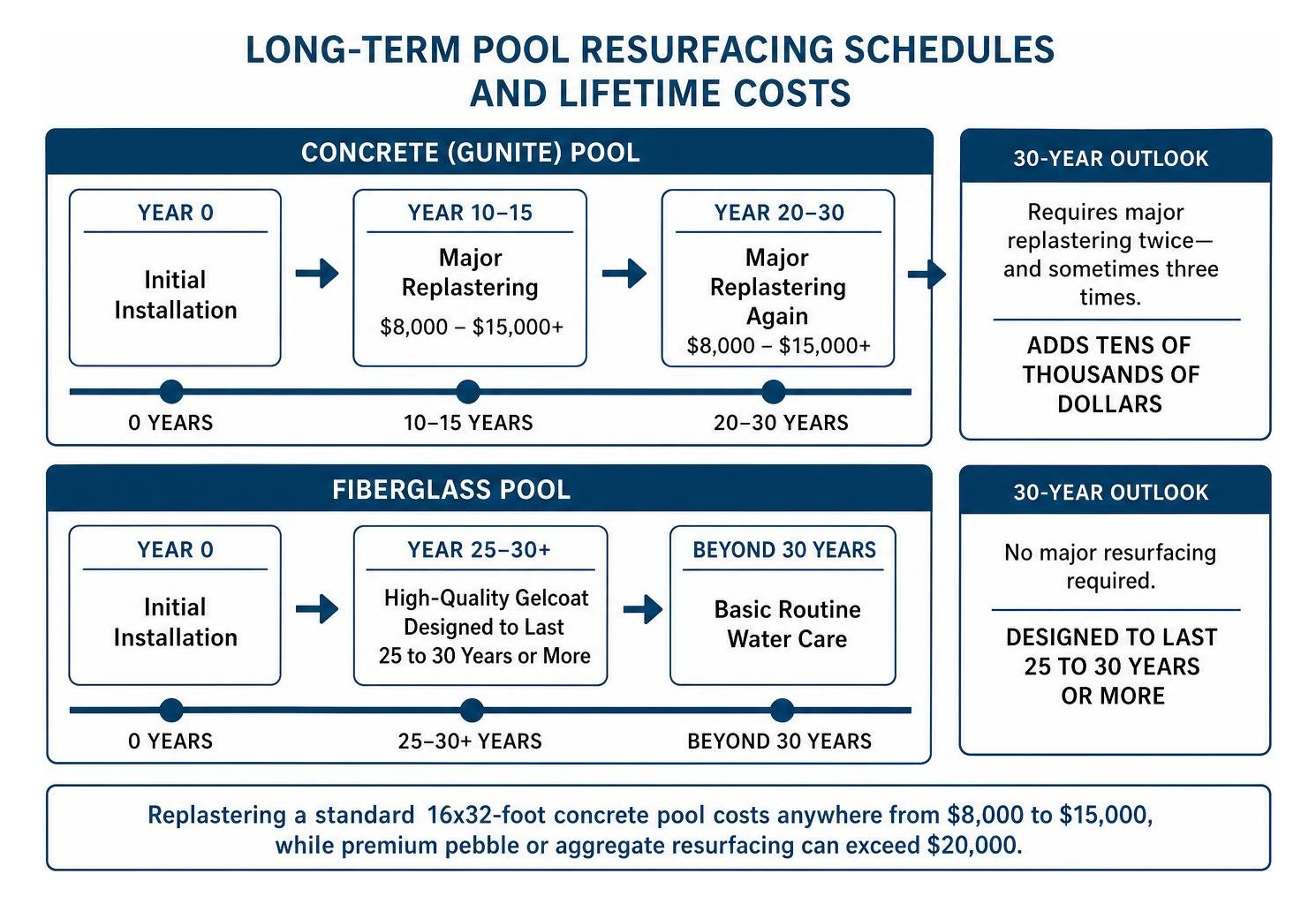
Replastering a standard 16×32-foot concrete pool costs anywhere from $8,000 to $15,000, while premium pebble or aggregate resurfacing can exceed $20,000. Over 30 years, a concrete pool will require major replastering twice—and sometimes three times—adding tens of thousands of dollars to your overall investment. High-quality fiberglass gelcoats are designed to last 25 to 30 years or more with basic, routine water care.
Installation Timelines and Summer Downtime
Wisconsin summers are precious and brief. The amount of time your backyard spends as an active construction site directly impacts how soon your family can get into the water.
Fast 2 to 4 Week Installs vs. Multi-Month Gunite Projects
A standard fiberglass pool installation follows a streamlined, predictable schedule. Once excavation is complete and a laser-leveled gravel base is set, the pool shell is placed, plumbed, backfilled, and filled with water often within just a few days. The complete project—including electrical hookups, safety fencing, and concrete decking—is commonly finished in 2 to 4 weeks.
A concrete pool build is an extended, weather-dependent construction project. Excavation is followed by rebar tying, plumbing inspections, gunite shooting, a 28-day water-curing stage, tile setting, coping installation, and final plastering. Any stretch of rainy, cold, or humid weather pauses the curing process. Gunite builds routinely take 3 to 6 months. If you partner with local pool builders in Waukesha, WI, choosing fiberglass ensures you do not lose an entire summer of swimming to construction delays.
How Soil and Climate Affect Fiberglass Pool vs Concrete Price in Wisconsin
Our local Midwest geology and climate present unique challenges to inground pools:
- Dense Clay Soils: Southeastern Wisconsin has heavy clay soil that expands when saturated and shrinks during dry spells. Concrete structures are rigid and brittle; if shifting clay places uneven pressure on the shell, structural cracking can occur. Fiberglass shells possess engineered flexural strength, allowing them to bend slightly with soil movement without cracking.
- Severe Freeze-Thaw Cycles: As winter groundwater freezes into frost lenses, it exerts massive lateral pressure. The non-porous gelcoat and flexible composite layers of fiberglass absorb these ground movements smoothly. Concrete pool plaster can spall or pop off if water penetrates micro-cracks before a hard freeze.
- Winterization Simplicity: Winterizing a fiberglass pool in Wisconsin is straightforward and fast. Because the smooth surface does not harbor water-absorbing calcium, winter covers and standard winterizing chemical kits reliably protect the pool until spring opening.
Frequently Asked Questions About Fiberglass and Concrete Pools
What is the primary downside of choosing a fiberglass pool?
The primary limitation of a fiberglass pool is design customization. Because fiberglass pools are constructed on pre-designed factory molds, you must select from existing shapes, lengths, depths, and built-in tanning ledge configurations. Additionally, because the pools must be transported via state highways on wide-load trailers, fiberglass shells cannot exceed 16 feet in width. If your vision requires a custom 10-foot-deep diving bowl or a unique freeform shape built around existing rock formations, concrete provides complete architectural freedom.
How much does it cost to resurface a concrete pool compared to fiberglass?
Resurfacing a standard residential concrete pool with basic white plaster costs between $8,000 and $15,000 every 10 to 15 years. Upgrading to a quartz or exposed pebble finish can raise that price tag to $15,000 to $25,000. Fiberglass pools, on the other hand, feature a factory-applied composite gelcoat that rarely requires resurfacing during its 25-to-30-year lifespan when balanced water chemistry is maintained, effectively eliminating this major recurring expense.
Which pool type holds better resale value for Midwest homes?
While both pool types add lifestyle value and can boost your home’s appraisal appeal by $15,000 to $30,000, modern homebuyers increasingly prefer fiberglass. Many prospective buyers in Wisconsin are wary of the demanding maintenance, costly chemical bills, and impending replastering costs associated with older concrete pools. A turnkey, low-maintenance fiberglass pool is an attractive selling point that signals hassle-free summer fun rather than endless weekend chores.
Conclusion: Making the Right Pool Investment for Your Backyard
When you evaluate initial installation quotes alongside long-term operating costs, the true financial picture becomes clear. Concrete pools provide limitless design flexibility and architectural scale, but they demand substantial summer maintenance, higher chemical and energy bills, and expensive recurring resurfacing projects. Fiberglass pools provide an attractive upfront price point, rapid installation times, and exceptionally low summer upkeep costs that save you thousands over the life of your pool.
At Wally’s Fiberglass Pools, we specialize in helping families across Sussex, Lake Country, Waukesha County, Walworth County, and the greater Milwaukee area build beautiful, long-lasting backyards tailored to Wisconsin’s climate. Connect with Wally’s Fiberglass Pools today to schedule your site consultation and discover the perfect low-maintenance fiberglass design for your home.