
Understanding Total Pool Heat Pump Costs from Purchase to Monthly Power Bills
Pool Heat Pump Cost: The Numbers to Compare Before You Buy
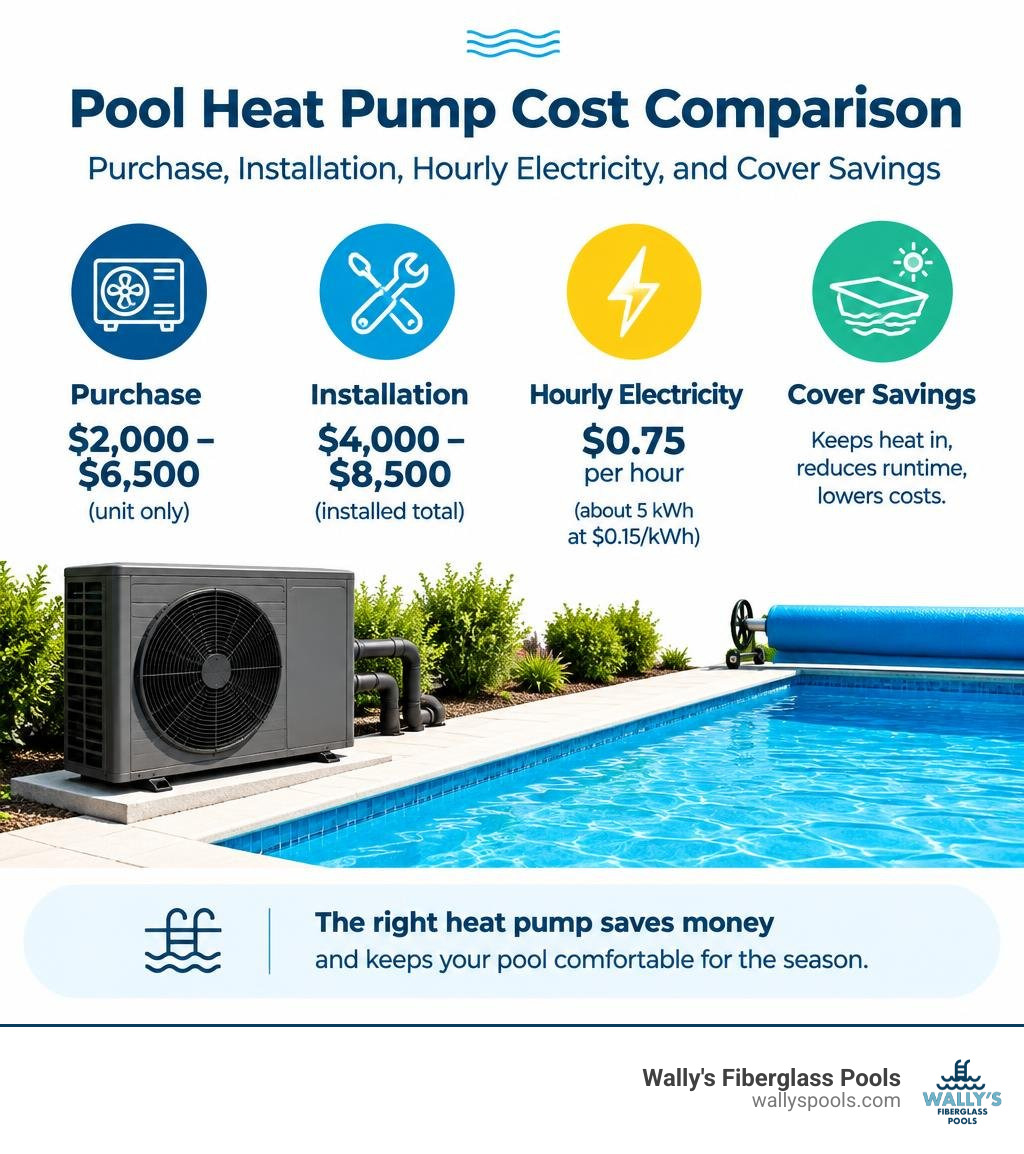
For most homeowners, a pool heat pump costs about $4,000 to $8,500 installed. The unit itself commonly costs $2,000 to $6,500, while electrical work, plumbing connections, permits, and an equipment pad can raise the final price.
A correctly sized 100,000-BTU heat pump may use about 5 kWh per hour. At $0.15 per kWh, that is roughly $0.75 per hour to run in favorable conditions. In Southeast Wisconsin, cooler spring and fall air can increase runtime and lower efficiency, so a pool cover is especially important.
When comparing models, look beyond the sticker price:
- Upfront cost: Unit size, electrical upgrades, and installation complexity
- Monthly cost: Pool size, target temperature, local electric rates, weather, and cover use
- Long-term value: Heat pumps often last 10 to 20 years and cost less to operate than gas heaters for steady heating
I am Wally Haines from Wally’s Pools, and we help Southeast Wisconsin homeowners plan pool equipment for real Wisconsin swimming seasons.
Pool heat pump cost word roundup:
Total Pool Heat Pump Cost Breakdown: Equipment and Installation
When budgeting for a pool heating system, you need to account for both the hardware and the specialized labor required to install it safely. The overall pool heat pump cost is broken into several distinct components:
- Equipment Price ($2,000 – $6,500): Basic units designed for smaller pools start near $2,000, while larger high-capacity inverter models with titanium heat exchangers run upwards of $5,000 to $6,500.
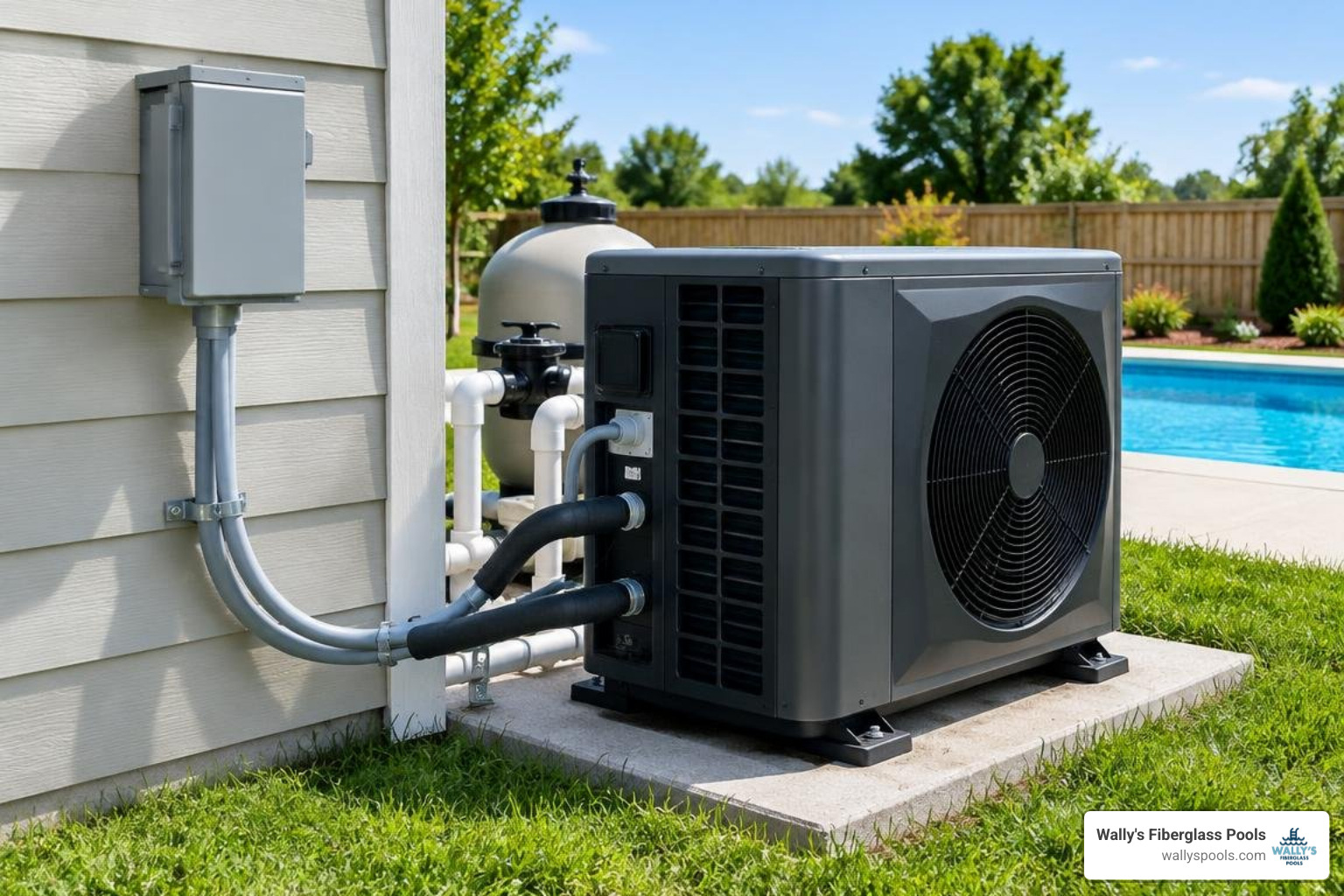
- Plumbing Integration & Bypass ($200 – $800): Tying the heat pump into your existing filtration loop requires rigid schedule 40 PVC, specialized union fittings, and a three-way bypass valve to regulate water flow and allow easy winterization.
- Electrical Infrastructure ($600 – $1,800): Most units demand a dedicated 240-volt, 30- to 50-amp circuit. Depending on the distance from your main panel, trenching and subpanel additions can add up.
- Permits and Inspections ($100 – $500): Municipal codes across Waukesha County, Milwaukee, and Walworth County require permits for major electrical and plumbing modifications.
If you are replacing an outdated or failing unit, evaluating your fiberglass pool replacement equipment options early helps prevent unexpected site modification expenses. You can also run numbers through this Pool Heat Pump Cost Calculator 2026 to model individual property configurations.
Sizing Factors That Influence Pool Heat Pump Cost
Choosing the right heating capacity is the difference between warm water and high electric bills. Heat pump output is measured in British Thermal Units (BTUs), ranging from 50,000 BTU for modest plunge pools up to 140,000+ BTU for large recreational layouts.
To size a heat pump accurately, we calculate:
- Pool Surface Area: The primary driver of surface evaporation and heat loss.
- Gallon Capacity: The total thermal mass that requires warming.
- Desired Temperature Rise: The difference between average ambient air and your target water temperature (typically 82°F to 86°F).
- Climate Thresholds: In Wisconsin, spring and fall nighttime temperatures routinely dip into the 40s and 50s, requiring extra heating capacity (roughly 20% to 30% margin) to ensure rapid recovery during daylight hours.

Site Preparation and Electrical Upgrade Expenses
Installing a heavy mechanical unit requires a solid, level surface and robust electrical backing. In our region, seasonal freeze-thaw cycles can heave uneven ground, making a properly poured concrete or engineered composite equipment pad essential.
If your electrical panel lacks sufficient breaker capacity, an electrician must install a dedicated subpanel. Running underground conduit across established landscaping or around pool excavation zones also influences overall labor expenses. Understanding these site conditions connects closely with standard yard planning, as outlined in our practical guide to comparing pool excavation costs.
Ongoing Operational Expenses: Monthly Bills and Seasonal Economics
Unlike gas heaters that burn fuel to create raw flame, a heat pump acts like a reverse air conditioner, capturing ambient heat from the outside air and transferring it directly into your pool water. Because it moves heat rather than generating it, efficiency is exceptionally high.
In Southeast Wisconsin and Lake Country, running a heat pump allows families to comfortably open their pools in May and extend swimming well into late September or early October.
Operating Pool Heat Pump Cost: Monthly Electricity and Efficiency
Heat pump efficiency is measured by the Coefficient of Performance (COP). High-efficiency units achieve a COP between 5.0 and 6.0+, which means for every $1.00 of electricity consumed, the system transfers $5.00 to $6.00 worth of heat into your pool.
- Hourly Expense: A 100,000-BTU unit draws roughly 5 kW per hour. At an average electric rate of $0.15/kWh, runtime costs around $0.75 per hour.
- Monthly Projections: In mild summer conditions, maintaining warmth costs between $50 and $150 per month. During cooler shoulder months like May or September, increased runtime can bring monthly power bills closer to $150 to $300 without proper heat retention.
Maximizing Heat Retention with Covers and Proper Chemistry
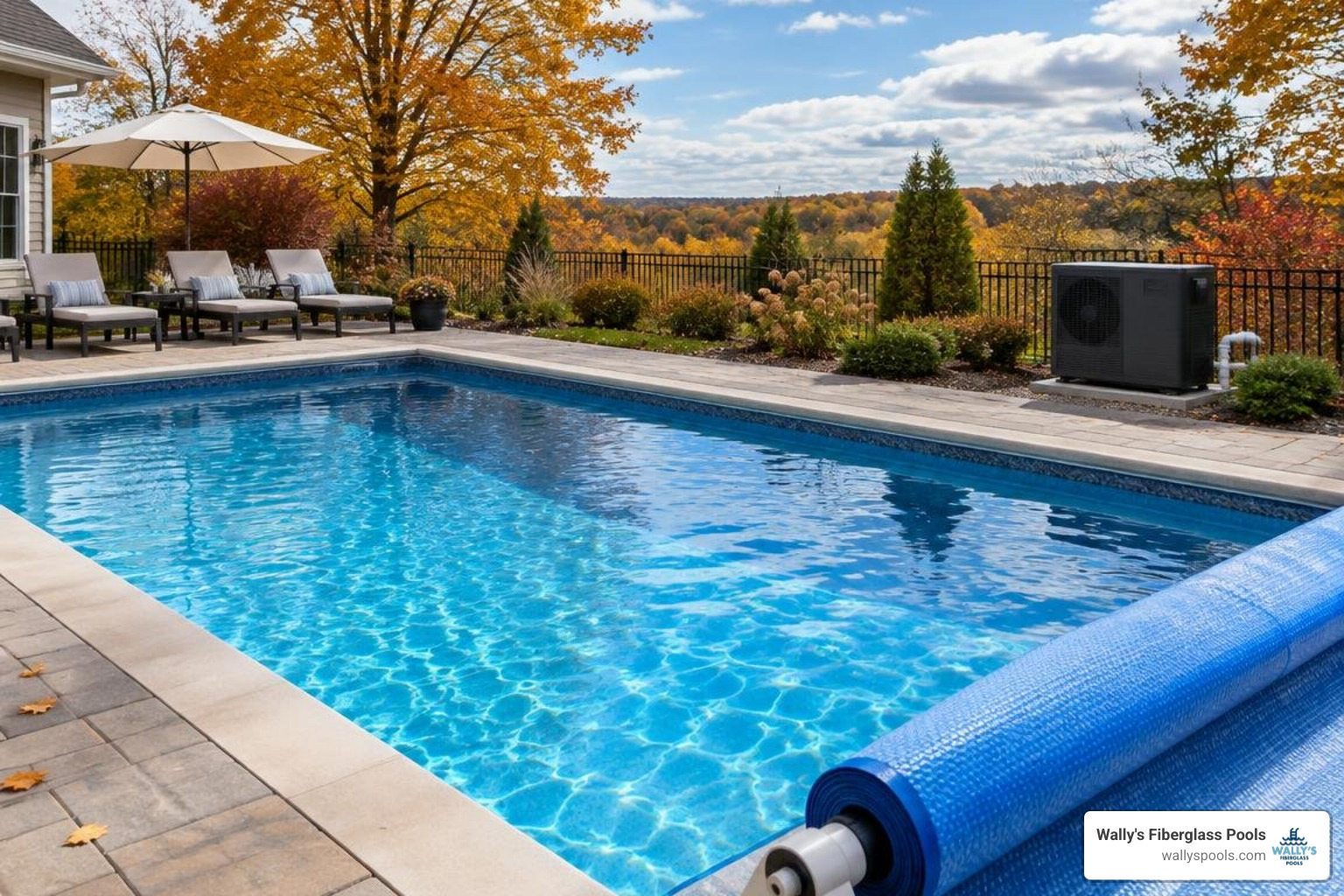
Roughly 75% of all pool heat loss occurs through evaporation at the surface. Operating a heat pump without a solar blanket or automatic cover is like running your home furnace with the front door wide open. Utilizing a durable solar cover reduces evaporation significantly, slashing monthly heating bills by 50% or more.
Equally important is water balance. High acidity, erratic sanitizer levels, or calcium scaling can prematurely degrade your heat exchanger. Reviewing how to maintain fiberglass pool chemistry 5 methods that guarantee results ensures your heater operates cleanly and reaches its full expected lifespan.
Long-Term Financial Considerations for Pool Heat Pumps
While gas heaters carry lower purchase prices ($1,500 – $4,500), their operational costs routinely run $200 to $500+ per month due to continuous fuel consumption. A heat pump requires a slightly higher initial investment but provides substantial operational savings over a 10- to 20-year lifespan.
| Heater System / Scenario | Upfront Purchase | Installation & Electrical | Avg. Monthly Operating Cost | Expected Lifespan | Energy Efficiency (COP / AFUE) |
|---|---|---|---|---|---|
| Small Pool Heat Pump (50k-70k BTU) | $2,000 – $3,500 | $1,200 – $2,000 | $50 – $100 | 10 – 20 Years | 5.0 – 6.0 COP |
| Standard Heat Pump (100k-120k BTU) | $3,200 – $4,800 | $1,500 – $2,500 | $80 – $160 | 10 – 20 Years | 5.5 – 6.5 COP |
| Premium Inverter Heat Pump (140k+ BTU) | $4,800 – $6,500 | $1,800 – $3,000 | $60 – $130 | 15 – 20 Years | 6.0 – 7.5+ COP |
| Traditional Gas Heater (Natural Gas / Propane) | $1,500 – $4,000 | $1,000 – $2,500 | $200 – $500+ | 5 – 10 Years | 80% – 85% AFUE |
To make management effortless, many homeowners pair their equipment with modern control setups. Learn how remote scheduling and temperature monitors can optimize runtimes in our review of the ultimate guide to comparing pool automation systems.
Frequently Asked Questions About Pool Heat Pump Costs
What is the average monthly electric cost to run a pool heat pump?
In moderate summer weather, running an appropriately sized heat pump costs between $50 and $150 per month. During cooler shoulder seasons (May and September in Wisconsin), monthly costs can rise to $150 to $300 if the pool is uncovered, but using a quality solar cover keeps operating costs manageable.
How long do pool heat pumps last compared to other pool equipment?
With annual winterizing and balanced water chemistry, a high-quality pool heat pump lasts between 10 and 20 years. In comparison, traditional gas pool heaters typically have a lifespan of 5 to 10 years before the heat exchanger or burners require major overhauls.
Do pool heat pumps qualify for energy rebates or tax credits?
While residential pool heat pumps generally do not qualify for federal heat pump tax credits aimed at home HVAC systems, select local electric utilities offer rebates ranging from $200 to $500 for installing certified high-efficiency, ENERGY STAR rated electric pool equipment. Check with your local power provider before purchase.
Conclusion
Investing in a pool heat pump transforms how much you use your backyard pool. While the upfront installed cost of $4,000 to $8,500 is higher than a standard gas heater, the low hourly operating expense, long mechanical life, and reliable performance deliver clear long-term value.
At Wally’s Fiberglass Pools, we specialize in helping homeowners across Sussex, Lake Country, Waukesha County, and the greater Milwaukee area design complete, low-maintenance pool environments built specifically for Wisconsin weather. Reach out to Wally’s Fiberglass Pools today for personalized equipment recommendations and professional installation guidance.